11 Smart Recessed Lighting Ideas for the Living Room That Fix Dark Spots Instantly
Recessed lighting sits inside the ceiling. No bulky fixtures. Just clean light.
Also called can lights or downlights. You mostly notice the effect, not the source.
In living rooms, recessed lighting works because it spreads light evenly. It doesn’t crowd the space. It also blends with any style.
Why Recessed Lighting Works in Living Rooms
Most living rooms have uneven lighting. Bright center. Dark corners.
Recessed lighting fixes that.
It fills gaps. Smooths shadows. Makes the room feel balanced.
In many setups I’ve seen, poor lighting came down to bad placement, not bad fixtures. Once the layout improves, the whole room changes.
Pros and Cons of Recessed Lighting
Pros
- Clean ceiling
- Even light distribution
- Works in small and large rooms
- Supports dimmable lighting
- LED recessed lighting saves energy
Cons
- Needs proper layout
- Installation takes planning
- Higher upfront cost
Most issues come from spacing mistakes. Not the lights themselves.
11 Recessed Lighting Ideas for the Living Room
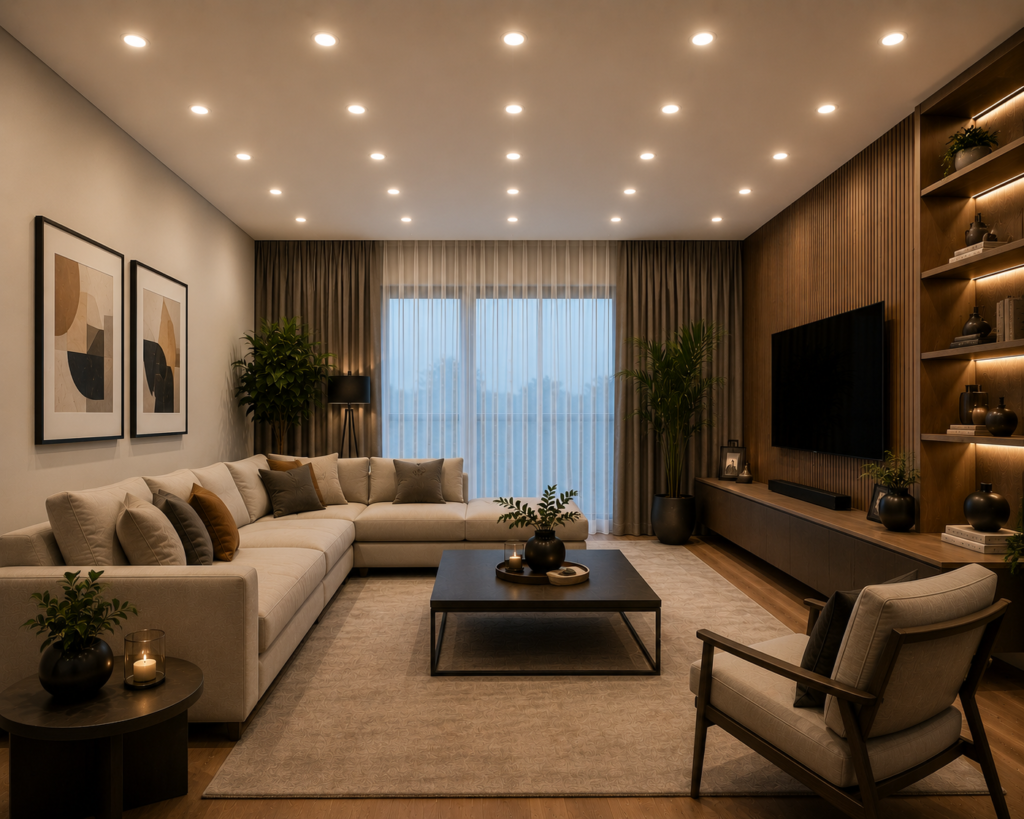
1. Grid Layout for Even Coverage
Start simple. Use a grid.
Space lights evenly across the ceiling. This creates consistent brightness.
A recessed lighting layout like this works best for general use.
See more on Modern Living Room Ideas
2. Perimeter Lighting to Remove Dark Edges
Place recessed lighting near walls.
This pushes light outward. Corners stop looking dull.
In most living rooms, corners stay underlit. This setup fixes that fast.
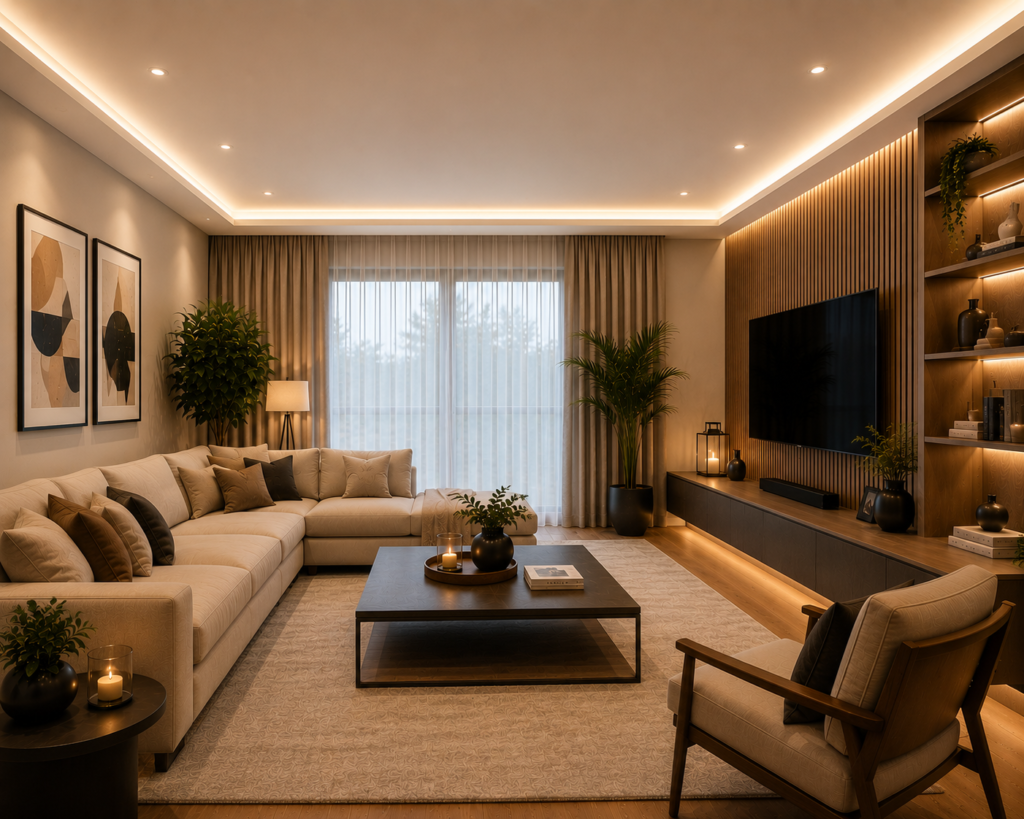
3. Accent Lighting for Visual Focus
Use adjustable recessed lighting or gimbal trims.
Aim at artwork, shelves, or textures.
This adds contrast. Makes the room feel layered.
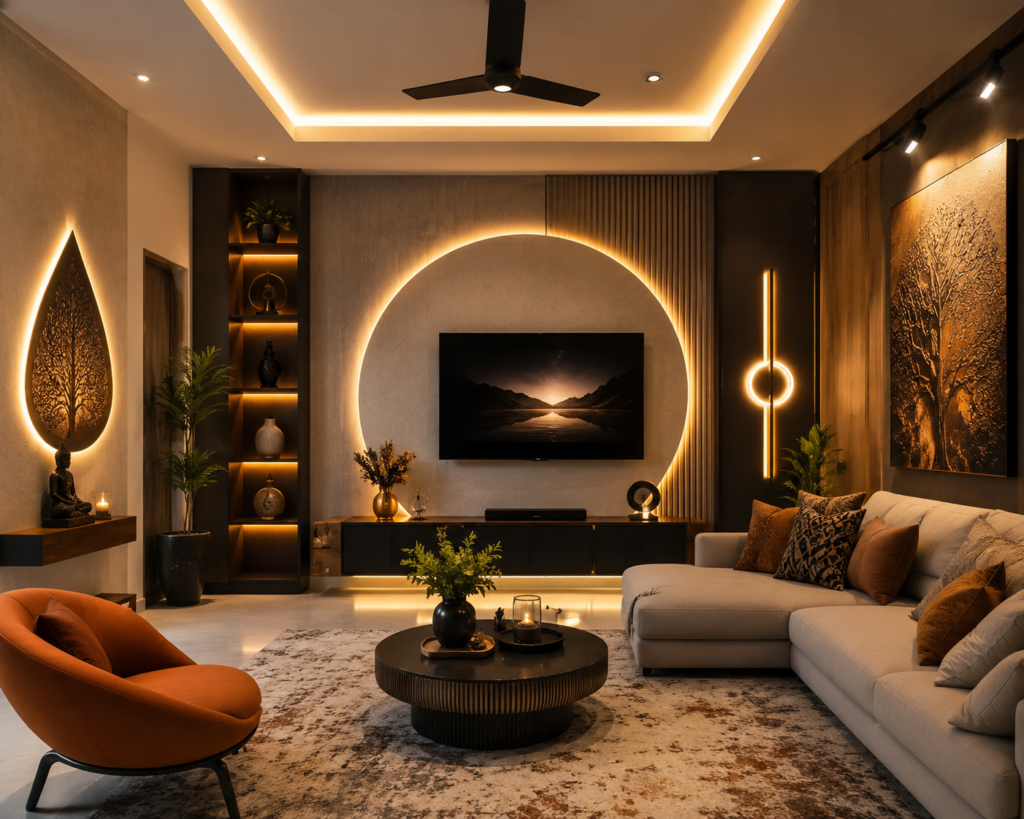
4. Layered Lighting Setup
Don’t rely only on ceiling lights.
Mix recessed lighting with lamps or wall lights.
A layered setup gives more control. You can adjust brightness based on the time of day.
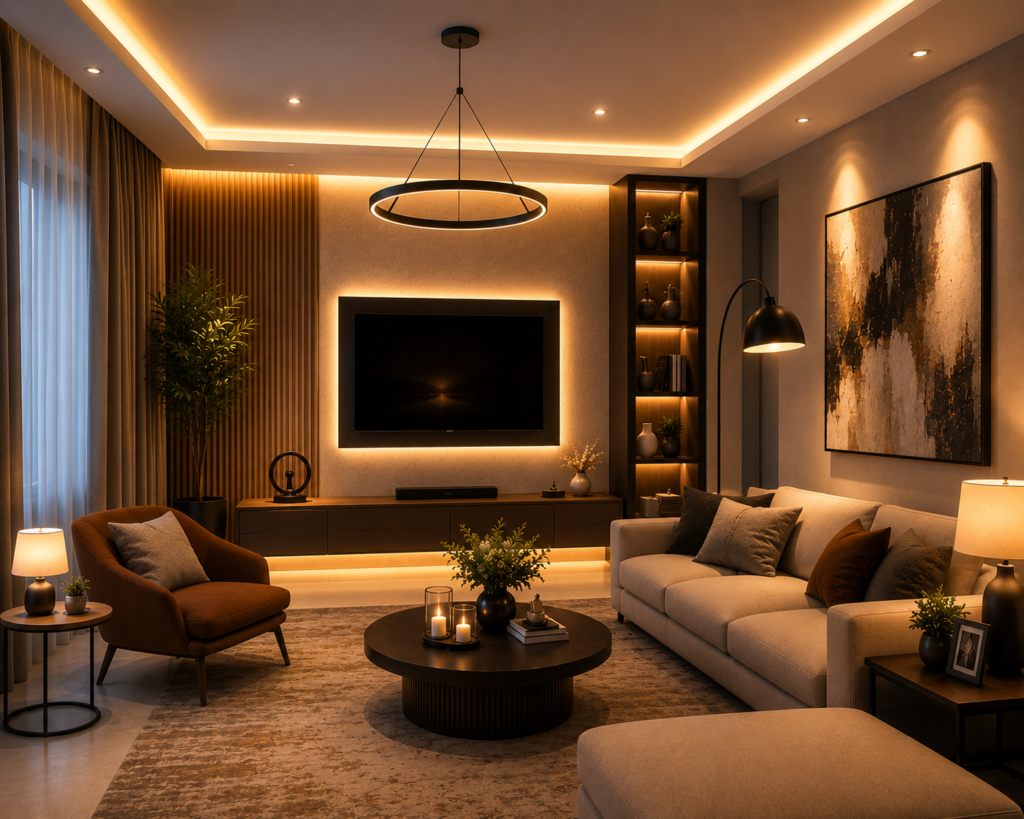
5. Dimmable Recessed Lighting for Flexibility
Install dimmers.
Bright light for cleaning or tasks. Lower light for evenings.
Most modern recessed lighting supports dimmer switches. No reason to skip this.
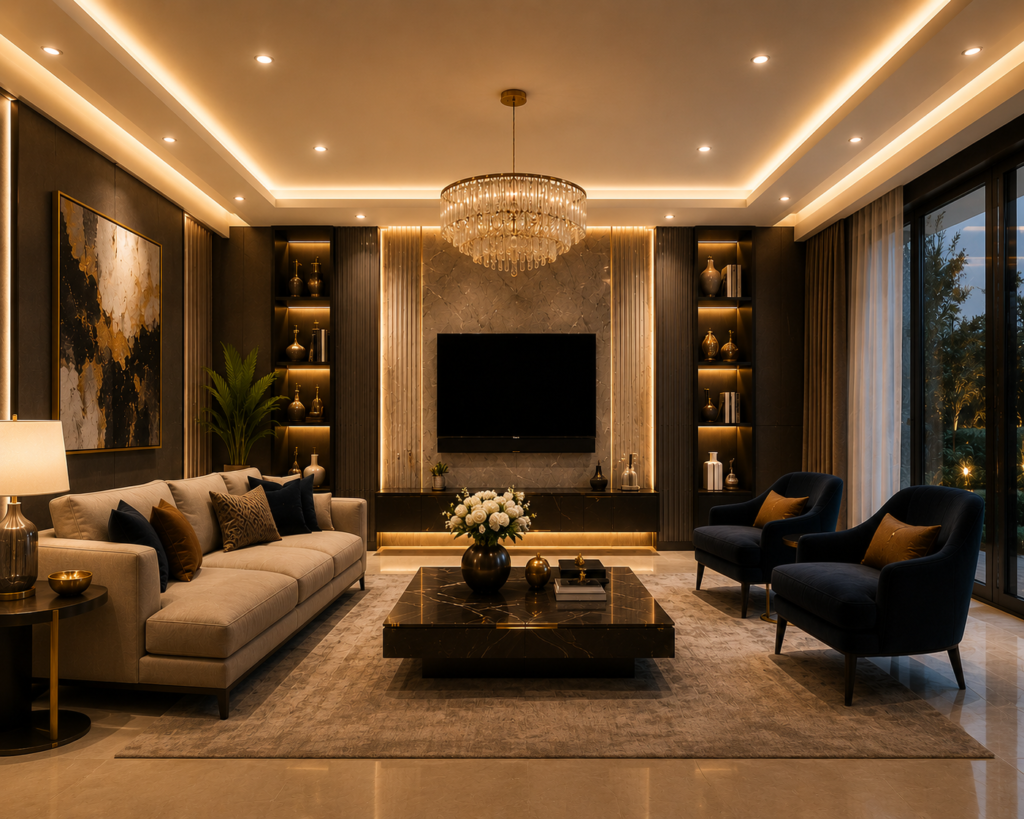
6. Trimless Recessed Lighting for a Clean Look
Trimless fixtures sit flush with the ceiling.
No visible edges. No distraction.
Best for modern recessed lighting designs.
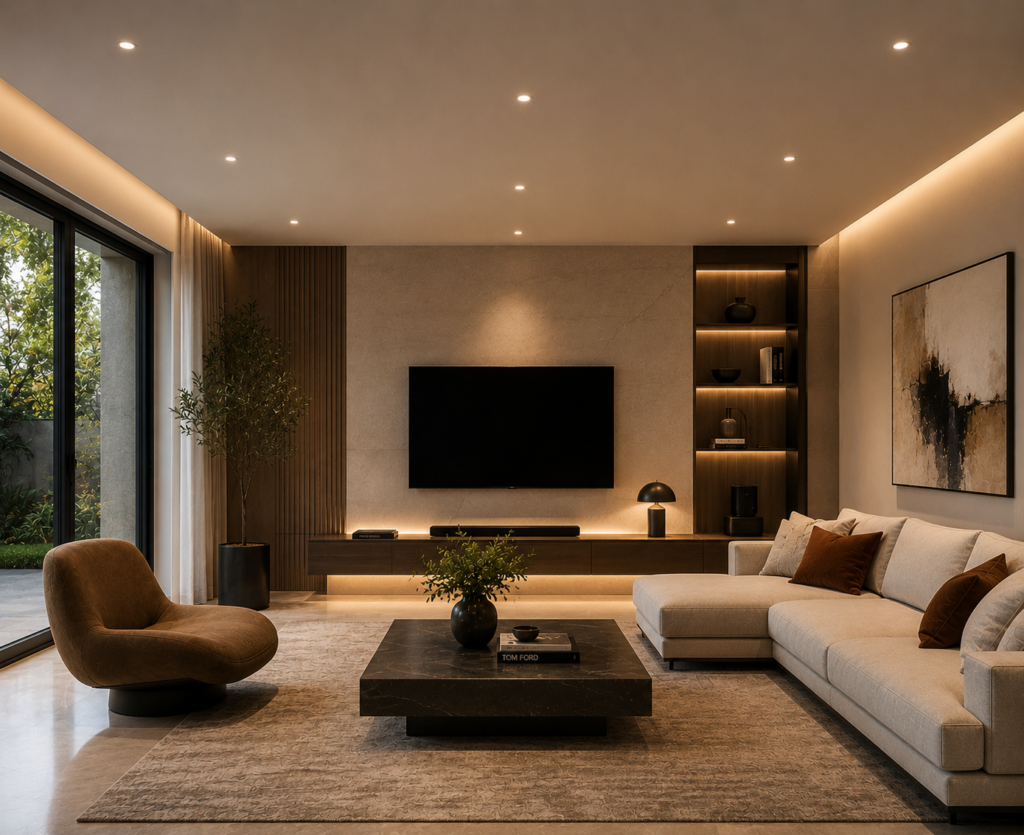
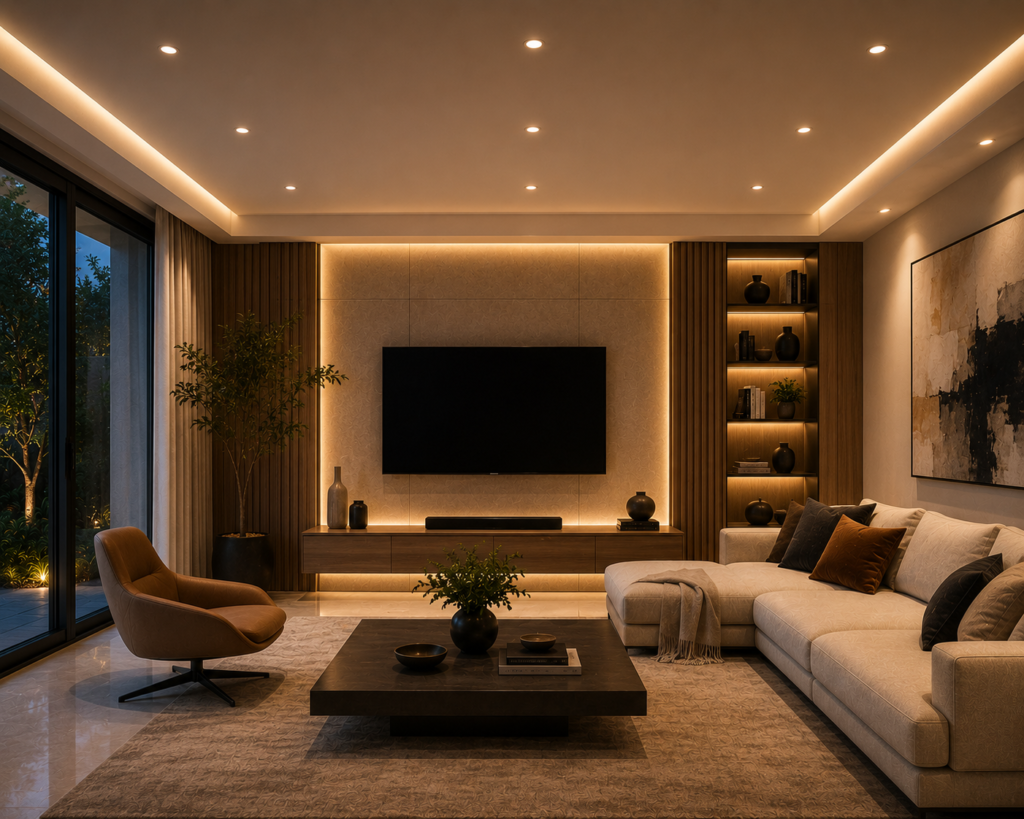
7. Smart Recessed Lighting Setup
Use smart recessed lighting.
Control brightness and color through an app or remote.
Some setups include motion sensors or schedules.
Watch also Warm Living Room Ideas
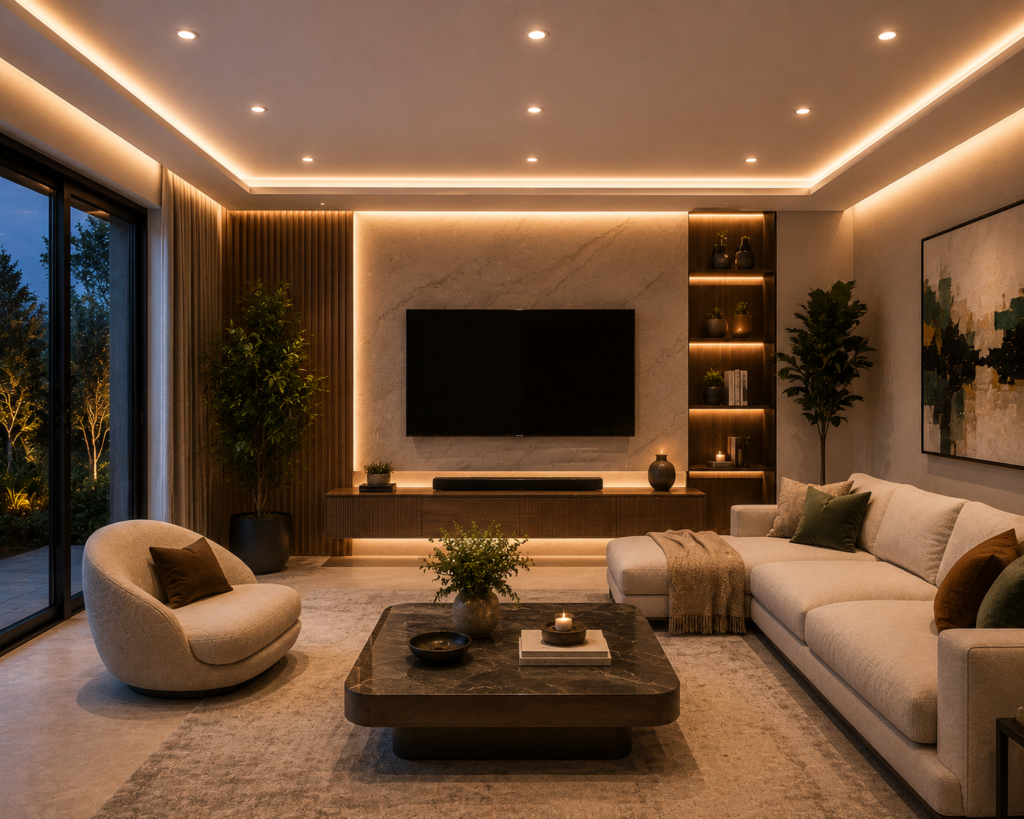
8. Zoned Lighting Layout
Split your recessed lighting layout into zones.
Seating area. TV area. Corners.
Use separate switches. Gives better control.
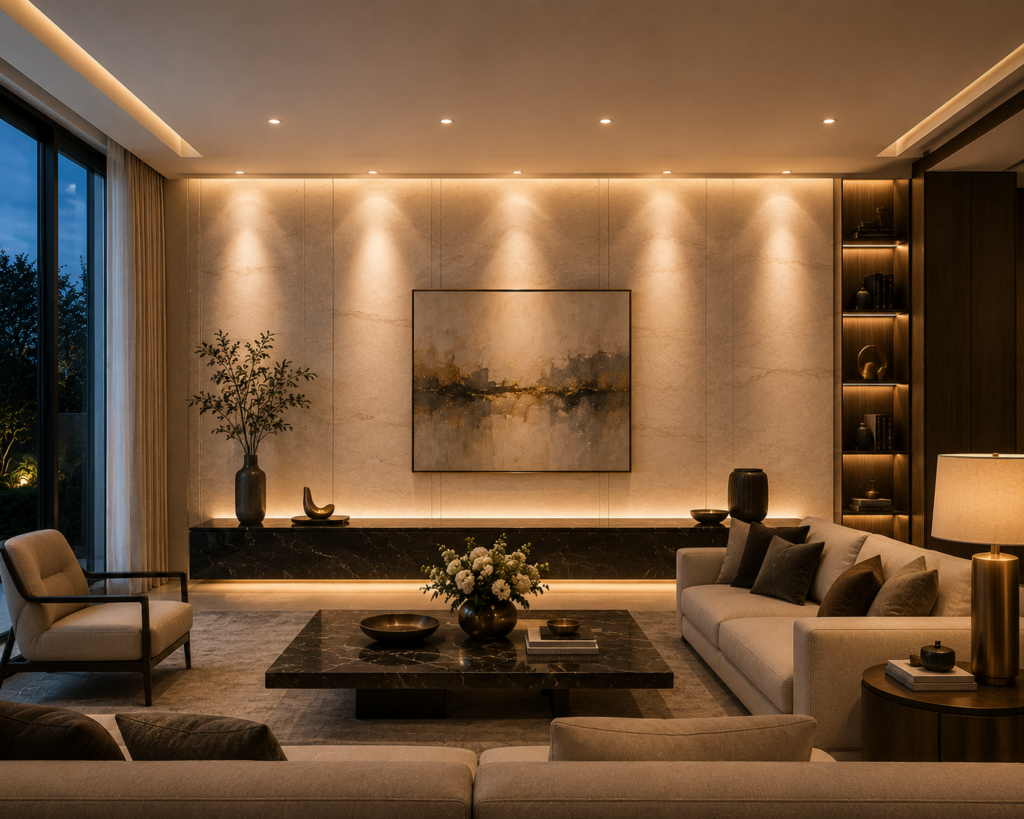
9. Wall Wash Lighting Effect
Place lights closer to walls.
Light spreads downward and across surfaces.
This highlights textures and paint finishes.
10. Smaller Fixtures for Low Ceilings
Use 4-inch recessed lighting.
Less glare. Better for compact rooms.
In low ceilings, large fixtures feel harsh.
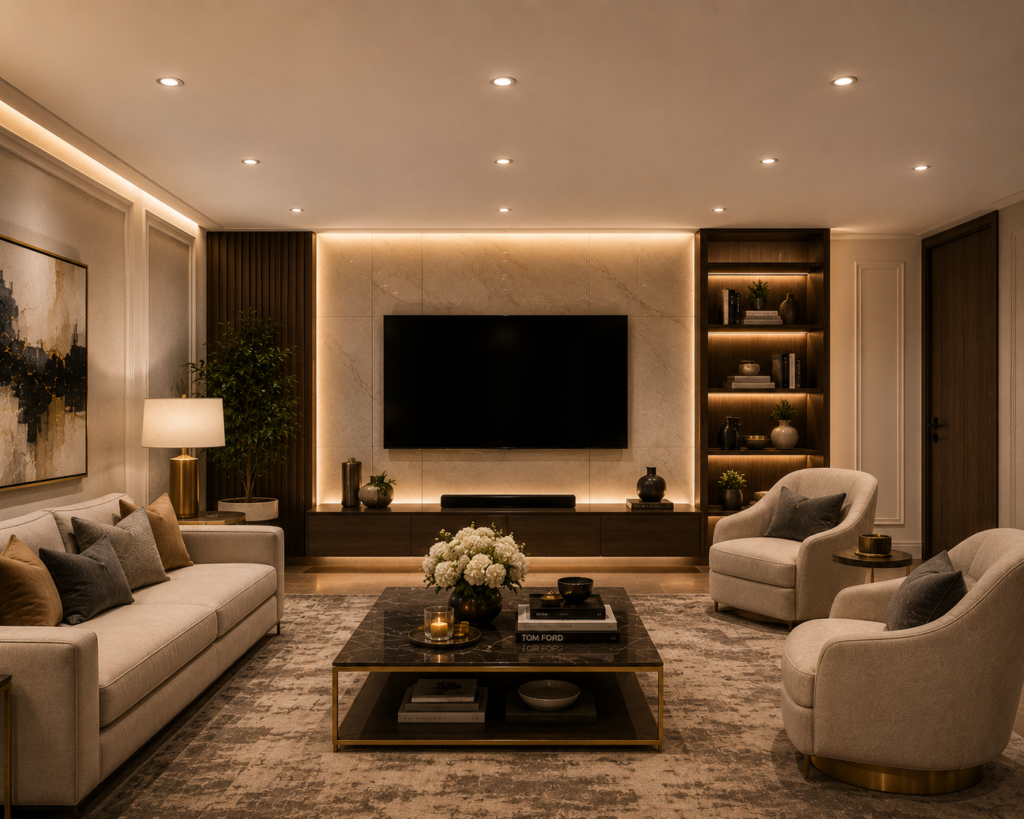
11. Mixed Sizes for Depth
Combine 4-inch and 6-inch recessed lighting.
This breaks uniformity. Adds visual interest.
Most living rooms look flat with the same-sized fixtures.
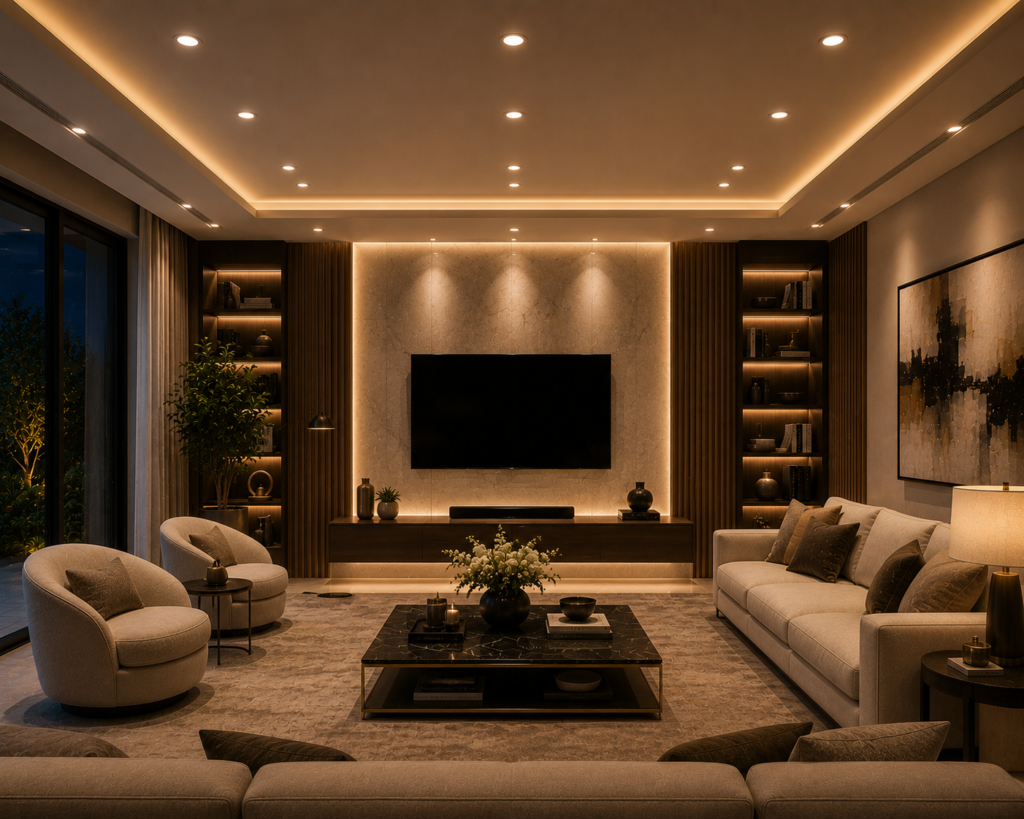
Types of Recessed Lighting You Should Know
Housing Types
- New construction housing
- Remodel housing
- Retrofit recessed lighting
If your ceiling is already built, retrofit options work best.
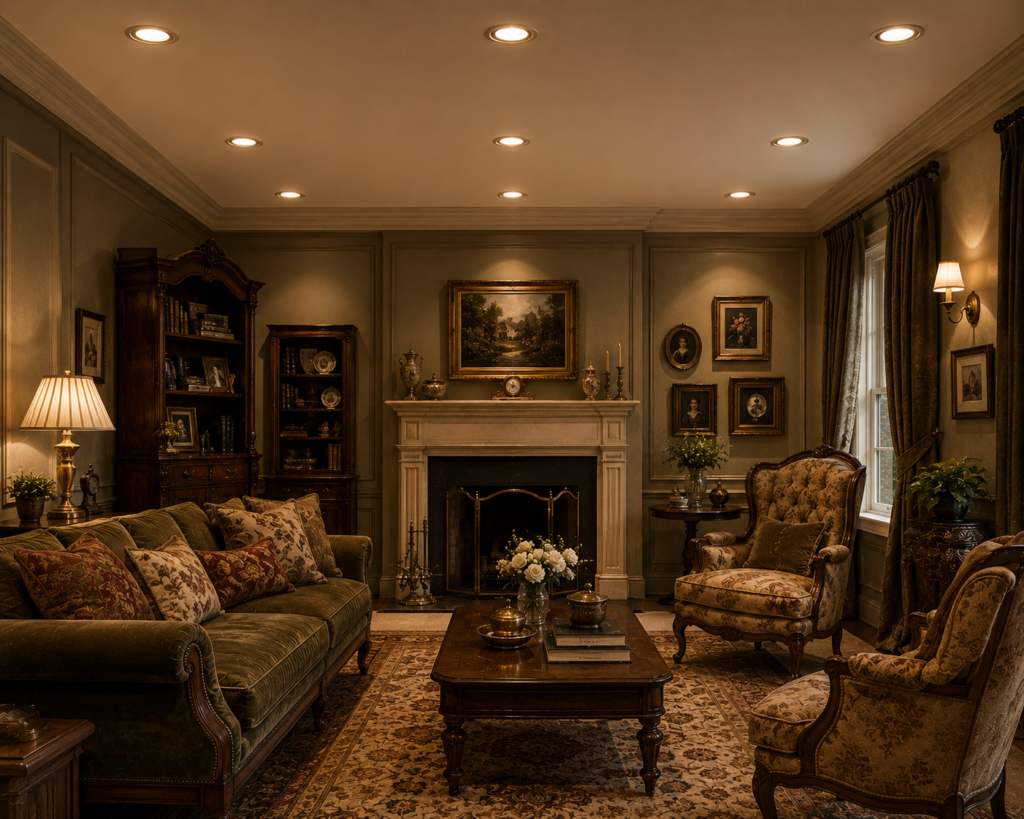
Trim Types
- Baffle trim reduces glare
- Reflector trim increases brightness
- Gimbal trim allows direction
- Eyeball trim focuses light
Each trim changes how light spreads.
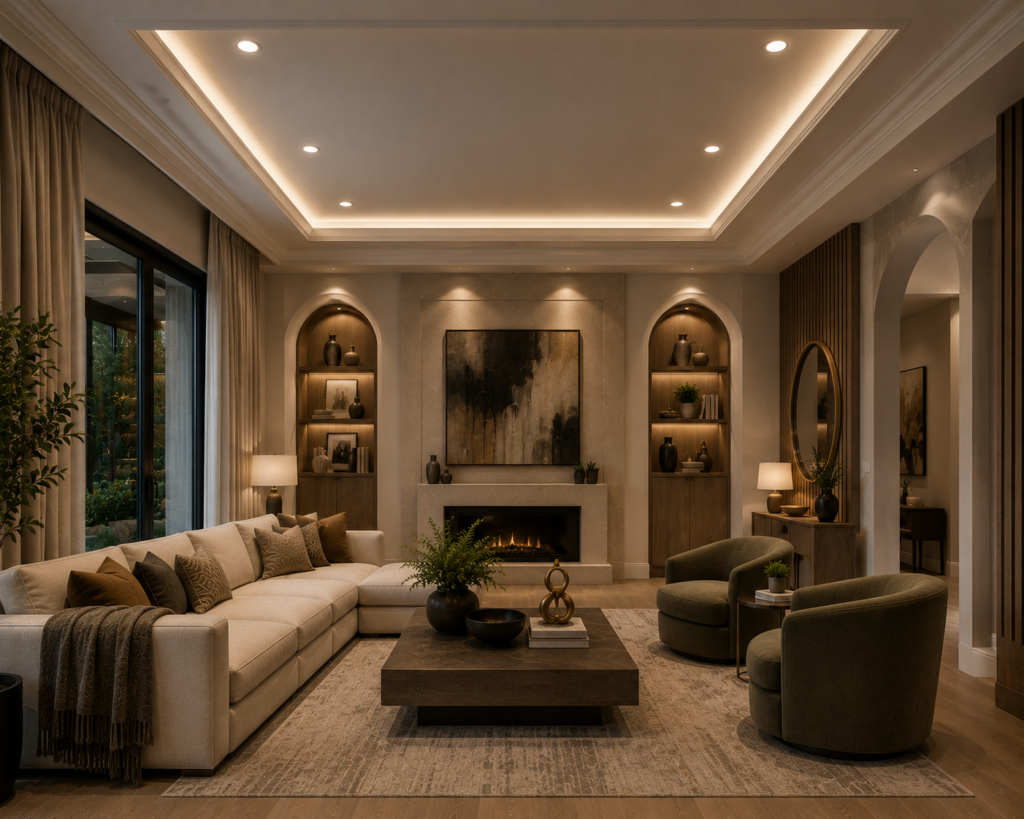
Bulb Types
LED recessed lighting is the standard.
Lower energy use. Longer lifespan.
Also supports dimmable recessed lighting setups.
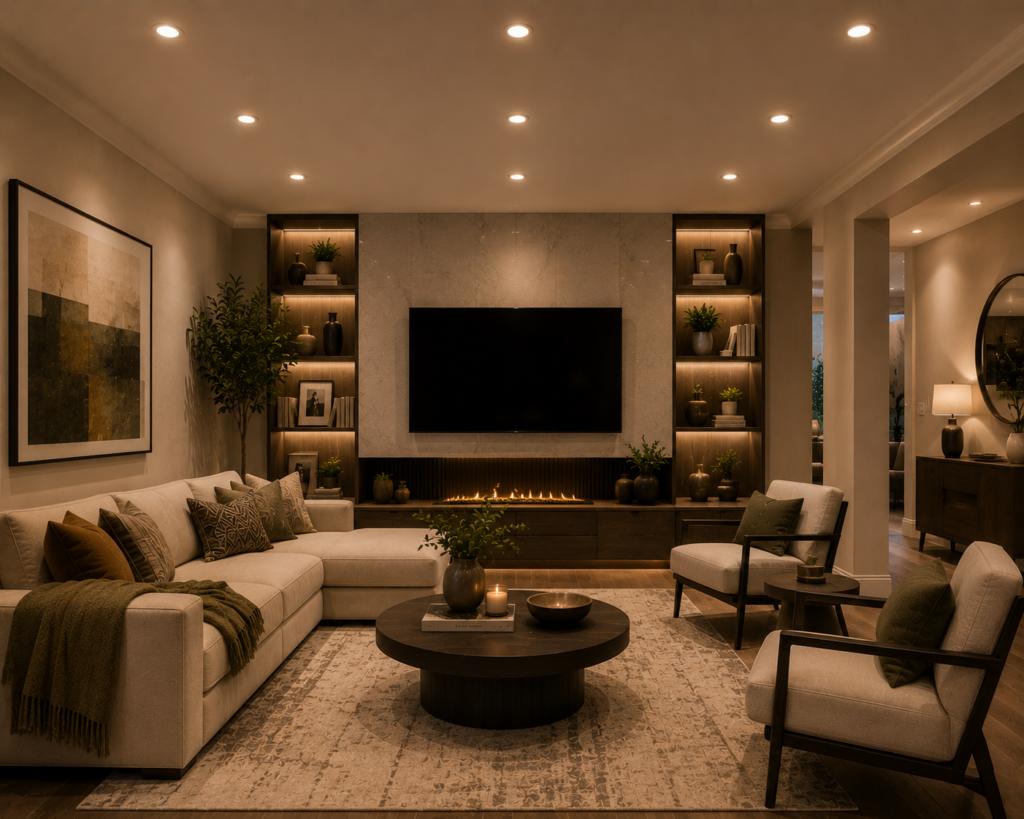
Sizes
- 4-inch recessed lighting
- 6-inch recessed lighting
- 3-inch recessed lighting
Smaller lights for detail. Larger for coverage.
How to Plan a Recessed Lighting Layout for a Living Room
Layout matters more than fixture type.
A poor recessed lighting layout creates shadows and uneven brightness.
Basic Spacing Rules
- Keep 4–6 feet between lights
- Place lights 2–3 feet from walls
- Avoid placing lights directly above seating
Use a recessed lighting layout calculator for accuracy.
Real Example (Average Living Room)
In a standard living room:
- 6 to 8 recessed lights work well
- Add perimeter lights for the edges
- Include dimmer switches
This setup avoids bright centers and dark sides.
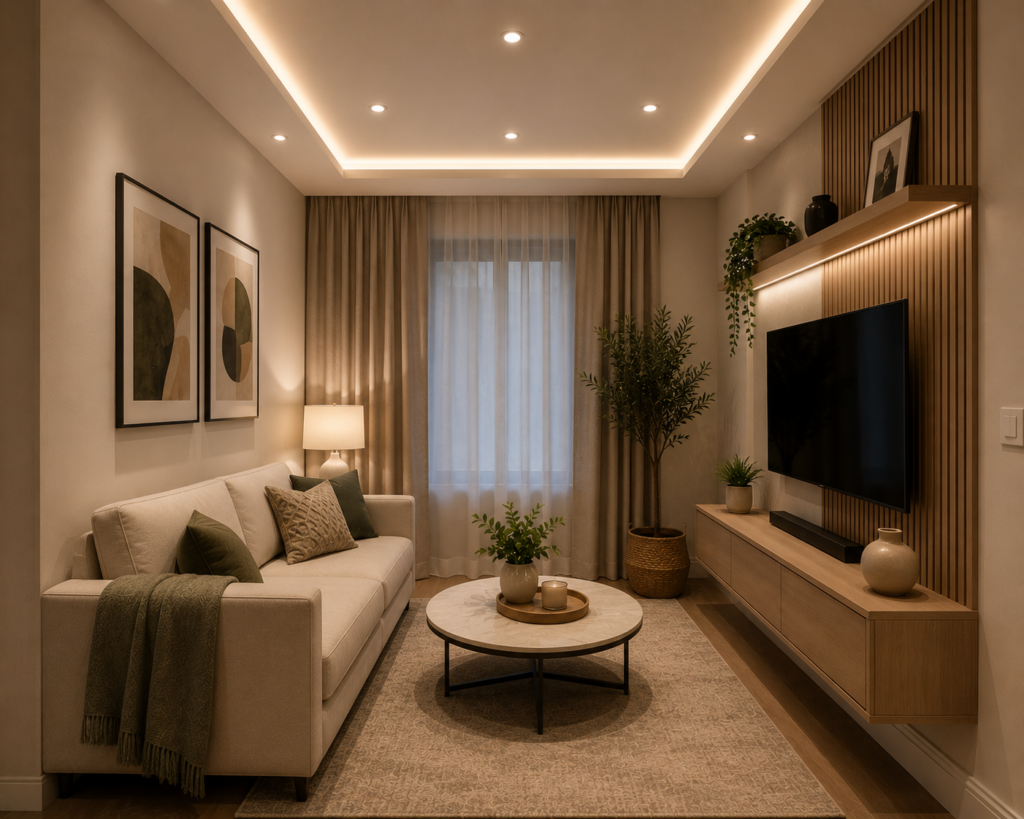
Small Living Room Strategy
Use fewer lights. Smaller sizes.
4-inch recessed lighting works better here.
Too many lights make the room feel harsh.
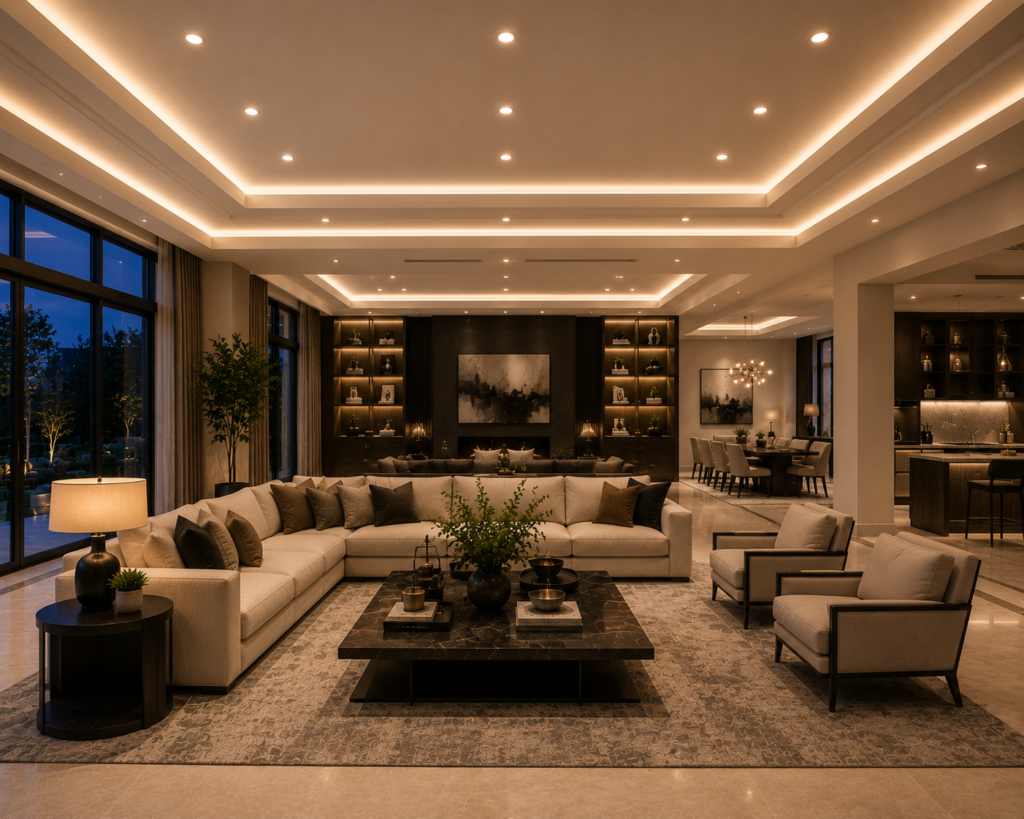
Large Living Room Strategy
Increase spacing carefully.
Use more fixtures, but keep the balance.
A recessed lighting calculator helps avoid gaps.
Recessed Lighting Placement Tips That Actually Work
- Light corners first
- Don’t cluster lights in the center
- Use zones instead of one switch
- Combine ambient and accent lighting
In many homes, I’ve seen people install lights without planning placement. Result? Uneven lighting and wasted cost.
Installation Basics
What You Need
- Recessed lighting kit
- Wiring tools
- Junction box
- Hole saw
Basic Steps
- Plan layout
- Cut ceiling holes
- Run wiring
- Install housing
- Attach trim and bulbs
If wiring feels complex, hire a recessed lighting electrician.
Recessed Lighting Cost Overview
Costs vary based on setup.
- Fixtures are affordable
- Installation costs more
- Smart recessed lighting costs more
Recessed lighting installation cost depends on wiring access and ceiling type.
Common Mistakes That Ruin Recessed Lighting
- Too many lights
- Poor spacing
- No dimmer switch
- Wrong color temperature
One common issue: placing lights too close together. It creates harsh brightness instead of balance.
Best Color Temperature for Living Room
- 2700K–3000K for a warm feel
- 3500K for neutral balance
Cool white feels too sharp for living rooms.
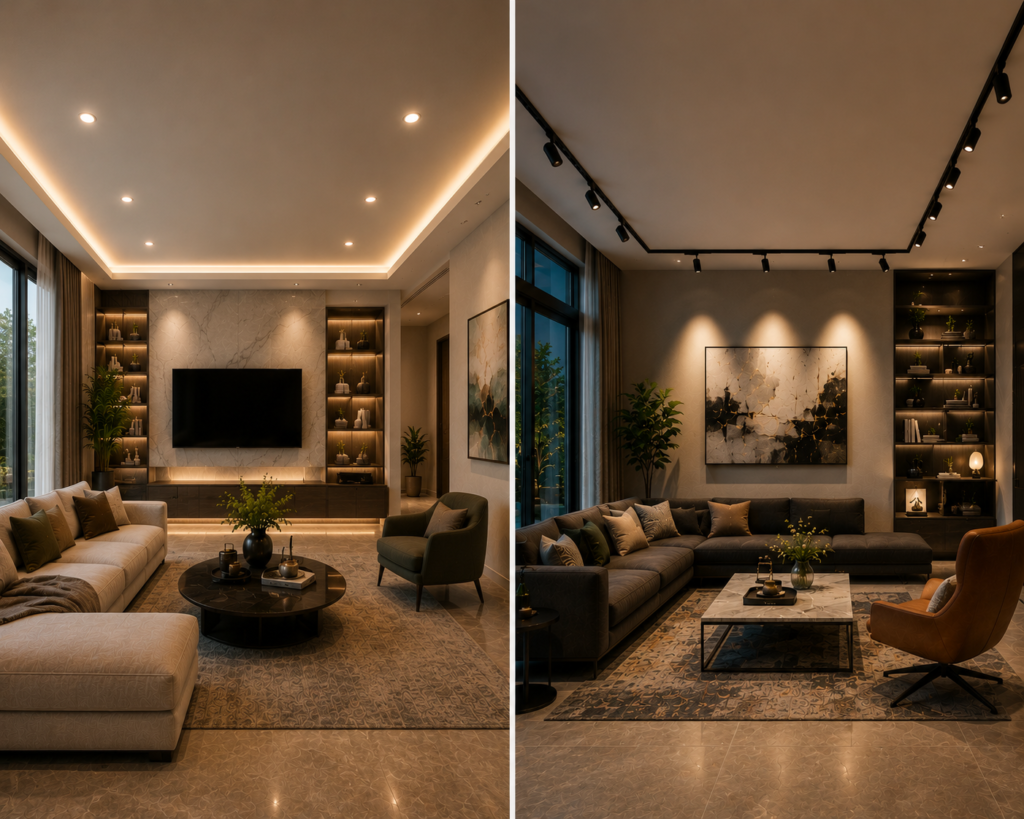
Recessed Lighting vs Other Options
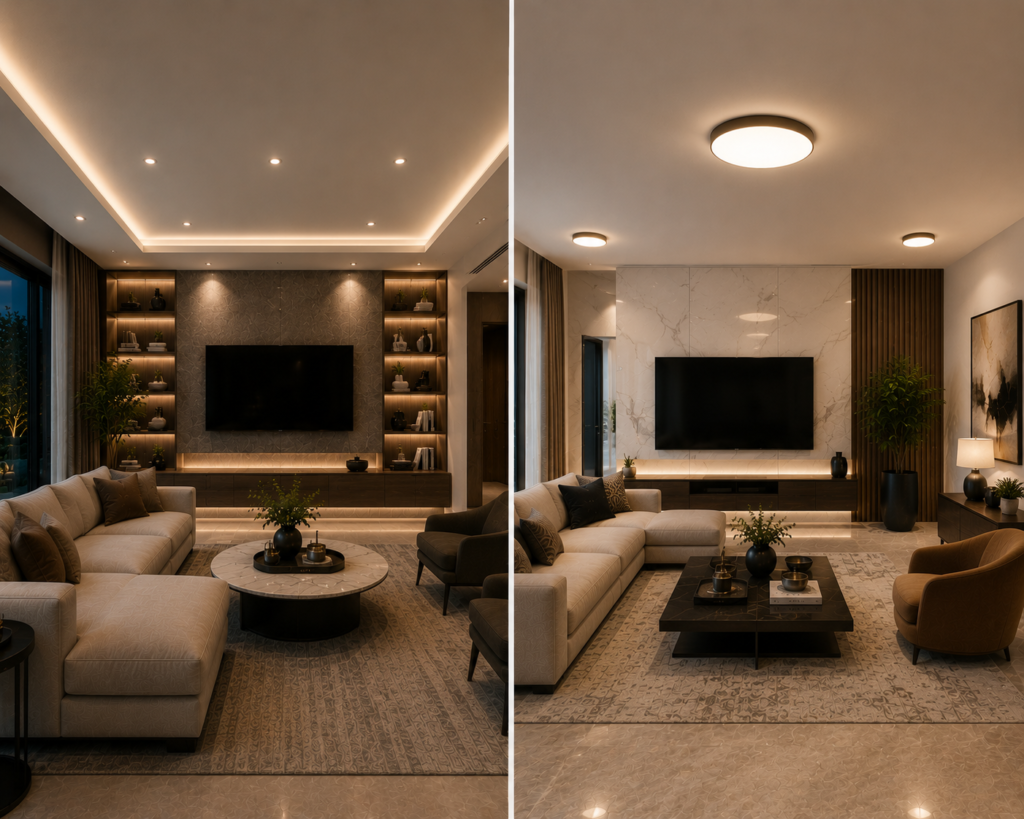
Recessed Lighting vs Flush Mount
Flush-mount fixtures are visible. Recessed lighting stays hidden.
Recessed Lighting vs Track Lighting
Track lighting is flexible. But it stands out visually.
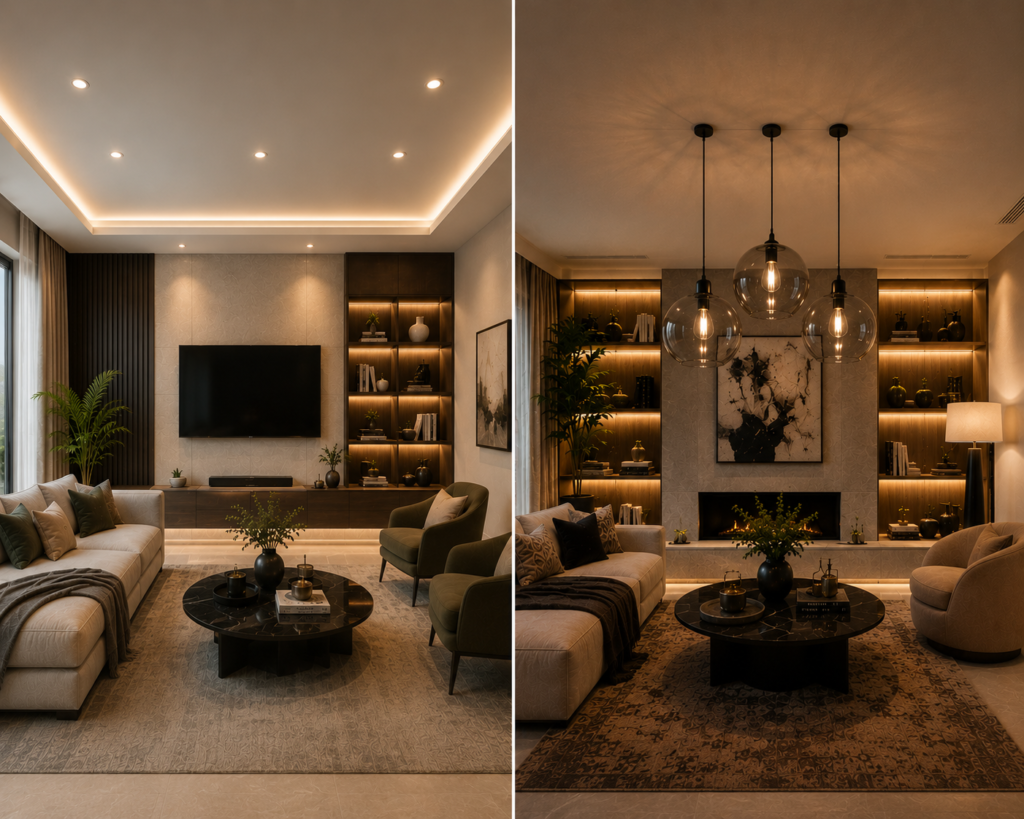
Recessed Lighting vs Pendant Lighting
Pendant lights add style. Not ideal for full-room lighting.
Best approach? Combine where needed.
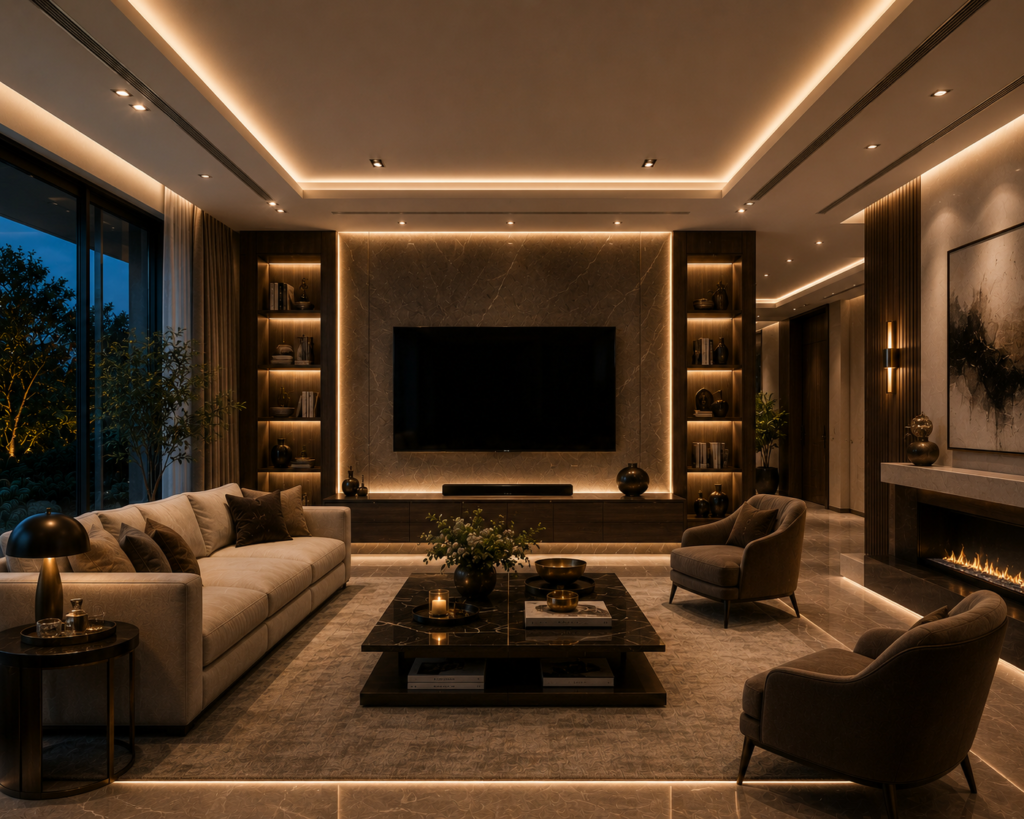
Advanced Recessed Lighting Ideas
- Use recessed lighting under cabinets
- Add lighting above shelves
- Try color-changing recessed lighting
- Use recessed lighting over seating zones
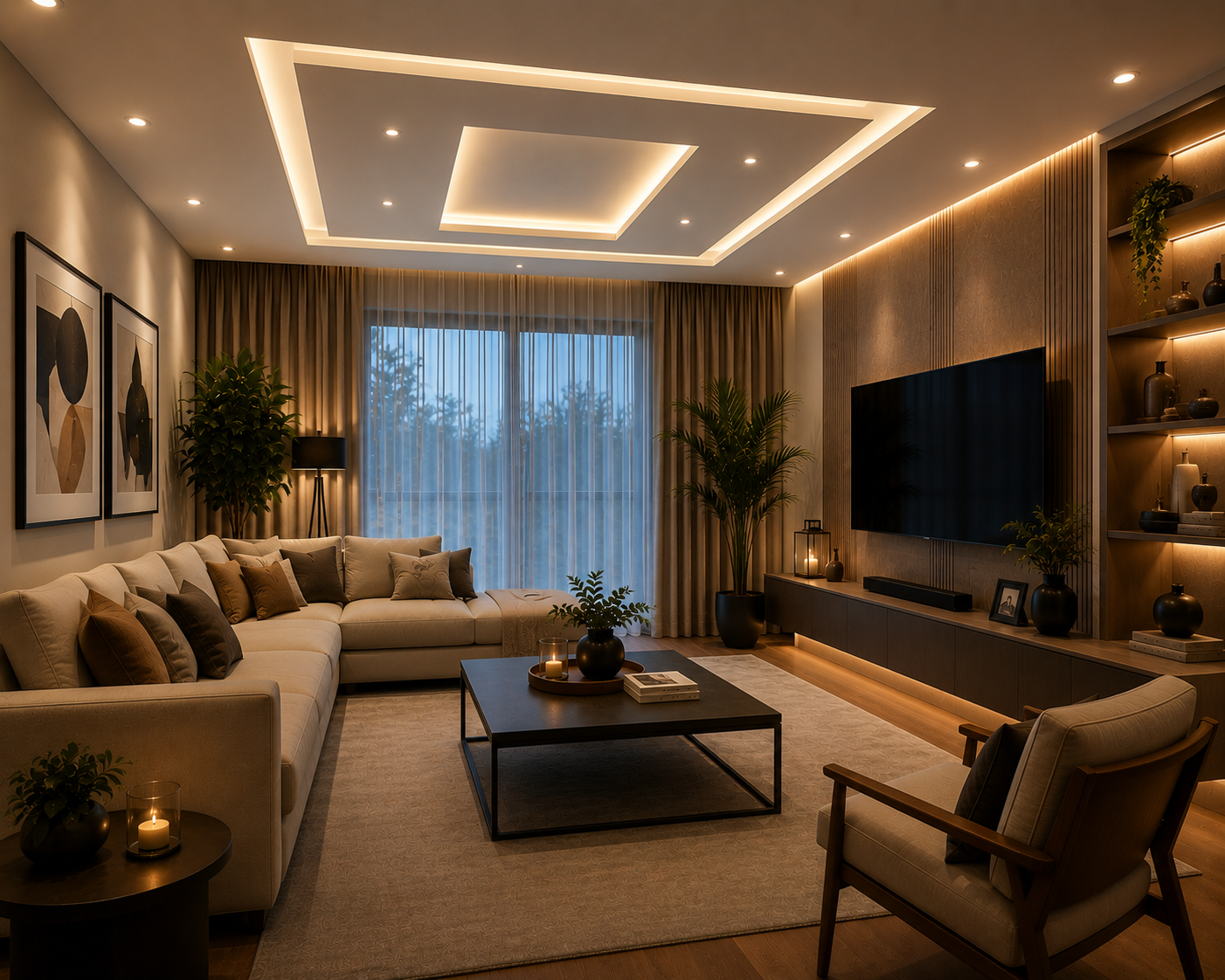
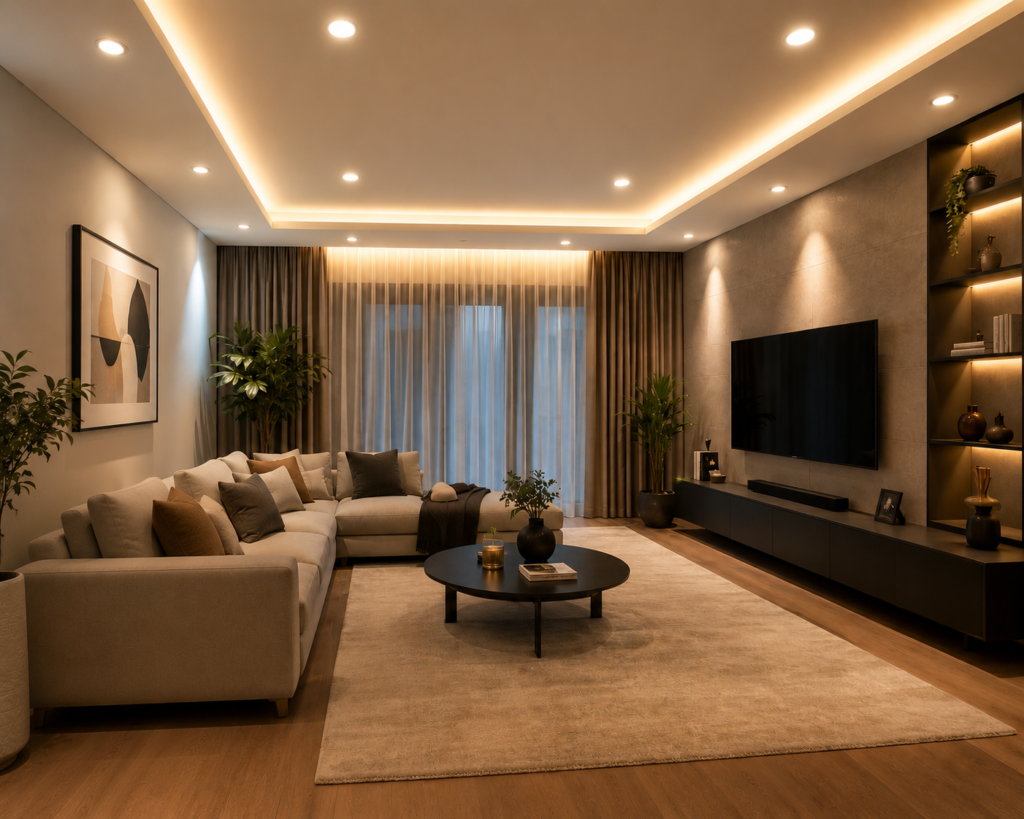
Picture a living room where soft perimeter light wraps the walls. No shadows. Just smooth brightness across the space.
FAQs
What is the best recessed lighting layout for a living room?
A balanced grid with perimeter lighting works best. Avoid center-heavy layouts.
How far from walls should recessed lights be?
Around 2 to 3 feet. This prevents shadow buildup.
Can recessed lighting be dimmable?
Yes. Most LED recessed lighting supports dimmers.
How do you avoid shadows with recessed lighting?
Use proper spacing. Add perimeter lights. Avoid placing lights only in the center.
What size recessed lighting is best?
4 inches for smaller spaces. 6 inches for wider coverage.
How many recessed lights do I need?
Depends on room size. Use a recessed lighting calculator for accurate planning.
Conclusion
Recessed lighting works when the layout is done right.
Spacing controls brightness. Placement controls mood.
Fix those two, and the living room feels completely different.
No clutter. No harsh light. Just clean, balanced lighting that fits the space.