Kitchen Layout Trends 2026: 7 Smart Layout Shifts Replacing Open-Plan Living
Open-plan kitchens had their moment. Walls came down. Spaces blended.
But the function started slipping. Noise carried. Clutter stayed visible. Working from home blurred boundaries.
Now the shift is clear.
Kitchen layout trends 2026 are moving toward smarter space planning, stronger zoning, and layouts built around real routines. Not just aesthetics. Not just resale photos. Daily use.
Designers across the U.S. are rethinking circulation paths, storage walls, and cabinetry configurations. Homeowners want kitchens that feel intentional again, and that shift is defining 2026 kitchen layouts in a big way.
If you’re renovating, building, or planning a remodel, understanding kitchen layout trends 2026 before choosing finishes will save money and frustration.
Which Kitchen Layout Is Right for You?
Every layout has a strength. Pick based on your space and how you cook.
| Layout | Best For | Min. Size Needed | Avg. Remodel Cost | Work Triangle? | Storage Rating |
|---|---|---|---|---|---|
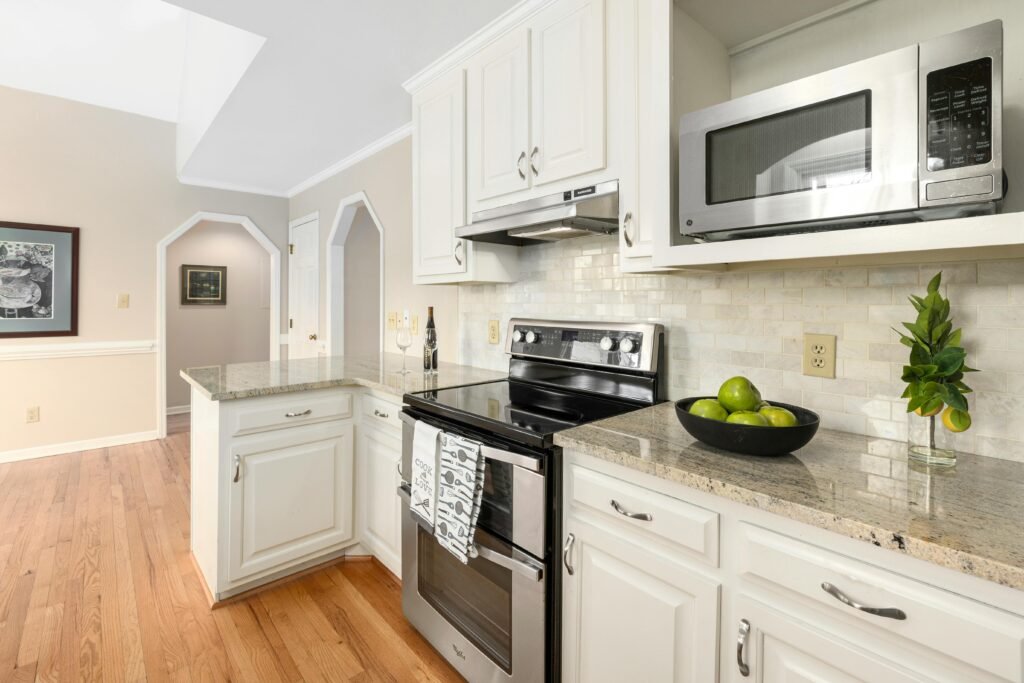
| L-Shape | Medium kitchens open to dining | 8×10 ft | $8,000–$18,000 | Yes | ★★★★☆ |
| U-Shape | Serious cooks needing max counter | 10×10 ft | $12,000–$25,000 | Yes (tight) | ★★★★★ |
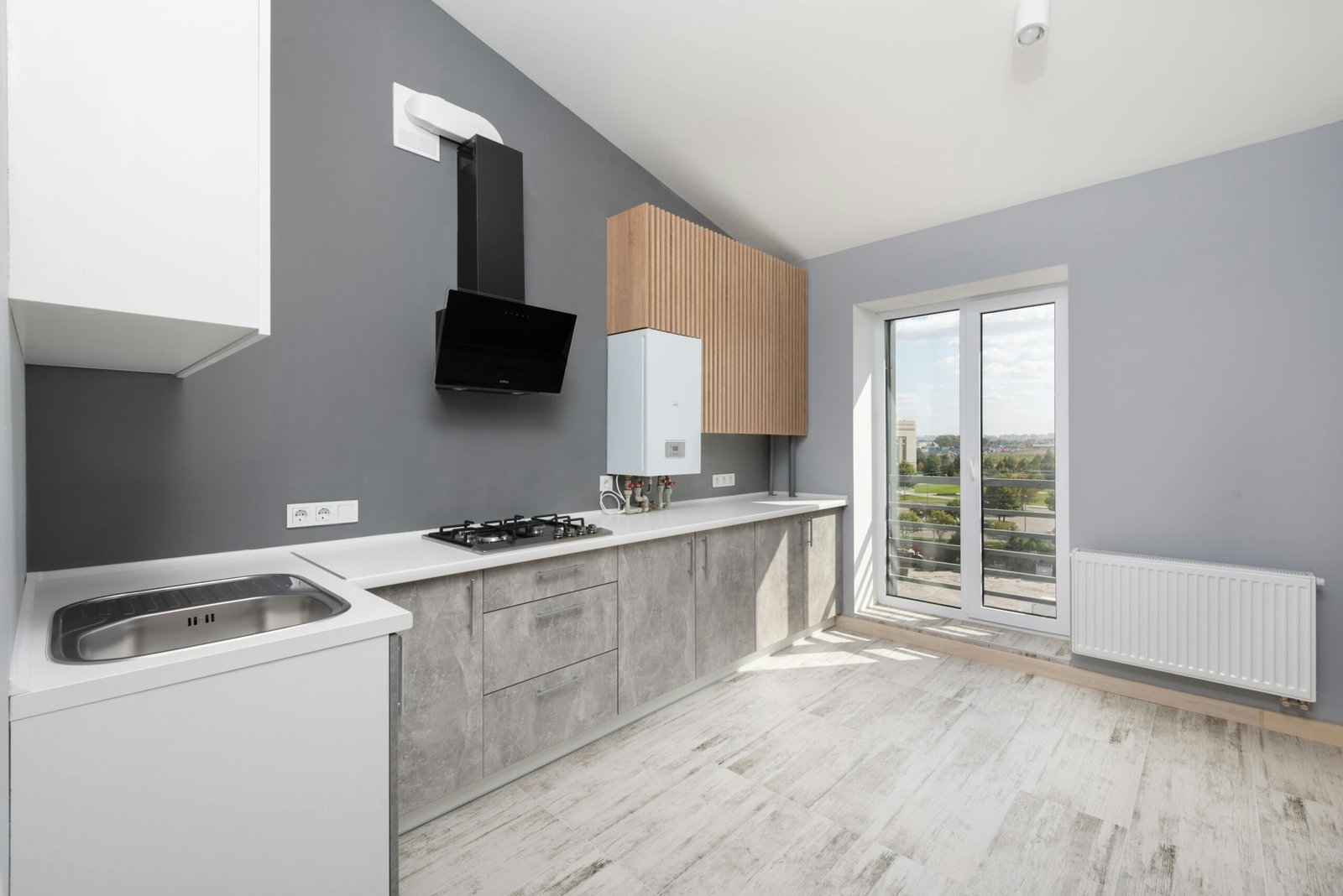
| Galley | Narrow spaces and rental units | 7×8 ft | $5,000–$15,000 | Yes (linear) | ★★★☆☆ |
| Island Layout | Open-plan homes with traffic flow | 12×12 ft | $15,000–$35,000 | Flexible | ★★★★★ |
| One-Wall | Studio apartments and tiny homes | 6×8 ft | $3,000–$10,000 | No | ★★☆☆☆ |
| G-Shape | Large families needing extra prep | 12×12 ft | $18,000–$40,000 | Yes (double) | ★★★★★ |
The Trending Kitchen Layouts for 2026
The defining theme in kitchen layout trends 2026 is structure. Clear zones. Better workflow. Dedicated functions.
This year, kitchen layout trends 2026 focus less on tearing walls down and more on designing kitchens that support everyday movement.
This doesn’t mean smaller kitchens. It means the smarter ones.
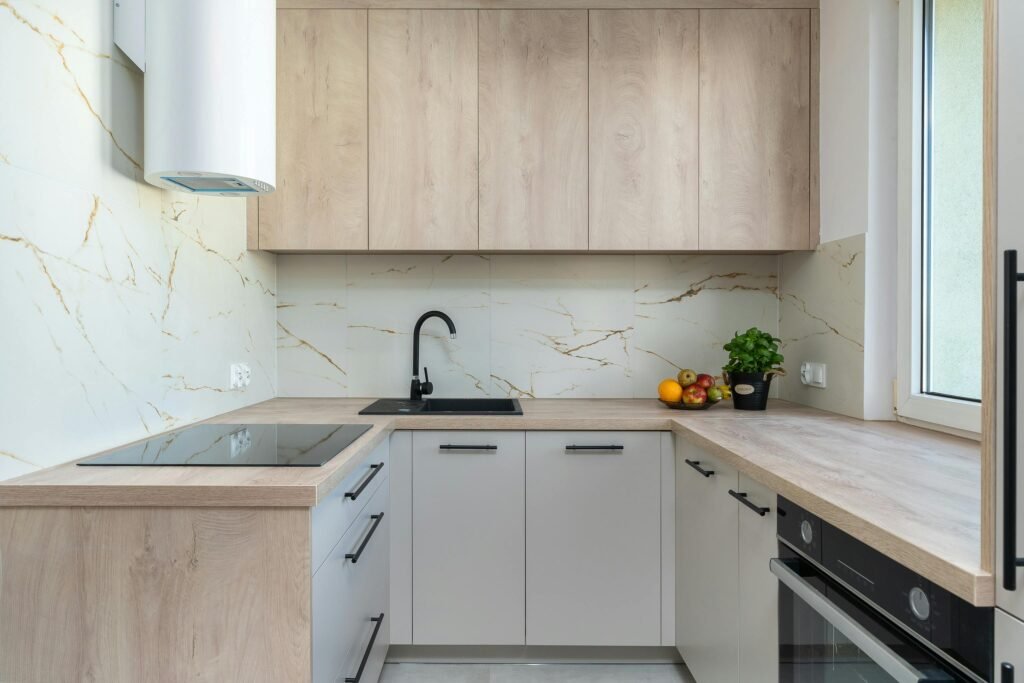
1. The Return of Closed Concept Kitchens
The open plan isn’t gone. But closed kitchens are rising fast.
Designers report that homeowners want control again, especially in busy family homes. Cooking smells, dish noise, and visual mess are real issues.
Modern closed concept kitchens don’t feel boxed in. They use:
- Steel-framed glass doors
- Arched openings
- Pocket sliders
- Fluted glass partitions
- Partial walls with built-in storage
In L-shaped or U-shaped kitchen layouts, closing the space actually improves workflow. The classic work triangle of sink, refrigerator, and cooktop becomes tighter and more efficient.
Closed layouts also support better cabinetry planning. Full-height pantry walls. Appliance garages. Seamless quartz countertops without interruption.
This return to enclosed kitchens is one of the strongest signals within kitchen layout trends 2026.
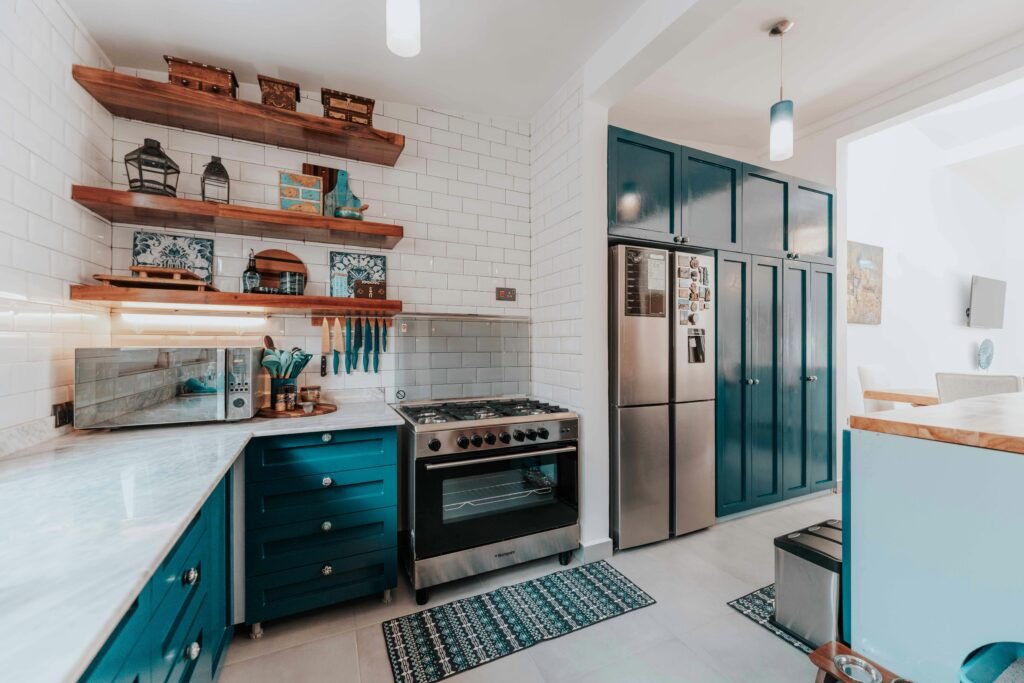
See More on Small Kitchen Decor Ideas
2. Incorporating Cozy Dining Nooks
Formal dining rooms are fading. Built-in dining zones are taking over.
Banquette seating is showing up in galley kitchens, L-shaped layouts, and corner extensions. Instead of placing a table in the center, designers anchor dining into the architecture.
Common features include:
- Upholstered bench seating
- Oak tables
- Wall sconces
- Storage drawers beneath benches
- Rounded table edges
In small kitchen layout ideas, a dining nook can replace bulky furniture and open up circulation paths.
For larger homes, nooks soften expansive layouts and prevent the kitchen island from becoming the only gathering space.
Comfort-driven spaces like this are reshaping kitchen layout trends 2026 toward warmth instead of formality.
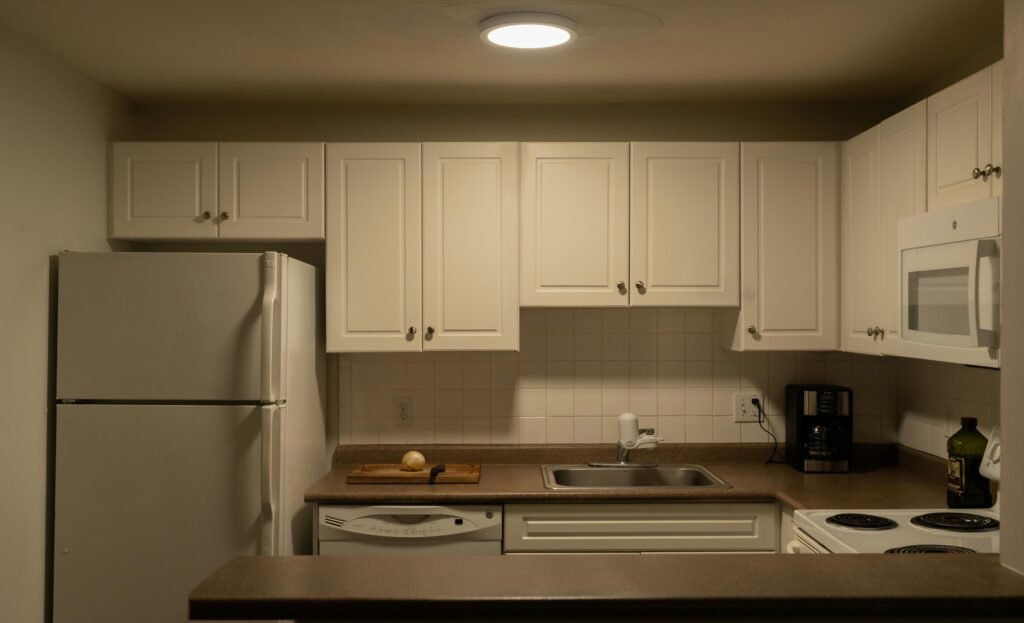
Kitchen Layout Dimensions: What You Actually Need
Guessing on space kills the design. These are the numbers designers work from.
Minimum clearance between counters: 42 inches for one cook. 48 inches for two.
Island sizing:
- Minimum length: 4 feet
- Comfortable length: 6–8 feet
- Two Cook Islands: 9–10 feet
- Seating overhang needed: 12 inches (stool) to 15 inches (chair height)
Standard counter depth: 24 inches. Wall ovens need 24–27 inches of depth.
Upper cabinet height: 18 inches above the counter for standard reach. Drop to 15 inches above a cooktop.
Work triangle rule: The total distance between the sink, cooktop, and fridge should sit between 12 and 26 feet total. Under 12 feels cramped. Over 26 means too much walking.
Doorway clearance: 32 inches minimum. 36 inches if you want wheelchair or appliance access.
L-shape minimum footprint: 8×10 ft. Any smaller and storage suffers.
U-Shape minimum footprint: 10×10 ft. You need at least 5 feet between the two parallel runs.
Galley minimum width: 7 feet total. That gives you two 24-inch counters plus a 30-inch walkway.
Plan these numbers before you touch a single cabinet door or tile sample.
3. Kitchen Layouts That Include a Butler’s Pantry
The butler’s pantry is becoming standard in new builds and major renovations.
Even compact homes are carving out the following:
- Slim walk-through pantries
- Hidden prep kitchens
- Appliance storage corridors
- Secondary sink zones
A kitchen with a butler’s pantry layout improves organization dramatically. Small appliances move off the main countertops. Coffee stations live behind pocket doors. Food prep happens out of sight.
Designers recommend at least 36 inches of walkway clearance in pantry corridors to maintain flow.
Materials often mirror the main kitchen shaker cabinetry, quartz countertops, and wood tones, but in simplified form.
Among all kitchen layout trends 2026, this one directly addresses clutter control, and clutter control is a major priority in kitchen layout trends 2026 planning discussions.
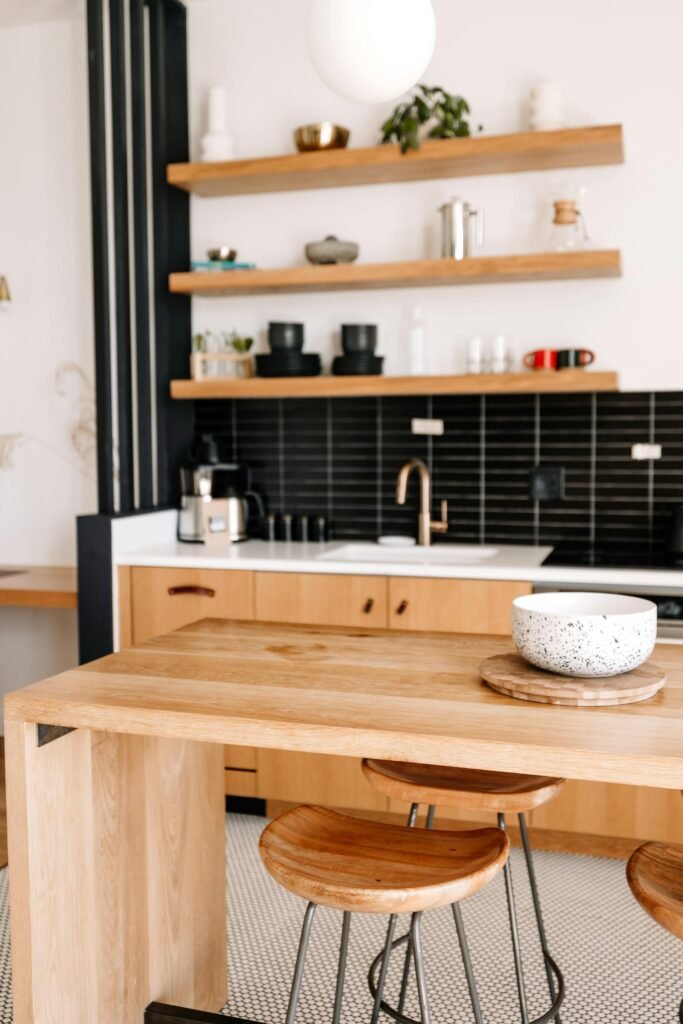
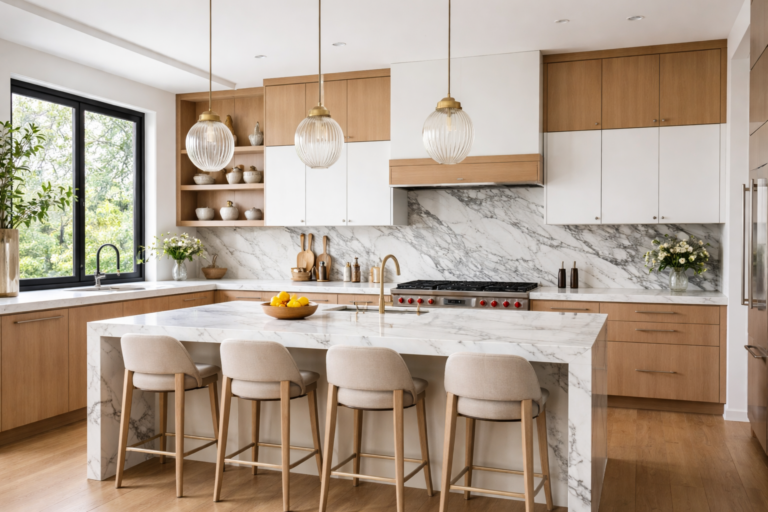
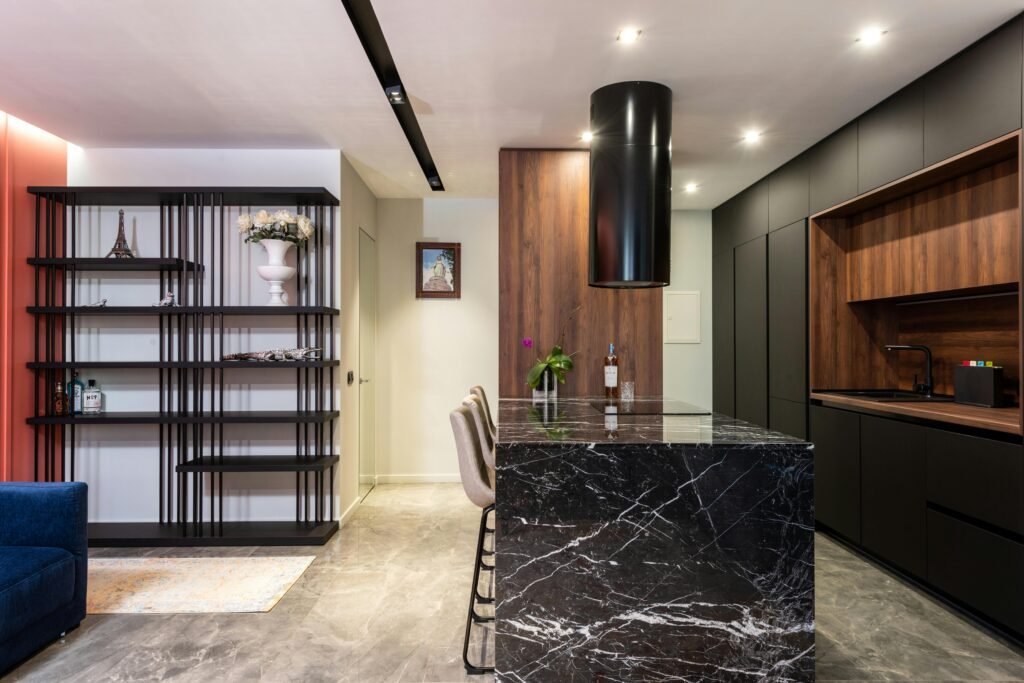
4. Kitchen Island Layouts That Do the Heavy Lifting
The island has evolved.
In kitchen layout design this year, the island acts as a command center.
It often includes:
- Induction cooktop
- Integrated sink
- Deep storage drawers
- Built-in recycling
- Charging outlets
- Seating for four or more
Double islands are appearing in large homes, one for prep and one for socializing.
In mid-sized kitchens, designers are extending islands into 9- to 10 foot lengths to increase functionality.
Clearance recommendations:
- 42 inches minimum around the island (48 preferred for multi-user kitchens)
In galley kitchen layout upgrades, removing upper cabinets and adding a narrow island can dramatically improve storage and flow.
Functional islands remain central to kitchen layout trends 2026 because they anchor both workflow and gathering space.
5. The Working Triangle Still Matters
The work triangle hasn’t disappeared.
It has adapted.
Today, designers sometimes create multiple mini-triangles, especially in homes with two cooks.
For example:
- Main triangle: sink, cooktop, refrigerator
- Prep triangle: sink, prep counter, pantry
- Beverage triangle: fridge drawer, coffee machine, sink
In U-shaped kitchen layouts, triangles remain tight and efficient. In open-plan kitchens, zoning supports triangle logic without feeling restrictive.
Workflow efficiency continues to anchor kitchen layout trends 2026 because no matter how design evolves, movement always matters.
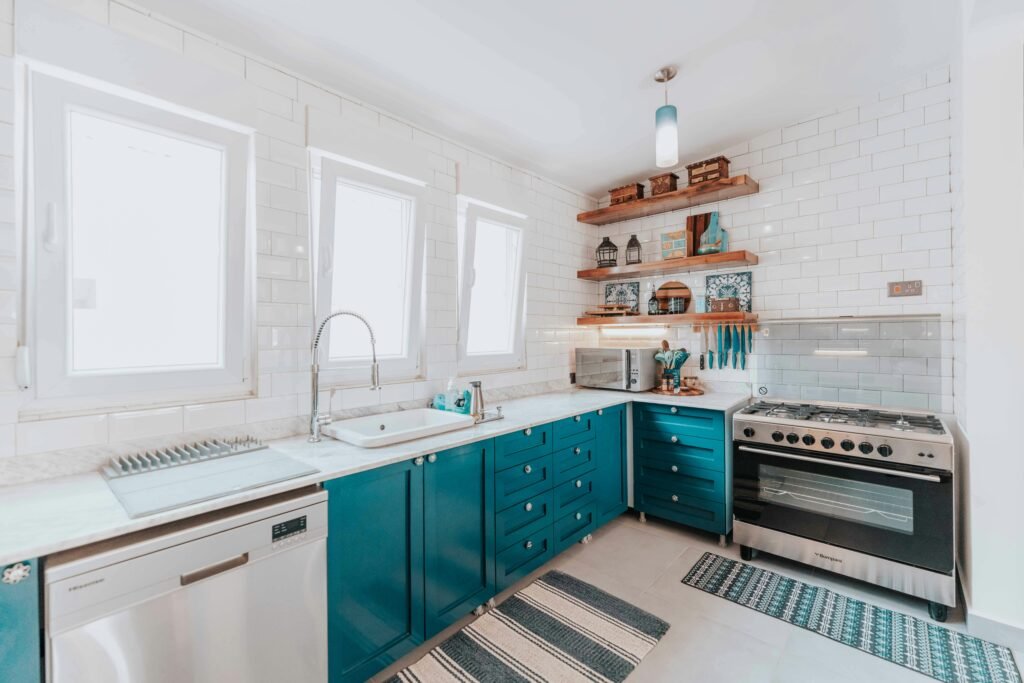
6. Clever Zoning in Open-Plan Kitchens
Open-plan kitchens still work if they’re zoned.
Designers use architectural elements to define space without closing it:
- Ceiling beams
- Tray ceilings
- Wood slat dividers
- Flooring transitions
- Pendant lighting clusters
- Half walls with storage
This approach keeps sightlines open while controlling movement.
For example:
- Hardwood flooring in the dining zone
- Large-format tile in the cooking zone
- Statement lighting above the island
These subtle shifts define boundaries.
This zoning strategy is one of the most practical evolutions in kitchen layout trends 2026, especially for homeowners who still prefer open connections.
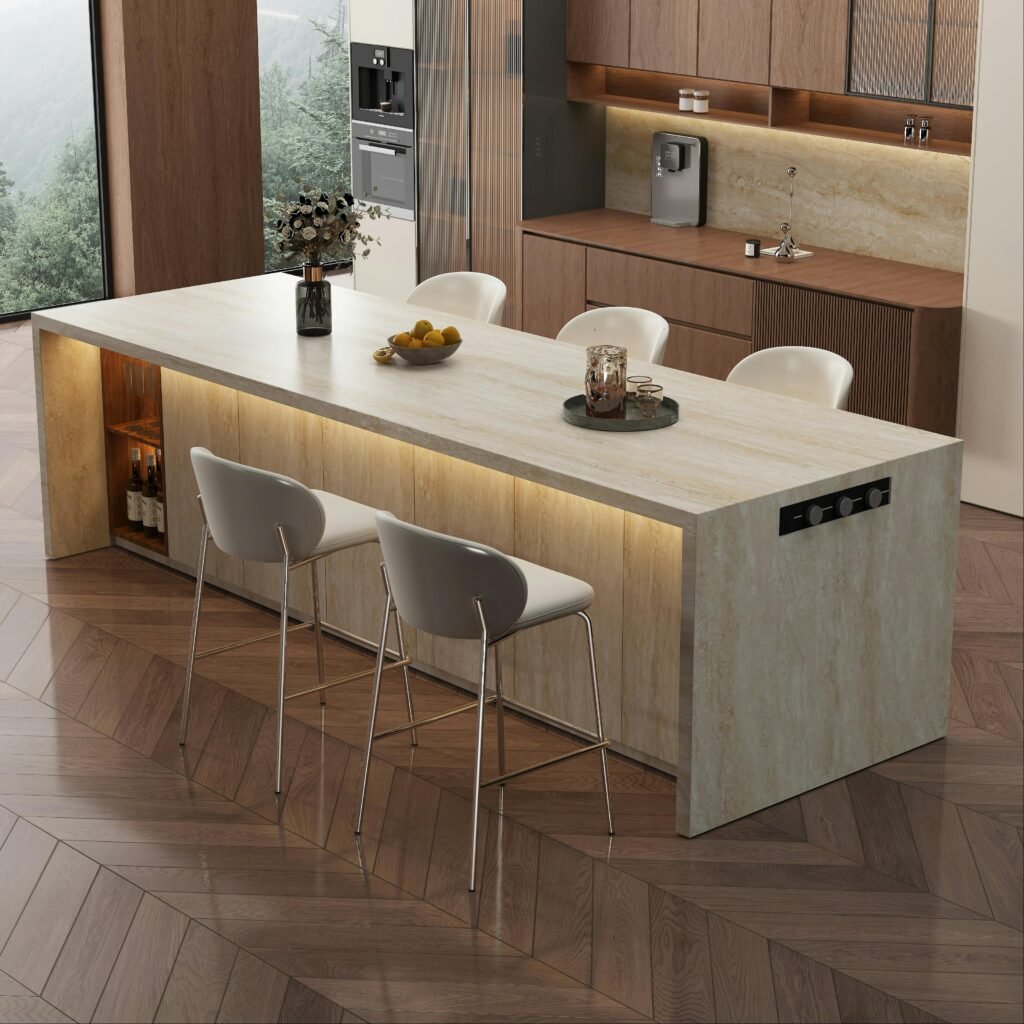
7. Layouts Centered Around Dedicated Stations
Single-surface kitchens are fading.
Dedicated stations improve flow and reduce congestion.
Common stations include:
- Coffee bar with appliance garage
- Baking station with marble slab counter
- Beverage center with undercounter fridge
- Smoothie corner with pull-out bins
- Breakfast prep zone near pantry
These stations work well in L-shaped kitchen layouts and larger U-shaped kitchens.
Storage planning is critical. Vertical cabinetry, drawer organizers, and hidden compartments prevent clutter from spreading.
Station-based design reflects how families use kitchens today, and it continues gaining traction across kitchen layout trends 2026 nationwide.
See more Kitchen Design Ideas
Before You Redesign: A Simple Planning Framework
Most kitchen remodels go wrong before a single cabinet ships.
Here is how to plan it right.
Step 1: Map how you actually move.
Stand in your kitchen for one full meal prep. Notice where you walk, where you pivot, and where you hit a bottleneck. That path is your real workflow. Design around it.
Step 2: Identify your three biggest frustrations.
Not enough counter space? No landing zone near the stove? Fridge blocks traffic? List the three things that annoy you daily. Fix those first. Everything else is a bonus.
Step 3: Lock plumbing before you lock anything else.
Moving a sink or dishwasher adds $1,000–$3,000 minimum per fixture. If you can keep plumbing in place and still get a better layout, do it. Save that budget for cabinetry or countertops.
Step 4: Decide: open or closed before the choice is finished.
Backsplash color doesn’t matter if the layout still creates noise bleed into the living room. Layout decision first. Finish decisions second. Always.
Step 5: Test clearances on paper.
Print a floor plan. Cut out scaled furniture pieces. Move them around. A 42-inch walkway looks fine on screen. It feels tight in real life with two people cooking. Test it before you build it.
Most people skip Steps 1 through 3 and spend weeks on Step 5. That’s why so many renovated kitchens still feel wrong.
Frequently Asked Questions
Q1. What is the most popular kitchen layout in 2026?
The L-shape and island combination leads in 2026. It balances workflow and social space without requiring a massive footprint. Closed-concept and butler’s pantry add-ons are rising fast in new builds.
Q2. What kitchen layout works best for small spaces?
Galley layouts work best in tight spaces. They keep everything within arm’s reach and create a natural linear workflow. For slightly larger small kitchens, an L-shape with a rolling island gives more flexibility.
Q3. How much does a kitchen layout change cost?
A cosmetic update with no plumbing moves runs $5,000–$15,000. A mid-level remodel with new cabinets and countertops runs $15,000–$30,000. A full gut renovation with layout changes and new plumbing can reach $40,000–$80,000, depending on finishes and location.
Q4. Is an open-plan kitchen still a good idea in 2026?
Yes, but only if zoned properly. Unstructured open-plan kitchens are fading. Zoned open-plan layouts with ceiling transitions, flooring changes, and island anchors still work well and remain popular.
Q4. What is a butler’s pantry, and do I need one?
A butler’s pantry is a secondary prep and storage room connected to the main kitchen. It keeps appliances, clutter, and prep work out of the main cooking area. You don’t need one, but if your kitchen lacks counter space or storage, it adds serious function without a full renovation.
Q6. What clearance do I need around a kitchen island?
At a minimum of 42 inches on all sides. If two people cook regularly, aim for 48 inches. Less than 42 inches creates traffic jams every time someone opens a drawer.
Final Thoughts
The shift away from a fully open plan is practical.
People want kitchens that function without feeling exposed.
Kitchen layout trends 2026 clearly show a move toward structure, smarter storage, and intentional zoning. And as kitchen layout trends 2026 continue evolving, layout-first thinking will separate timeless kitchens from short-term trends.
Before choosing backsplash tile or cabinet color, review the layout.
Because finishes change. Layout doesn’t.
If you’re planning a remodel, start with flow. Map your routine. Identify clutter zones. Then design around how you actually cook, gather, and live.
That’s what makes kitchen layout trends 2026 worth paying attention to.