Modern Bathroom Ideas: 21 Designs That Make Any Home Look More Expensive
Modern bathroom ideas have come a long way from plain white walls and a standard vanity. Yet most people still settle for exactly that.
Here’s the real problem: bathrooms are the most-used rooms in your home. They set the tone for your morning and your night. A poorly designed bathroom quietly drains your mood every single day.
The good news? You don’t need a full renovation to change that.
This guide covers 21 proven modern bathroom ideas that work across every budget. Whether you have $200 or $20,000, there is a design move here that will make your bathroom feel completely different. Each tip includes cost estimates, product suggestions, and practical steps so you can actually use this guide, not just read it.
1. Choose a Floating Vanity Instead of a Traditional Cabinet
Best for: Small to medium bathrooms · Cost range: $400–$2,500
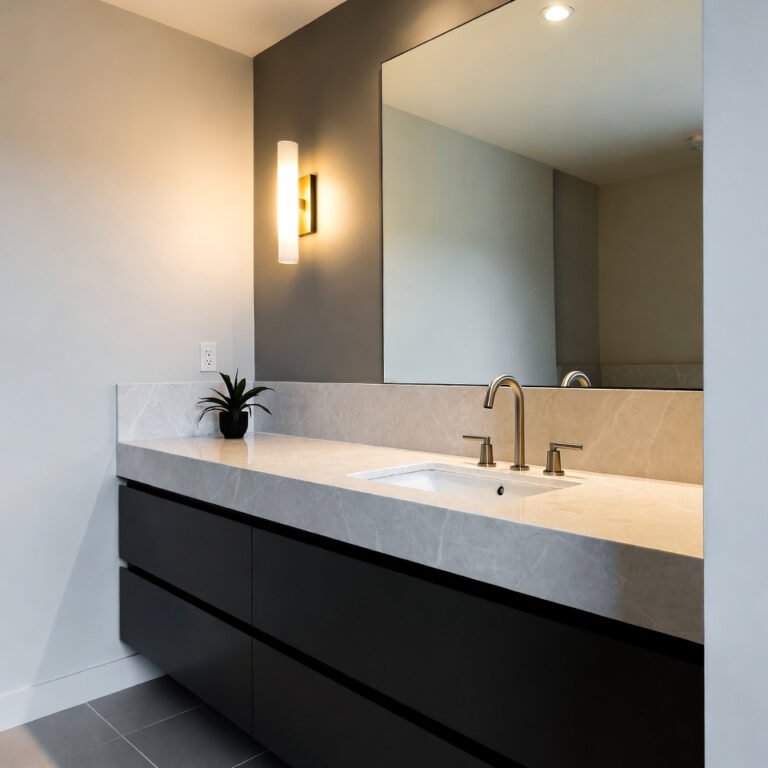
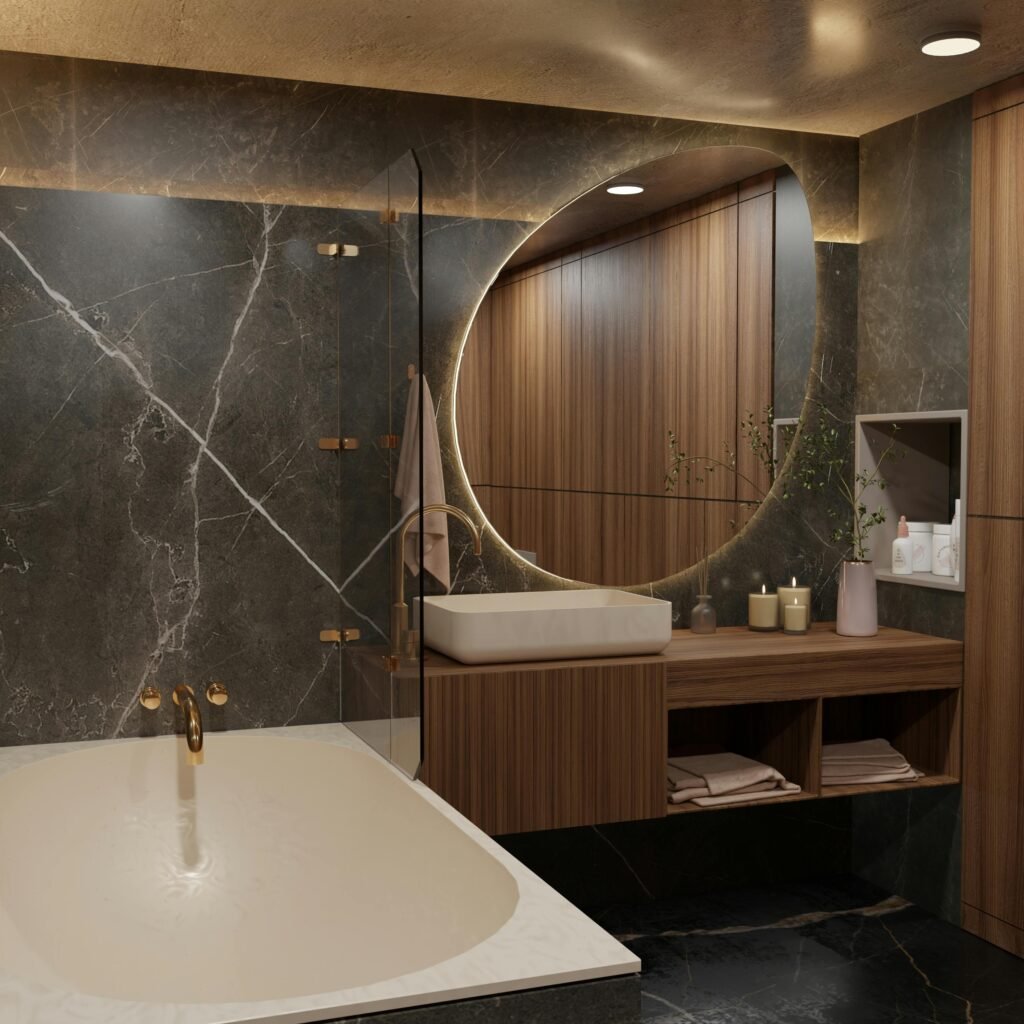
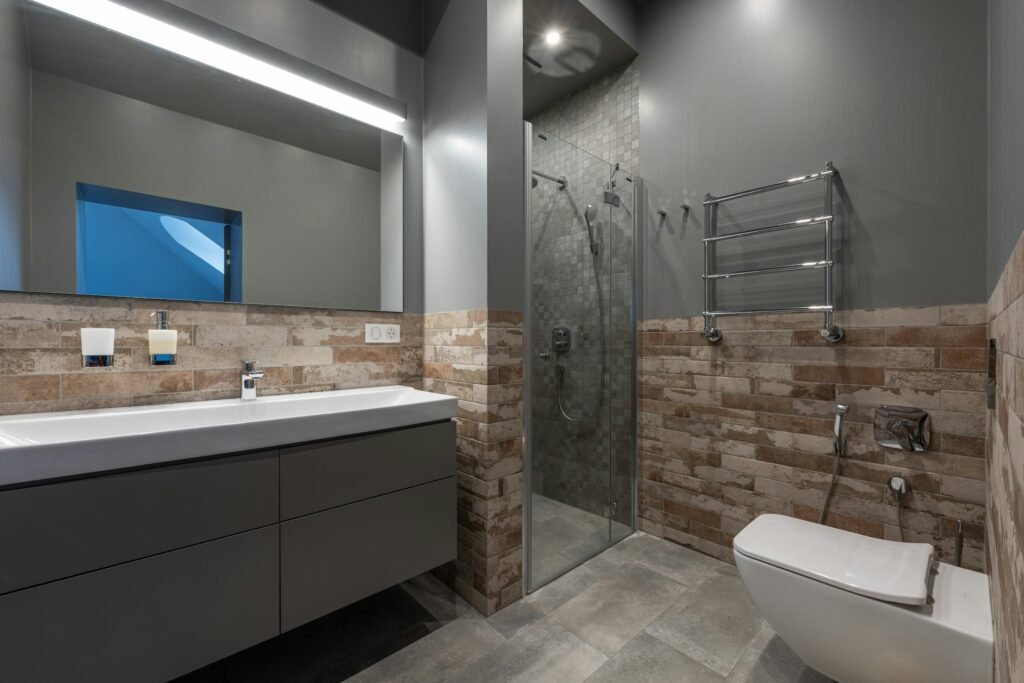
A floating vanity is one of the single most effective bathroom remodel ideas you can invest in. Because it sits 6–8 inches above the floor, the room instantly feels more open and less crowded.
That visual trick is especially powerful in a small bathroom where every inch matters. The floor reads as continuous. The eye travels further. The space feels bigger than it is.
What to look for when shopping:
- Width: 24–36 inches for single vanities. 60–72 inches for double sinks.
- Material: Solid wood or plywood carcasses hold up better than MDF in humid spaces.
- Finish: Matte finishes hide water spots better than gloss.
Pair it with under-cabinet LED strip lighting (around $40–$80 at any hardware store). That soft glow creates a premium look that most people associate with high-end hotels.
Product pick: The IKEA GODMORGON series starts at $449 and offers solid construction with good finish options. For a premium version, check out James Martin Furniture or Kohler Tailored Vanity Collections ($900–$2,500).
Pro tip from practice: Mount the vanity at 34–36 inches high instead of the standard 32. Taller people find it far more comfortable, and it photographs better, too.
2. Build a Walk-In Shower With Frameless Glass
Best for: Master bathrooms and bathroom renovations · Cost range: $1,500–$8,000
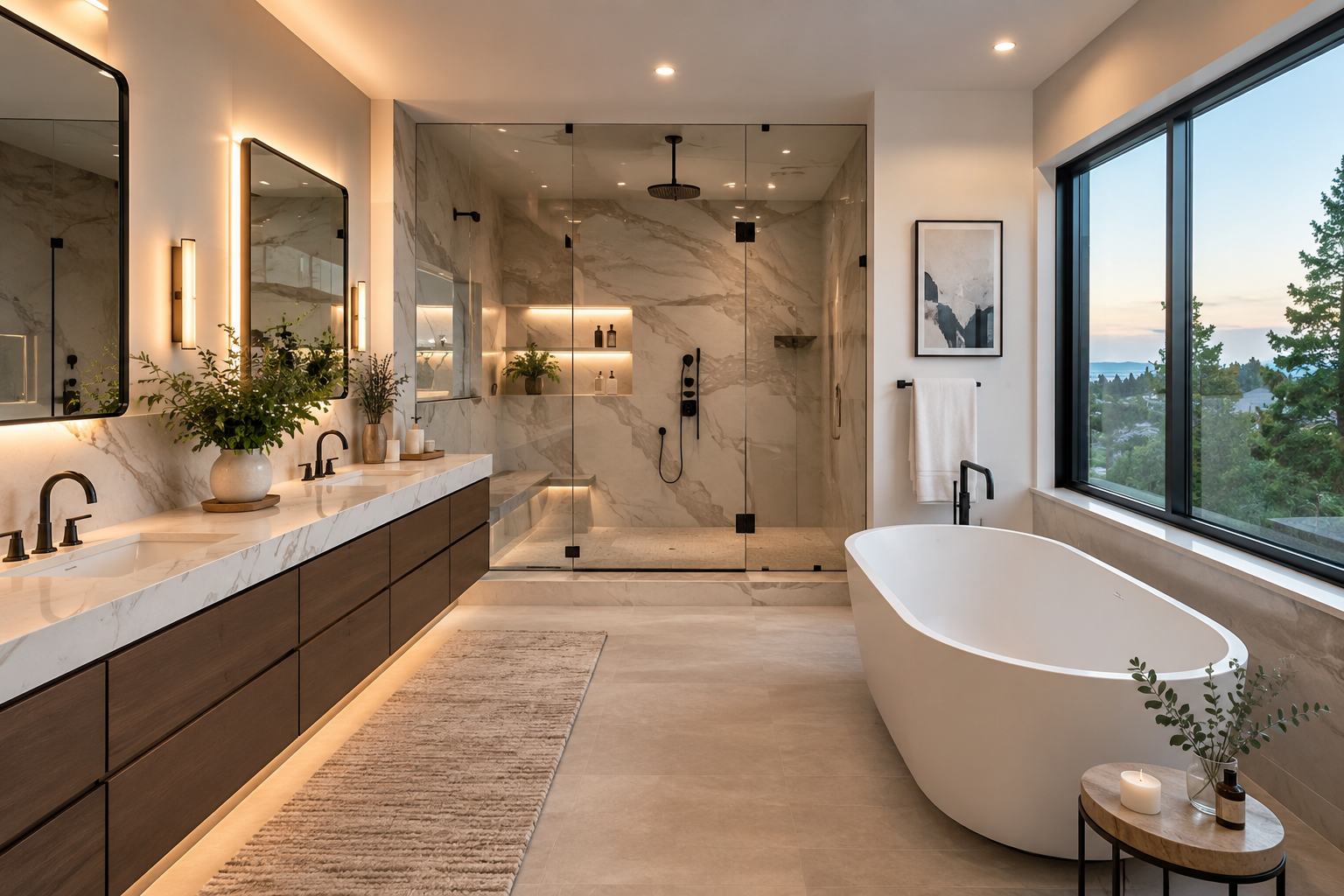
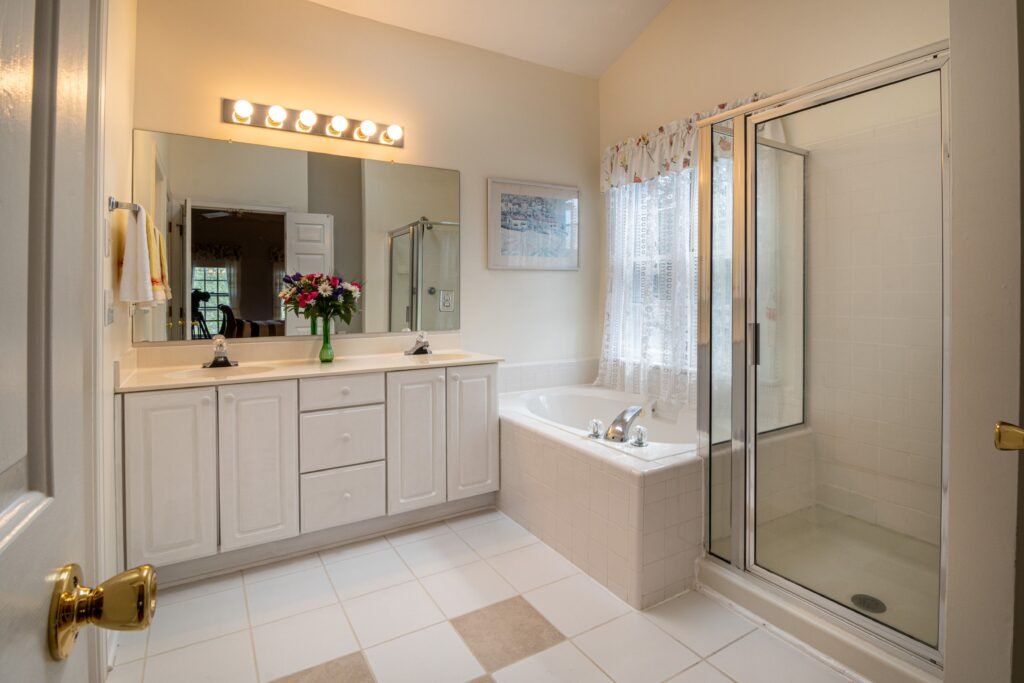
Walk-in showers continue to dominate modern bathroom design in 2026, and for good reason. Removing the traditional tub and replacing it with a walk-in shower can add up to 4–8% to your home’s resale value, according to the National Association of Realtors.
Frameless glass panels are the key. They remove visual barriers completely. The shower tile becomes the focal point. The room feels 30–40% larger than it actually is.
What makes it work:
- Use large-format tiles (12×24 or 24×48 inches) inside the shower. Fewer grout lines keep the look clean and the maintenance low.
- Niche shelving built into the wall eliminates clunky shower caddies and looks far more intentional.
- A rain shower head (8–12 inches wide) instantly elevates the experience. Budget picks start at $60. High-end brands like Grohe or Hansgrohe run $200–$600.
Cost breakdown:
- Basic frameless enclosure: $500–$1,500 (materials only)
- Professional installation: $800–$3,000, depending on complexity
- Custom tile work: $500–$3,500
If a full walk-in shower isn’t in the budget, even replacing a framed glass enclosure with a frameless one (around $800–$1,500 installed) makes a dramatic difference.
See more on Bathroom Decorations
3. Switch From Pure White to Warm Neutral Colors
Best for: Any bathroom size · Cost range: $50–$300 (paint only)
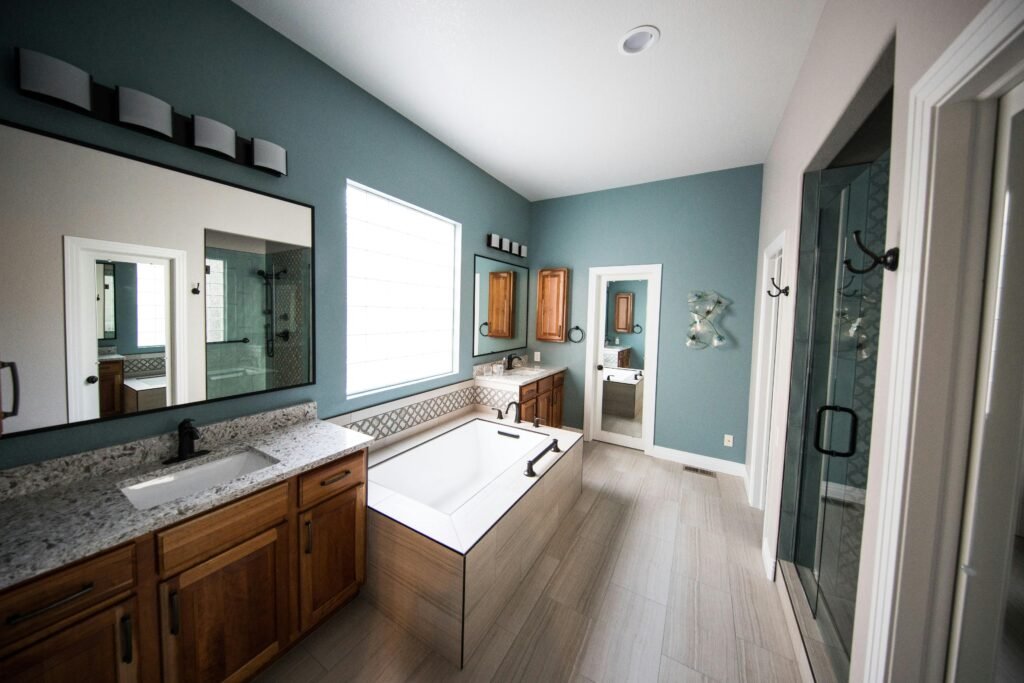
Pure white bathrooms are fading fast. The shift toward warmer shades is one of the most consistent trends in bathroom renovation ideas right now.
Why does it matter? White reads as cold under artificial light. Warm neutrals, beige, greige, cream, and taupe bounce light back in a way that makes the room feel alive rather than clinical.
Top-performing colors for 2026:
- Sherwin-Williams Accessible Beige (SW 7036) works in almost any lighting condition
- Benjamin Moore White Dove (OC-17) is a warm white that avoids the sterile look
- Farrow & Ball Elephant’s Breath: moody greige with enormous depth
- Sherwin-Williams Repose Gray (SW 7015): the safest warm-neutral choice for resale
One important rule: always test paint swatches in the actual bathroom under your actual lighting before committing. Bathroom lighting is notoriously tricky. What looks warm in the store looks completely different under recessed lighting or north-facing windows.
4. Layer Your Bathroom Lighting Properly
Best for: All bathrooms · Cost range: $150–$1,500
One overhead light is one of the most common mistakes in bathroom design. It creates harsh shadows, especially around the face, and makes the room feel flat.
Modern bathroom lighting works in layers. Each layer serves a different function:
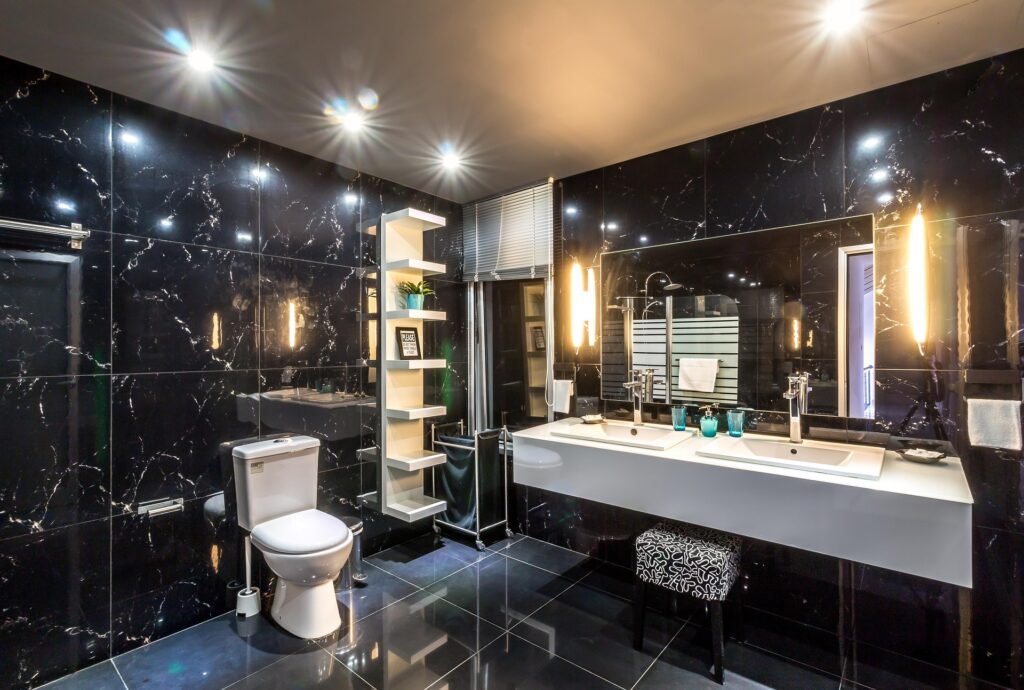
- Ambient lighting: Overhead recessed lights or a ceiling fixture. This is your base layer.
- Task lighting: Vanity lights placed on both sides of the mirror (not above). Side-mounted lights eliminate shadows on the face. This is critical for applying makeup or shaving accurately.
- Accent lighting: LED strips under the floating vanity, inside niches, or behind mirrors. This adds depth and a spa-like glow.
Bulb temperature matters more than most people realize. Use bulbs rated 2700K–3000K (warm white) for a flattering, relaxing feel. Avoid 4000K+ (cool white) unless you specifically want a clinical look.
Budget approach: Swap your single overhead for two side-mounted sconces ($50–$200 each) and add LED strips under the vanity ($40). Total investment: under $300. The visual difference is significant.
See also Bathroom Decor Ideas
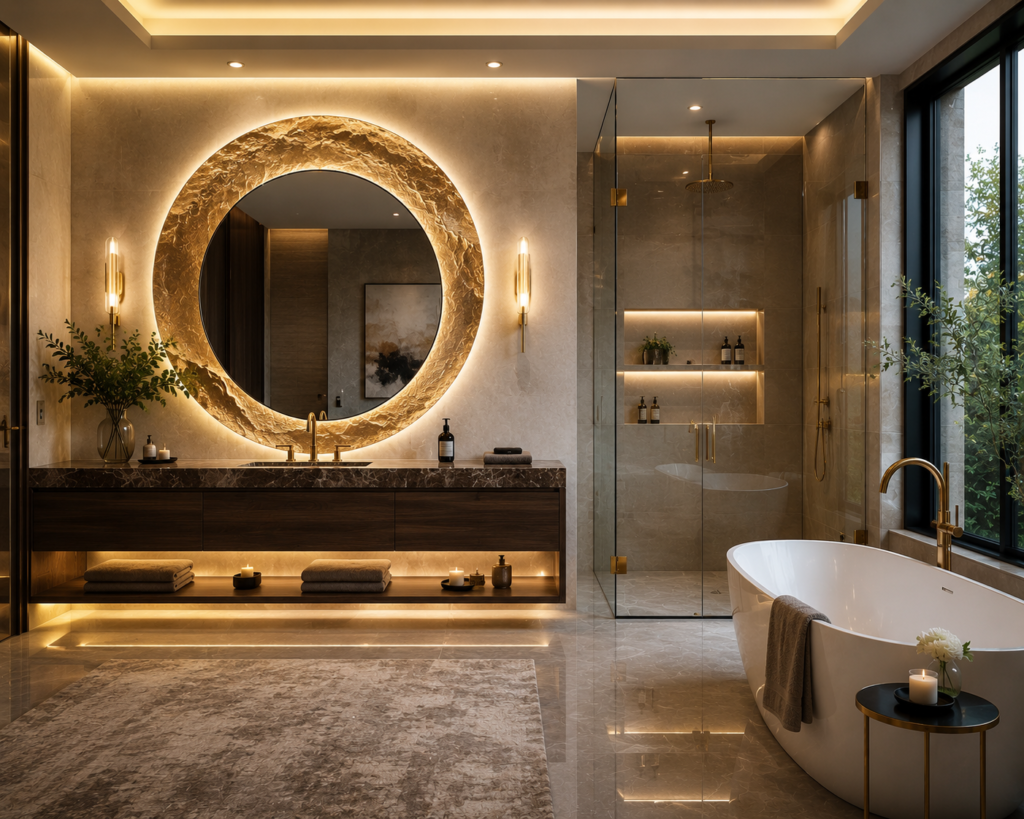
5. Install a Statement Mirror
Best for: All bathrooms · Cost range: $80–$1,200
A mirror does more visual work in a bathroom than almost any other element. It reflects light, creates depth, and sets the design tone for the whole room.
Round mirrors surged in popularity around 2020 and are still going strong. But the real momentum in 2026 is toward oversized arched mirrors and full-wall mirror panels. These make small bathrooms feel significantly larger.
Frame material guide:
- Matte black: Pairs with white and light tile. Creates a strong modern contrast.
- Brushed brass: Adds warmth to neutral and greige schemes. Very on-trend right now.
- Natural wood: Works beautifully in spa-inspired or organic bathroom designs.
- No frame (frameless): The most minimalist option. Best in very clean, white bathrooms.
One practical tip: size your mirror to roughly the width of your vanity, or slightly wider. A mirror that’s too narrow looks like it’s floating. A mirror that spans the full vanity feels intentional and anchored.
For a smart upgrade that’s worth the investment, LED backlit mirrors ($200–$800) combine task lighting and design in one piece. Brands like Kohler, VIGO, and Keonjinn are well-reviewed options.
6. Bring Natural Materials Into the Design
Best for: All bathrooms · Cost range: $100–$3,000+
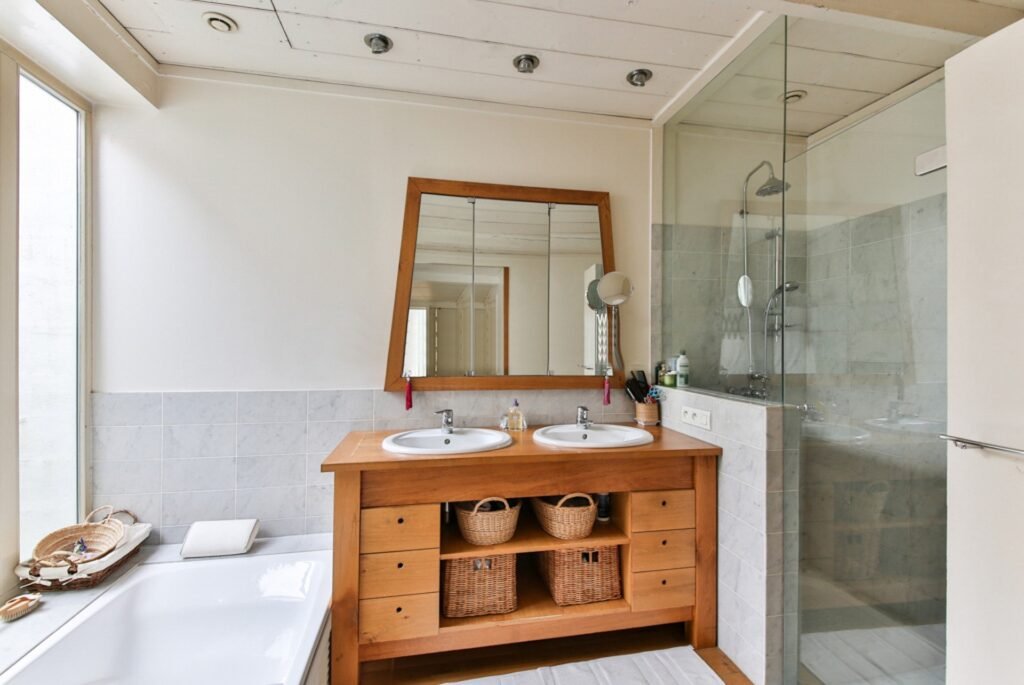
Natural materials are the fastest way to make a modern bathroom feel warm instead of cold. Hard tile and chrome on their own can feel impersonal. Wood, stone, and bamboo soften everything.
How to use each material:
- Wood accents: Teak shower benches ($80–$300), wood-look porcelain tile, or a walnut vanity top. Use only sealed or moisture-rated wood in wet areas.
- Stone countertops: Marble and quartzite look beautiful but require sealing. Quartz (engineered) offers a similar look with far less maintenance. Expect $50–$120 per square foot installed for quartz.
- Bamboo accessories: Towel trays, soap dispensers, and storage baskets. These cost almost nothing ($20–$80) and immediately shift the feel of a space.
- Indoor plants: Pothos, snake plants, and peace lilies thrive in bathroom humidity. A single plant in a ceramic pot costs $15–$40 and adds life to any corner.
From real renovation experience: clients who add even one or two natural elements consistently rate their finished bathrooms higher than those who don’t, even when the overall renovation budget was similar.
7. Install a Curbless (Zero-Entry) Shower
Best for: Master bath renovations · Cost range: $500–$3,000 additional over standard shower
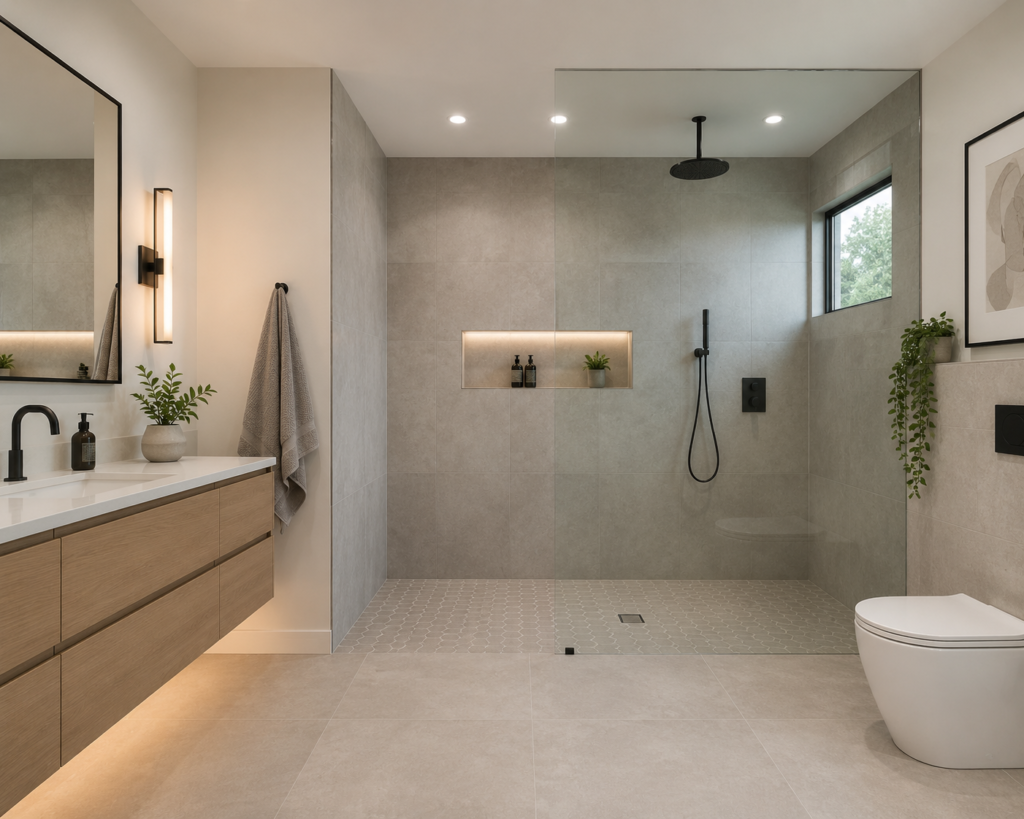
A curbless shower removes the raised lip at the shower entrance. The floor flows continuously from the bathroom into the shower. It looks seamless and feels immediately more expensive.
Beyond aesthetics, curbless showers are also safer and more accessible. This is a real selling point for buyers, especially families with older members or young children.
Key installation requirements:
- The shower floor needs a linear drain running along one wall. This allows water to flow without a curb to contain it.
- Proper waterproofing below the tile is non-negotiable. Schluter KERDI or similar waterproof membranes are the professional standard.
- Minimum floor slope: 1/4 inch per foot toward the drain.
This is not a DIY project for most homeowners. Budget for professional tile work and waterproofing. It’s worth it; a well-done curbless shower transforms the entire feel of a master bathroom renovation.
8. Use Large-Format Tiles for a Cleaner Look
Best for: All bathrooms · Cost range: $2–$18 per square foot (materials)
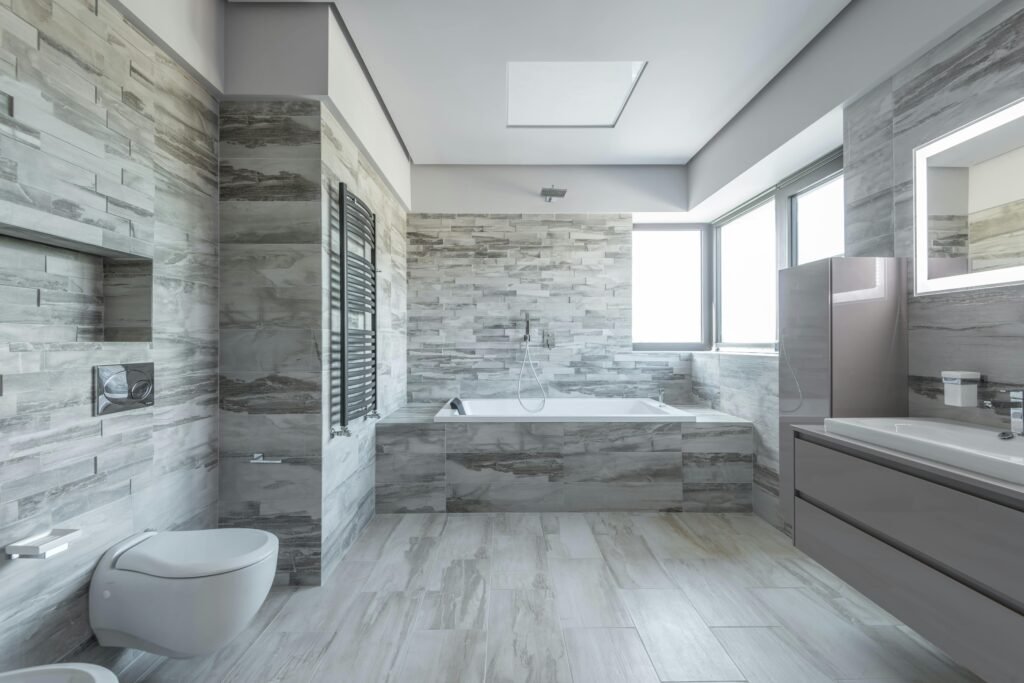
Large tiles, 24×24 inches or bigger, are one of the most effective small bathroom makeover ideas. They reduce the number of grout lines, which makes the entire floor and wall surface look cleaner and more continuous.
This is a simple visual principle. More grout lines = busier surface = smaller-looking room. Fewer grout lines = calmer surface = larger-looking room.
Best tile formats for 2026:
- 24×48 porcelain slabs: The current favorite for modern bathrooms. Works beautifully on both floors and feature walls.
- 12×24 staggered: It’s more affordable and easier to install. Still delivers a clean look.
- Stone-look porcelain: All the visual warmth of marble or travertine with far better durability and moisture resistance.
Avoid real marble in wet areas unless you’re prepared for the maintenance commitment. Porcelain that mimics marble is nearly indistinguishable at a fraction of the upkeep.
Watch more on Small Bathroom Design Ideas
9. Build Hidden Storage Into the Design
Best for: All bathrooms · Cost range: $50–$2,000
Clutter is the fastest way to make any bathroom feel cheap and outdated. Modern bathroom storage is built around one principle: keep surfaces clear.
Most effective hidden storage solutions:
- Recessed wall niches: Built between studs during renovation. Perfect for shampoo, soap, and razors inside the shower. Cost: $200–$600 installed.
- Medicine cabinets with hidden storage: Surface-mount or recessed. Modern versions don’t look like your grandmother’s medicine cabinet. Robern makes excellent options from $400–$1,500.
- Drawer organizers inside vanity drawers: Acrylic or bamboo organizers turn chaotic drawers into something that functions smoothly every day. Cost: $20–$60.
- Floating shelves with closed baskets: Open shelving only works when everything on it looks intentional. Use uniform closed baskets for toiletries and leave a few decorative items visible.
The real goal is a bathroom where the counter holds only what you use that morning. Everything else is out of sight.
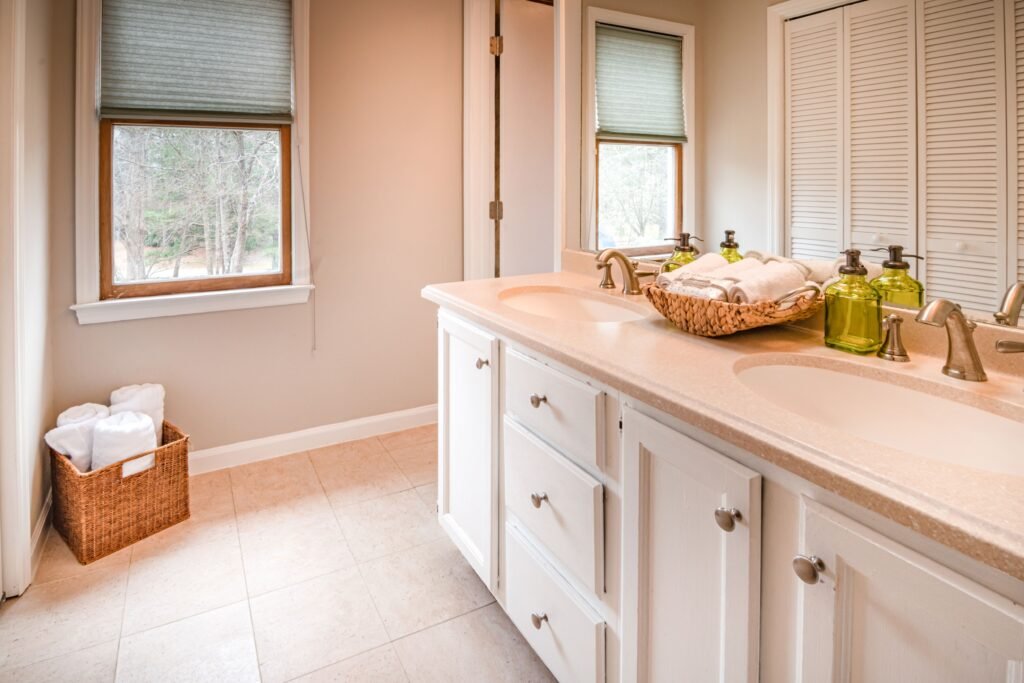
10. Add Matte Black Fixtures for Contrast
Best for: Light-colored bathrooms · Cost range: $200–$2,000 for a full fixture set
Matte black fixtures remain one of the most consistently searched bathroom renovation ideas. They work because they create a strong contrast, a design principle that makes a space feel more curated.
Against white or cream tile, matte black pops without feeling aggressive. Against warm wood or stone, it grounds the design and adds edge.
Fixture upgrade checklist:
- Faucet: $80–$400
- Towel bars and hooks: $30–$150 per piece
- Toilet paper holder: $25–$80
- Shower system (head, arm, valve): $200–$1,200
- Cabinet hardware: $8–$40 per pull or knob
You don’t need to replace everything at once. Start with the most visible pieces, the faucet and towel bar, and add more over time. Even a partial switch creates a noticeably more intentional look.
Important: Stick with matte black. Glossy black shows water spots and fingerprints immediately. Matte finishes aging gracefully.
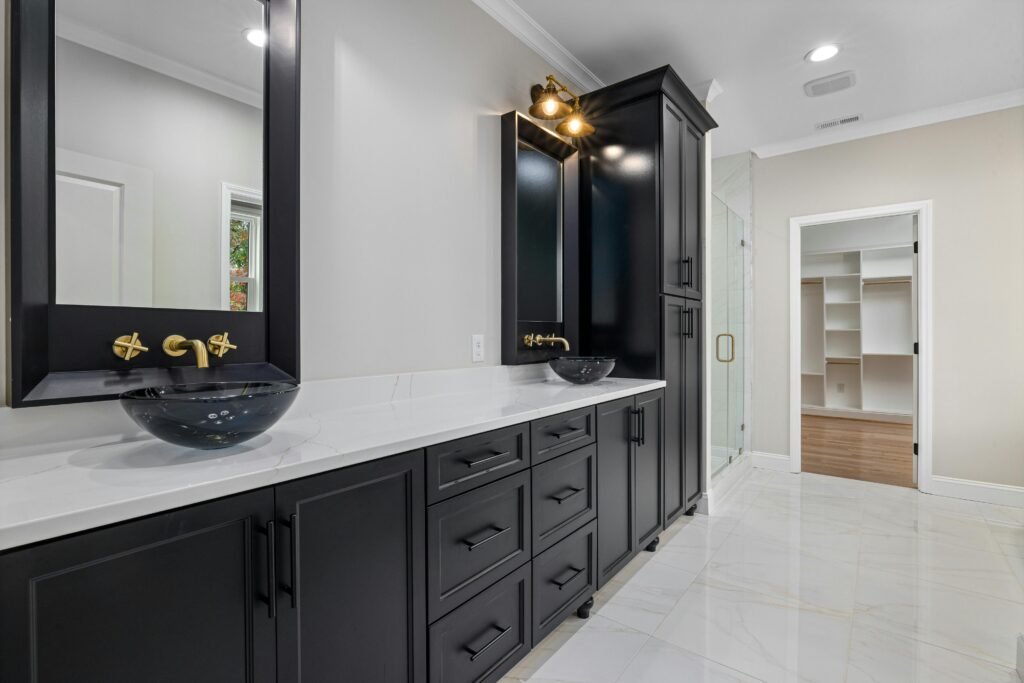
11. Design Around a Spa-Inspired Bathroom Concept
Best for: Master bathrooms and primary baths · Cost range: $500–$5,000+
Spa bathroom ideas are among the fastest-growing searches in home design right now, and the concept is more accessible than most people think. A spa bathroom is not about expensive materials. It’s about a specific sensory experience.
The five elements of a spa bathroom:
- Soft lighting: dimmer switches on every fixture. Install them yourself for $20–$40 each.
- Warm towels: a heated towel rail costs $80–$300 and works on a standard outlet. Daily luxury for a one-time purchase.
- Neutral, natural palette: warm whites, soft greens, and stone tones. No busy patterns.
- Sensory details: a diffuser with eucalyptus or lavender, a teak bath mat, and rolled towels instead of hung ones.
- Total visual calm — no visible clutter. Nothing is sitting on the counter that doesn’t belong there.
You can build a convincing spa bathroom feeling for under $1,000 if you focus on these five elements first.
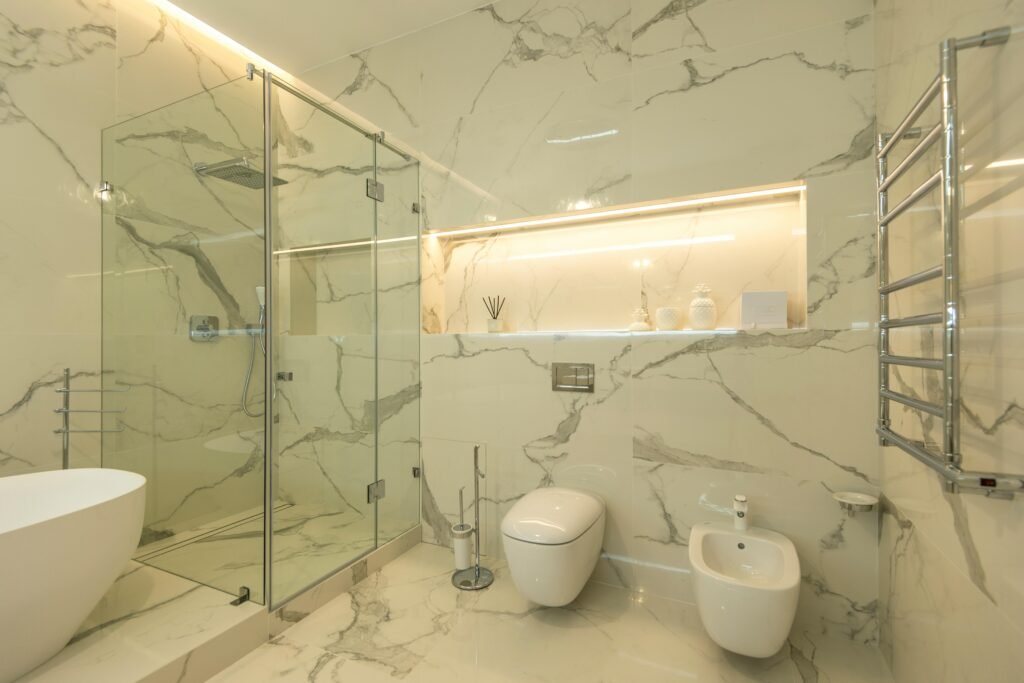
See more on Bathroom Remodel Ideas
12. Add Smart Bathroom Technology
Best for: New builds and full bathroom renovations · Cost range: $100–$5,000
Smart technology is no longer a luxury bathroom feature. It’s becoming a standard expectation in modern home design.
High-impact smart upgrades:
- Heated floors (radiant heat): The single most requested luxury upgrade. In-floor electric heating systems cost $8–$15 per square foot installed. For a 60 sq ft bathroom floor, expect $500–$900 total. The daily comfort impact is enormous.
- Smart mirrors: Display time, weather, and calendar. Some include built-in lighting and defogging. Brands like Kohler Verdera and SÉURA are top-rated. Cost: $400–$2,000.
- Motion-sensor faucets: Reduce water waste and germs. Delta and Moen both make retrofit versions that install without plumbing changes. Cost: $100–$300.
- Digital shower controls: Set your exact temperature before stepping in. Moen U and Kohler DTV+ are the leading systems. Cost: $500–$2,500, including installation.
Start with heated floors if the budget allows just one smart upgrade. Nothing else in bathroom renovation has a higher daily satisfaction return.
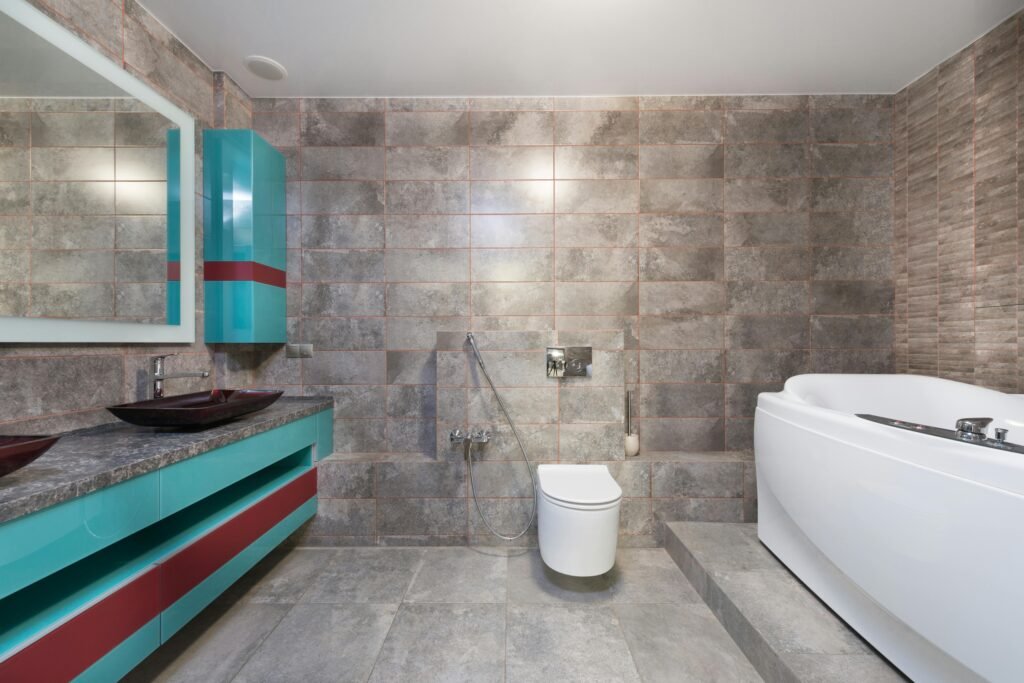
13. Go Vertical in Small Bathrooms
Best for: Small bathrooms and powder rooms · Cost range: $100–$800
Small modern bathroom ideas need to think vertically. Floor space is limited. Wall space is not.
Vertical storage that works:
- Tall linen towers beside the vanity (12–18 inches wide, 70–80 inches tall). These provide significant storage while using almost no floor space. IKEA, Pottery Barn, and Wayfair all carry good options from $150–$600.
- Wall-mounted shelving above the toilet. This is dead space in most bathrooms. A set of two floating shelves above the toilet tank adds real storage for $60–$150.
- Ladder shelves leaning against the wall. No installation required. Perfect for renters. Cost: $50–$200.
- Door-mounted organizers on the back of the bathroom door. Ideal for hair tools, extra toiletries, and cleaning supplies. Cost: $25–$80.
The key principle: use every inch of vertical wall space before expanding horizontally.
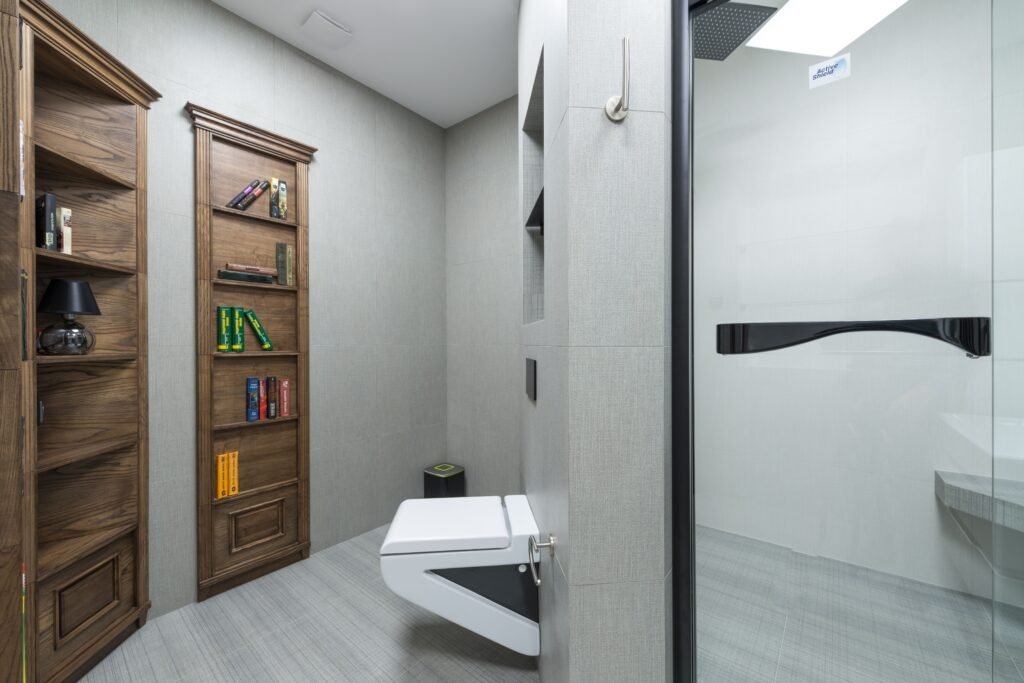
14. Use Texture to Add Visual Interest
Best for: Minimalist and neutral bathrooms · Cost range: $200–$3,000
A modern bathroom does not need bold color to feel interesting. Texture does the same work more subtly, and it ages far better.
Texture ideas that work in 2026:
- Fluted vanity fronts: Vertical channel detailing on cabinet doors. Adds depth and an artisan feel. Many IKEA SEKTION cabinets can be fitted with fluted door fronts from brands like Superfront or Reform.
- Textured wall tiles: Zellige-style handmade tiles, 3D relief tiles, or stone-look surfaces with natural variation. These reflect light differently across the day and keep the wall from looking flat.
- Ribbed glass shower screens: Add privacy while diffusing light in a beautiful way. Growing fast in popularity right now.
- Concrete or stone-effect surfaces: On countertops or feature walls. Requires no actual concrete porcelain versions, which are maintenance-free.
The goal is a room that looks more interesting the longer you look at it.
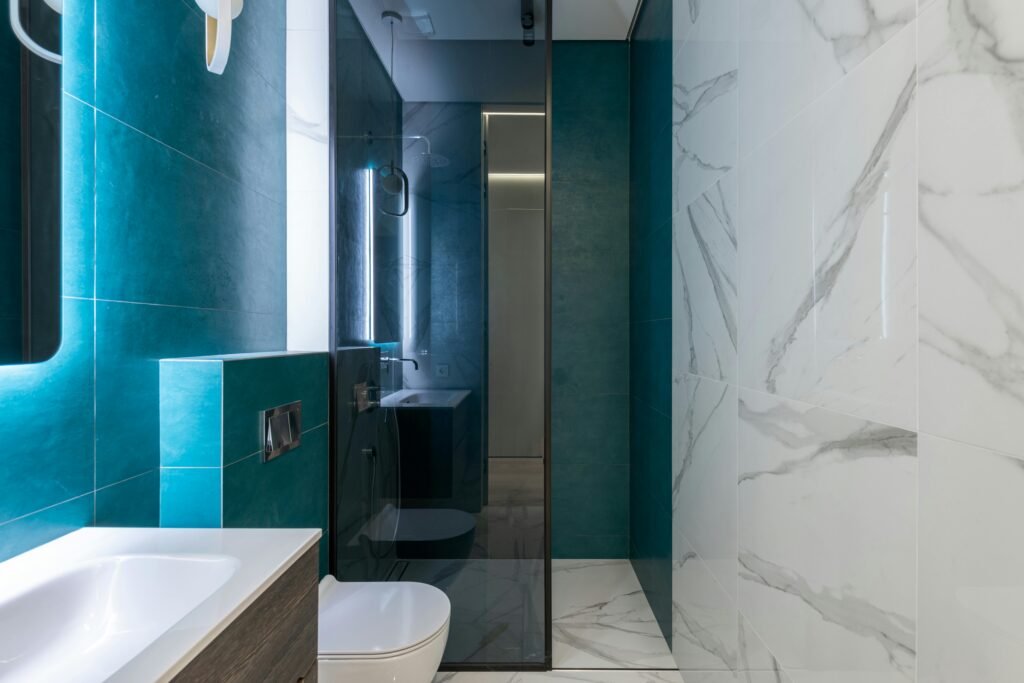
15. Mix Metal Finishes Thoughtfully
Best for: All bathrooms · Cost range: Varies by fixture selection
A bathroom where every single finish matches can look overly safe. Mixing metals adds personality and depth, but it requires one clear rule.
The rule: Pick one dominant finish (70% of fixtures) and one accent finish (30%). Never three.
Combinations that work:
- Brushed brass dominant + matte black accent: Warm, modern, and very popular in 2026. Brass faucets and hardware with a black mirror frame and towel bars.
- Brushed nickel dominant + warm brass accent: Classic and versatile. Works in almost every style.
- Matte black dominant + brushed gold accent: Bold and contemporary. Best in bathrooms with strong geometric tile work.
What does NOT work: chrome mixed with nickel. They look similar but clash slightly; most people can’t name it, but everyone senses it.
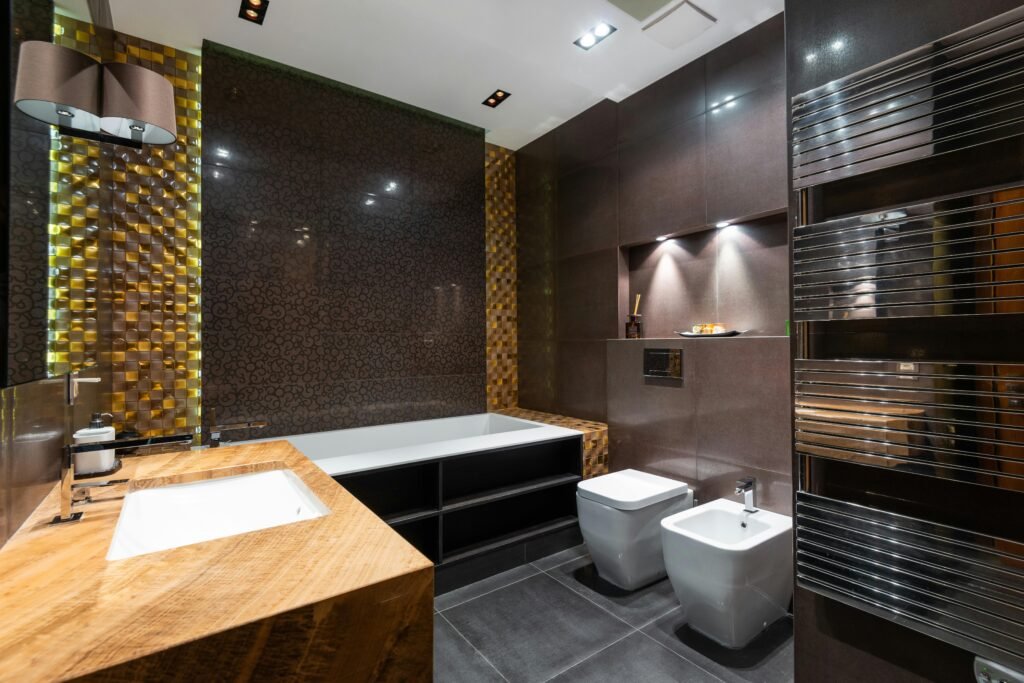
16. Make the Ceiling Part of the Design
Best for: All bathrooms · Cost range: $50–$800
The ceiling is the most ignored surface in bathroom renovation. That’s a mistake.
A painted ceiling creates a finished, intentional look that most bathrooms simply don’t have. It takes the space from “renovated” to “designed.”
Ceiling approaches that work:
- Paint it the same color as the walls, but one shade lighter. This wraps the room in one tone and makes it feel both larger and more deliberate.
- Paint it a deep contrasting color: navy, forest green, or charcoal. This is bold but surprisingly effective. It makes the room feel cozy and high-end rather than tall and empty.
- Add tongue-and-groove wood paneling to the ceiling. This is the most dramatic option and works beautifully in spa-inspired bathrooms. Cost: $300–$800 for materials in a standard bathroom.
When was the last time you looked up in a bathroom and thought, “That looks designed”? Exactly. It’s a wide-open opportunity.
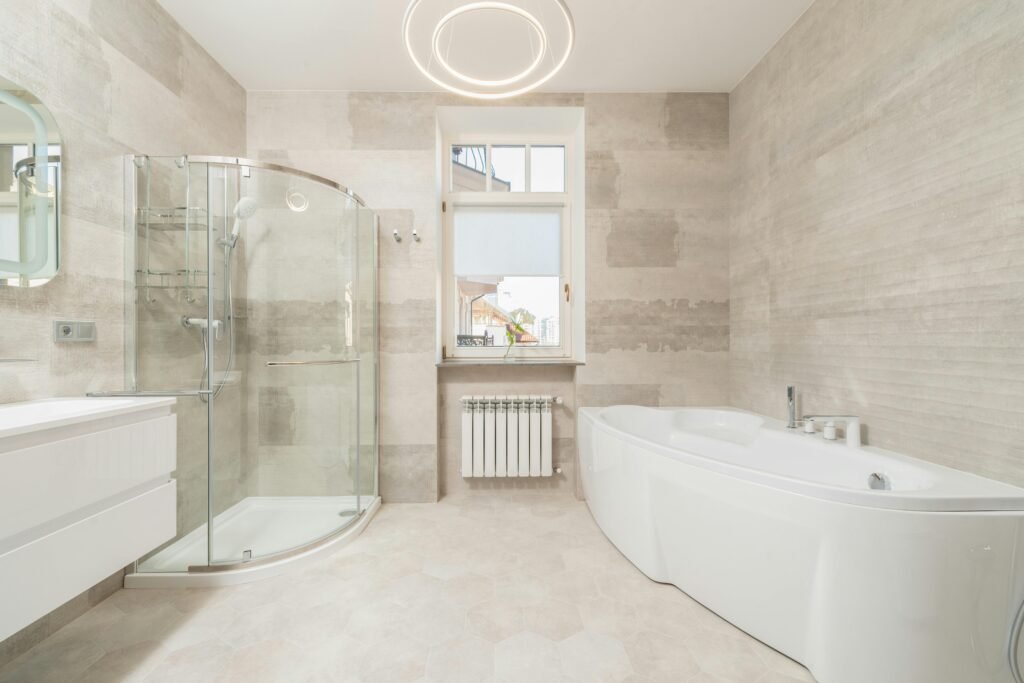
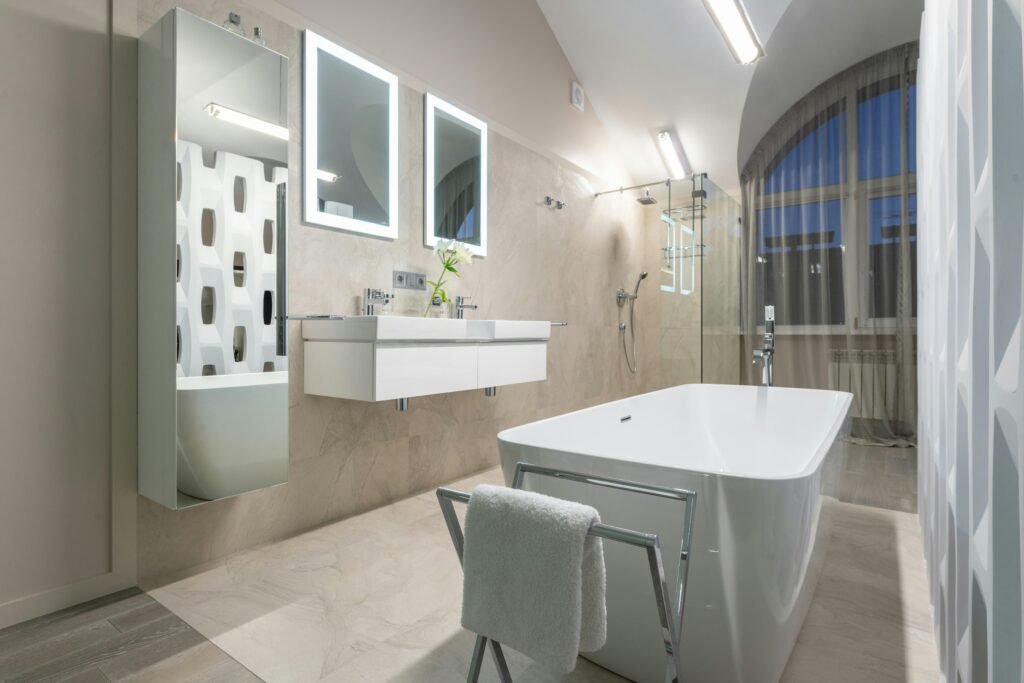
17. Add a Freestanding Tub as a Focal Point
Best for: Larger master bathrooms (60 sq ft minimum) · Cost range: $600–$8,000**
Nothing signals luxury bathroom design more clearly than a freestanding tub. It creates a visual anchor for the entire room. People see it and immediately think “spa.”
The good news: you no longer need a massive bathroom to pull it off. Compact freestanding tubs now come in sizes as small as 54 inches long, manageable in most master bathrooms.
Freestanding tub material guide:
- Acrylic: Lightest weight, most affordable, retains heat reasonably well. Cost: $600–$2,000. Brands: American Standard, Kohler.
- Cast iron: Extremely durable, retains heat better than any material, very heavy (300–500 lbs). Cost: $1,500–$4,000. Requires floor reinforcement in some older homes.
- Stone resin: Luxurious, heavy, and modern-looking. Cost: $2,000–$8,000. Brands: Aquatica, Victoria + Albert.
Pair a freestanding tub with a floor-mounted tub filler (faucet that rises from the floor) for a complete high-end look. Budget for both together.
18. Use Open Shelving Intentionally
Best for: All bathrooms · Cost range: $60–$400**
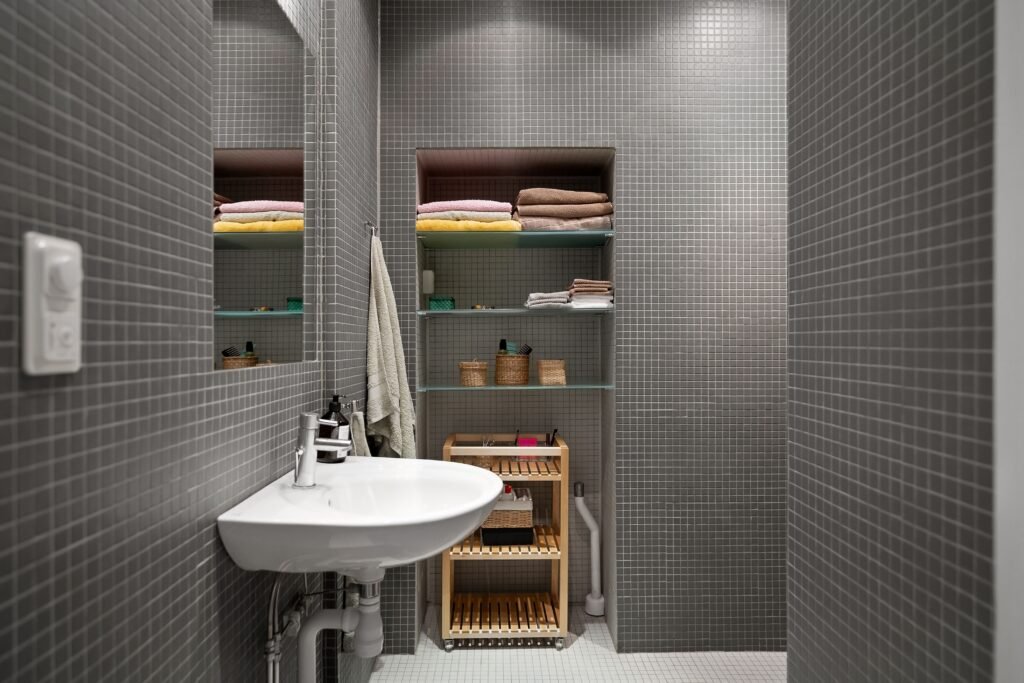
Open shelving works. But only when everything on the shelf looks like it was placed there on purpose.
The rule of thumb: display no more than five items per shelf. Everything else gets stored behind a door.
What looks good on open bathroom shelves:
- Rolled white or linen-colored towels in uniform stacks
- One or two small plants in ceramic pots
- Glass or ceramic containers for cotton rounds, Q-tips, or bath salts
- A single candle or small diffuser
- A few small decorative objects with clean lines
What kills open shelving: half-empty product bottles, mismatched containers, electrical cords, and anything with a busy logo.
Think of each shelf as a small still-life photograph. If it wouldn’t look good in a photo, it shouldn’t be on the shelf.
19. Try Wall-Mounted Faucets
Best for: Vessel sink setups and floating vanities · Cost range: $200–$1,500, including rough-in
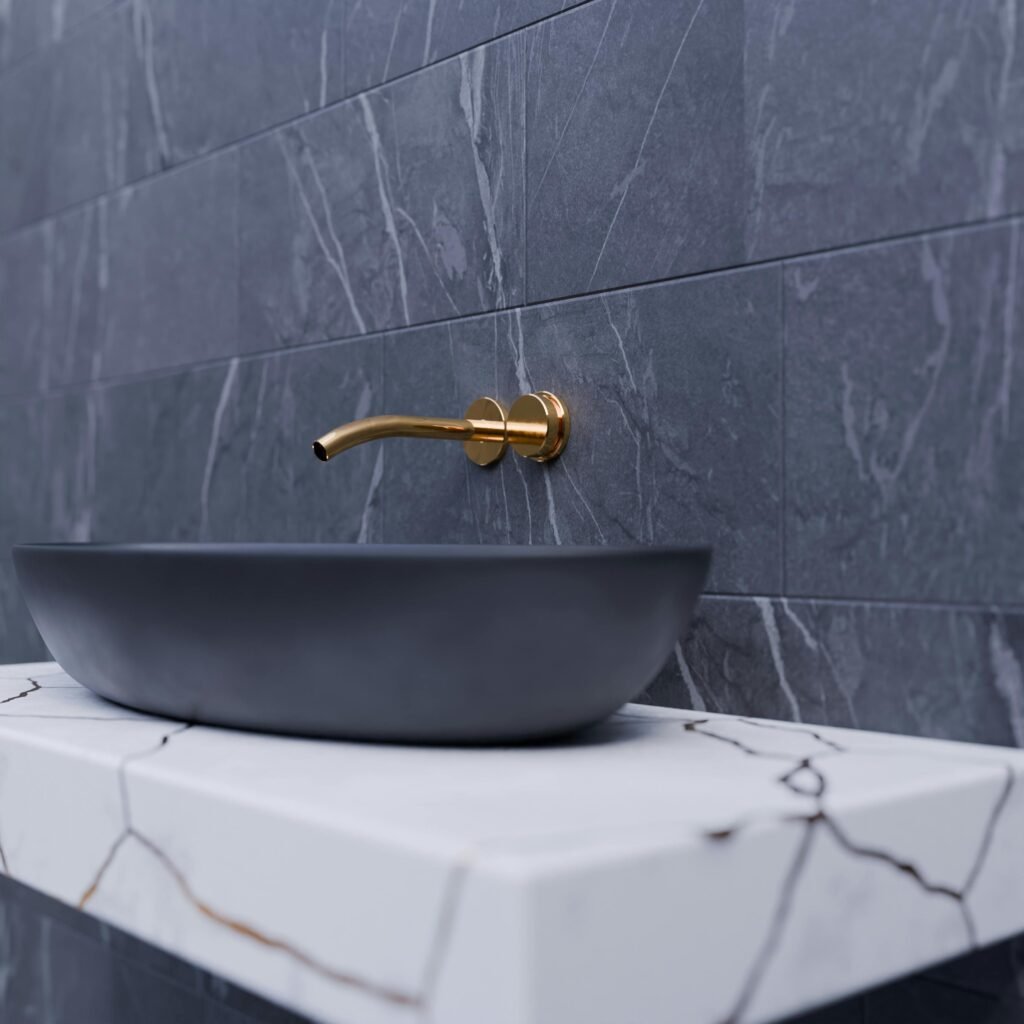
Wall-mounted faucets look cleaner than deck-mounted versions because the plumbing disappears into the wall. The countertop stays completely clear.
They pair naturally with vessel sinks, sinks that sit above the counter rather than dropping into it. Together, this combination creates a look that reads very high-end.
Installation note: Wall-mounted faucets require rough-in plumbing inside the wall before tiling. This is a renovation-phase decision, not an afterthought. If you’re doing a full bathroom makeover, it’s worth planning for from the start.
Popular brands: Hansgrohe, Grohe, VIGO, and Kingston Brass all make well-reviewed wall-mount options across different price points.
20. Try Earthy Green Tones in the Bathroom
Best for: All bathroom sizes · Cost range: $50–$500 depending on application
Sage green is one of the strongest bathroom color trends in 2026. It feels calming, natural, and genuinely timeless, unlike trend colors that date themselves within three years.
Green works in bathrooms because it connects psychologically to nature. It reads as clean without feeling sterile. It pairs with warm wood, brass, and white tile in a way that almost always looks intentional.
Ways to introduce green:
- Full wall paint: Use Sherwin-Williams Comfort Gray (SW 6205) or Farrow & Ball Mizzle for a muted, sophisticated sage.
- Tile accent wall: A sage or forest-green zellige tile on the shower wall or behind the vanity.
- Vanity color: A sage-painted or factory-finished vanity cabinet against white walls is one of the cleanest looks available right now.
- Accessories: If you’re not ready to commit, sage green towels, a plant, and a ceramic soap dish can introduce the color with zero renovation.
21. Design for Comfort First: Then Aesthetics
Best for: All bathrooms · Cost range: Varies
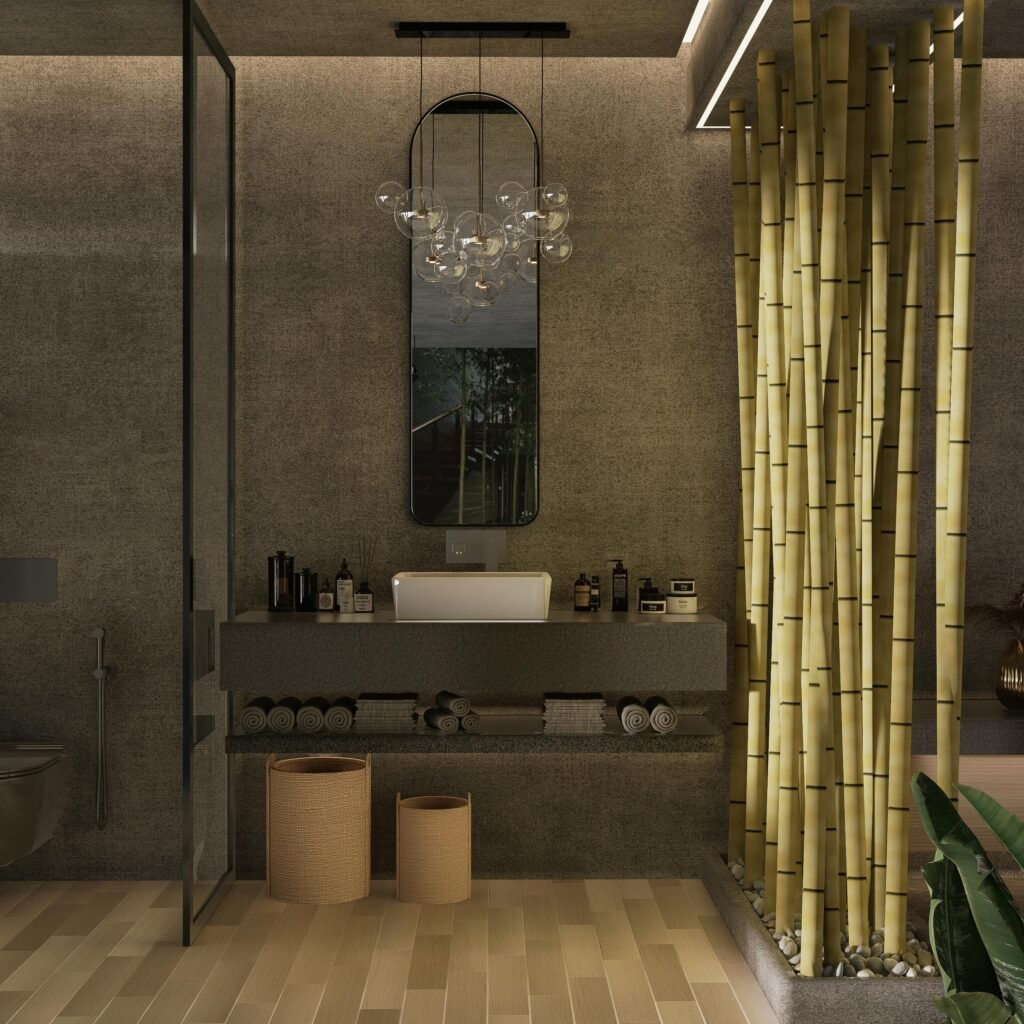
Every tip in this guide comes back to one principle: the best modern bathroom ideas combine beauty with daily functionality.
Before finalizing any bathroom design decision, ask three questions:
- Does this give me enough storage? If you’re hiding products in different rooms because there’s no space, that’s a design failure.
- Is the lighting good enough to function in? Can you apply makeup, shave, or see clearly at any time of day?
- Will this still look right in 10 years? Trendy finishes date quickly. Timeless materials, stone, wood, and quality tile hold up.
A bathroom that works beautifully every morning is worth more than one that photographs well but feels awkward to use.
Modern Bathroom Trends Homeowners Are Choosing in 2026
Based on current renovation data and design surveys, these are the trends with the most momentum this year:
- Warm minimalism: clean lines combined with warm tones and natural materials, not cold white minimalism
- Hidden everything: integrated storage, recessed niches, and seamless cabinetry that hides all the clutter
- Spa at home: the bathroom as a recovery and wellness space, not just a utility room
- Curbless showers: growing demand driven by both aesthetics and accessibility
- Earthy color palettes: sage green, terracotta, warm taupe, replacing stark white
- Smart technology: heated floors and smart mirrors crossing from luxury to expected
- Mixed metals: intentional combinations replacing the all-matching chrome era
These trends share a common thread: they prioritize how the bathroom feels to be in, not just how it looks in a photograph.
Final Thoughts
The most effective modern bathroom ideas don’t require a complete gut renovation.
A floating vanity, better layered lighting, smart hidden storage, and a warm color palette can transform a bathroom completely. Start with the changes that solve your biggest frustrations first, not the ones that look most impressive on Instagram.
Invest in quality where it matters most: tile, fixtures, and lighting. Save where it doesn’t: accessories, paint, and soft goods.
That approach creates a bathroom you’ll genuinely enjoy every morning and one that adds lasting value to your home.
Frequently Asked Questions
What makes a bathroom look modern?
A modern bathroom focuses on clean lines, minimal clutter, functional storage, and a calm color palette. Key features include floating vanities, frameless glass showers, large-format tiles, and layered lighting. The goal is a space that feels intentional, not just updated.
What colors work best in a modern bathroom in 2026?
Warm neutrals are the most consistent performers: beige, greige, cream, soft white, and light taupe. Sage green is the breakout trend color this year, particularly for vanities and accent walls. Avoid pure stark white; it reads as cold under most bathroom lighting.
How can I make a small bathroom look modern without renovation?
Paint the walls a warm neutral. Swap out old fixtures for matte black or brushed brass versions. Replace the mirror with a larger, more interesting shape. Add under-vanity LED lighting. These four changes cost under $400 combined and make a measurable visual difference.
Are modern bathrooms still popular in 2026?
Modern bathroom design is the most searched residential interior style globally. Homeowners prefer it because it combines easy maintenance, good resale value, and a look that stays relevant. The style has also evolved; 2026 modern bathrooms are warmer and more personal than the cold-white minimalism of a decade ago.
What is the biggest bathroom design trend right now?
Warm minimalism, the combination of clean, simple layouts with natural materials and earthy tones, is the defining direction in 2026. Curbless showers, hidden storage, and spa-inspired design are the three fastest-growing subcategories within that trend.
How do I make my bathroom feel more luxurious on a budget?
Focus on sensory details that cost little: upgrade your towels, add a heated towel rail ($80–$120), install a diffuser, switch to dimmer switches on your lights, and clear every surface completely. These changes cost under $300 total and shift how the room feels immediately.
What flooring works best in a modern bathroom?
Large-format porcelain tile (24×24 or larger) is the gold standard. It’s durable, water-resistant, and creates a cleaner look than smaller tiles with more grout lines. Stone-look porcelain gives the warmth of natural stone with far lower maintenance. Heated floors under porcelain tile are the ultimate combination.
How important is lighting in a modern bathroom?
Lighting is arguably the most impactful single element in bathroom design. Bad lighting makes even an expensive bathroom look mediocre. Good layered lighting, ambient, task, and accent, makes even a modest bathroom feel elevated. Side-mounted vanity lights are the single biggest functional upgrade most bathrooms are missing.
Do modern bathroom renovations increase home value?
A bathroom renovation returns an average of 60–70% of its cost at resale, according to the Remodeling Cost vs. Value Report. Mid-range renovations ($10,000–$20,000) tend to return the best percentage. Specific upgrades with the highest buyer appeal: walk-in showers, floating vanities, and updated tile.
What are the must-have features in a modern bathroom?
The features buyers and homeowners consistently prioritize: a walk-in shower (or walk-in shower option), floating vanity, frameless glass enclosure, smart storage solutions, quality lighting, a statement mirror, and a neutral palette with quality tile. Smart technology, especially heated floors, is crossing from luxury to expectation in higher-end renovations.