17 Olive Garden Decor Ideas: How to Design a Beautiful Mediterranean Garden at Home
Most gardens look planned.
Too neat. Too perfect.
An olive garden should feel different.
Loose layout. Soft colors. Natural flow.
That’s where people go wrong. They try to decorate it like a modern backyard.
It doesn’t work.
Olive Garden decor ideas are not about adding more. It’s about choosing less and choosing right.
This guide breaks down Olive Garden decor ideas, layout planning, plant pairing, and real setup examples you can follow.
What an Olive Garden Really Looks Like
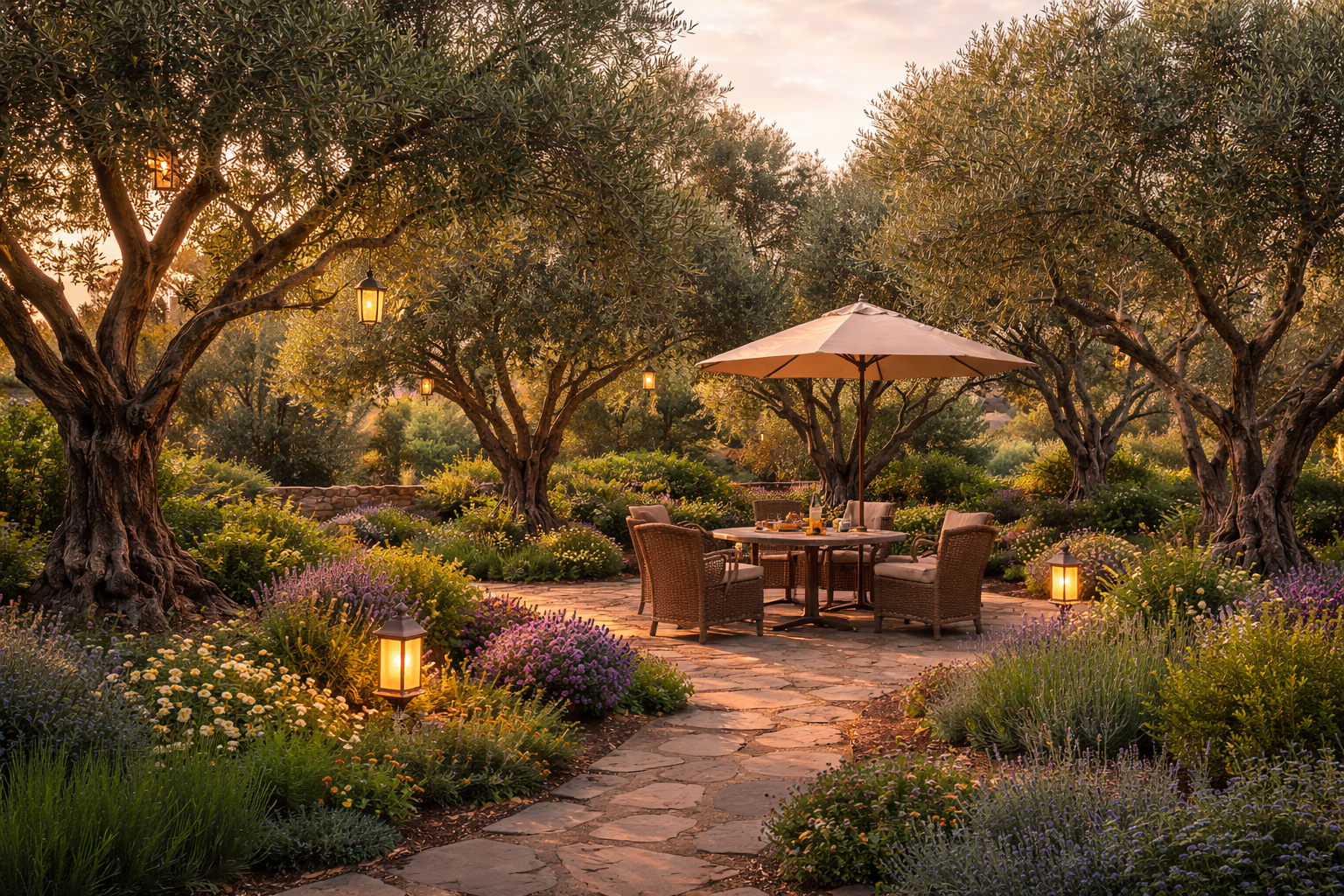
Olive garden decor ideas are inspired by Mediterranean landscapes.
Not polished. Not crowded.
You’ll notice:
- Open space between trees
- Dry, textured ground
- Muted color palette
- Simple seating areas
Nothing feels forced.
That’s the goal.

Layout First: Build Structure Before Decor
Skip decor for now.
Start with the layout.
A strong olive tree garden design solves most problems early.
Tree Spacing Matters More Than You Think
Don’t plant trees randomly or too close.
Leave space.
- Ideal spacing: 10–20 feet between trees
- Smaller gardens: use potted olive trees
This allows airflow, sunlight, and natural growth.
Crowded trees kill the aesthetic.
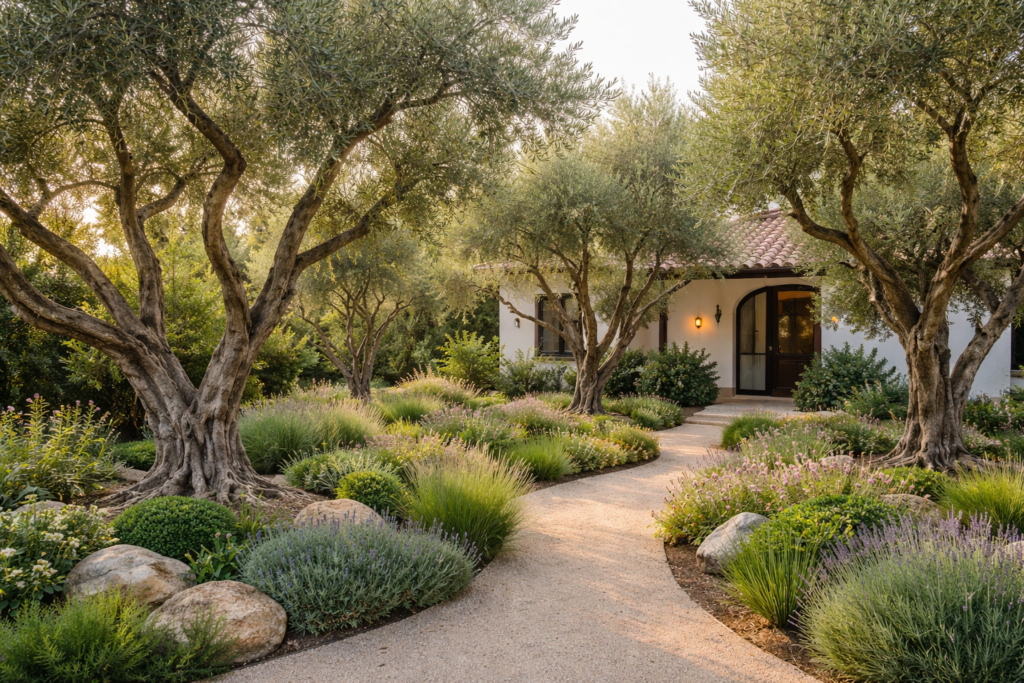
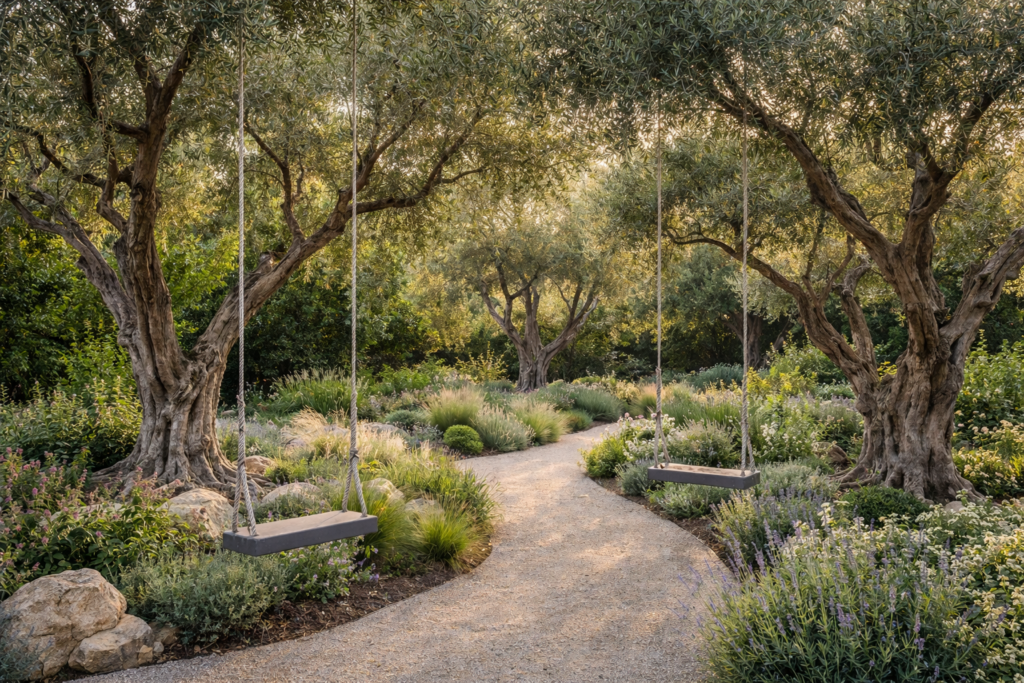
Create Natural Movement Paths
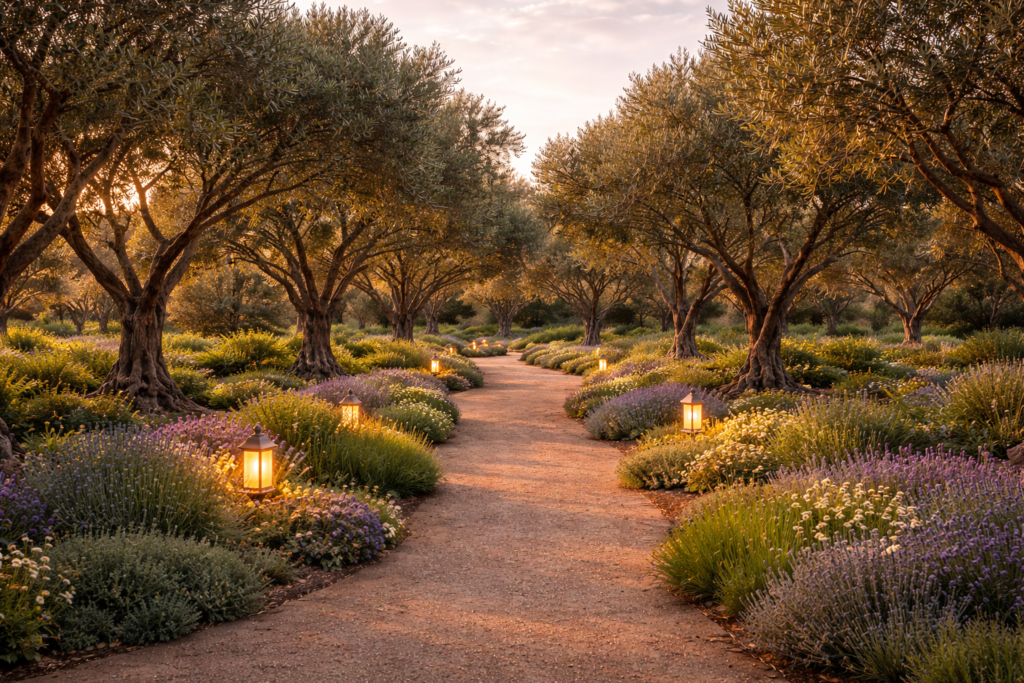
Your garden needs flow.
Use:
- Gravel paths
- Irregular stone slabs
- Brick walkways
Avoid straight lines.
Let the path curve slightly. It feels more natural.
Color Palette: Keep It Muted
Color decides whether your Olive Garden decor ideas work or fail.
Stick to:
- Olive green
- Dusty beige
- Terracotta
- Warm gray
These tones reflect Mediterranean garden decor.
Avoid:
- Bright whites
- Neon colors
- Glossy finishes
Soft colors = calm space.
Watch also Garden Front Yard Ideas
Real Example: Small Backyard Olive Garden Setup
Let’s make this practical.
Imagine a 10×12 ft backyard.
Here’s a working layout:
- Two potted olive trees in opposite corners
- Gravel base across the ground
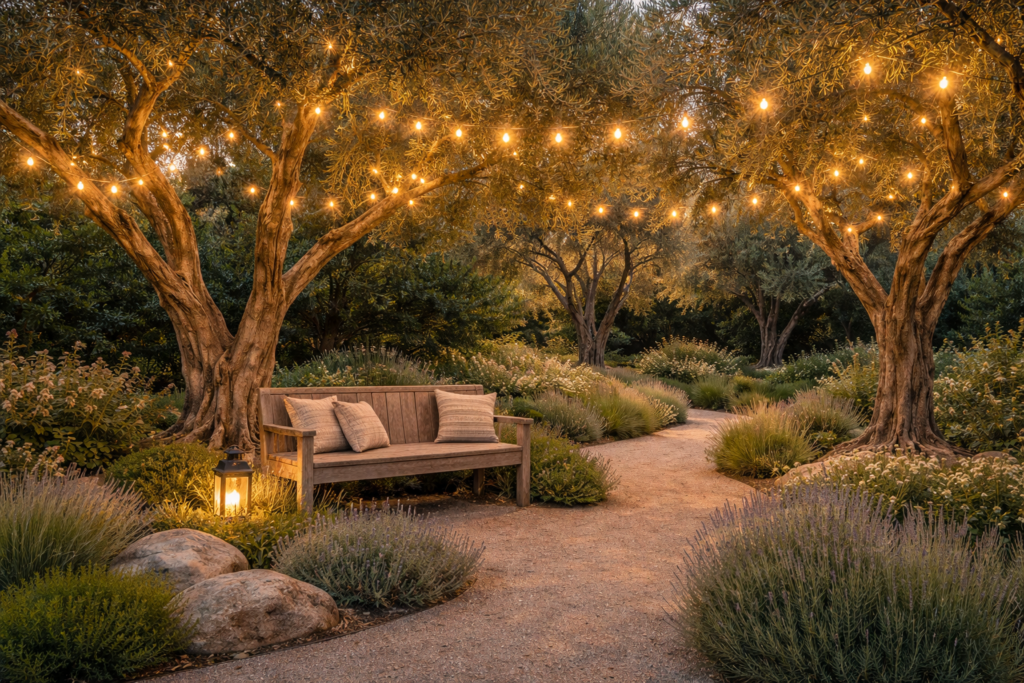
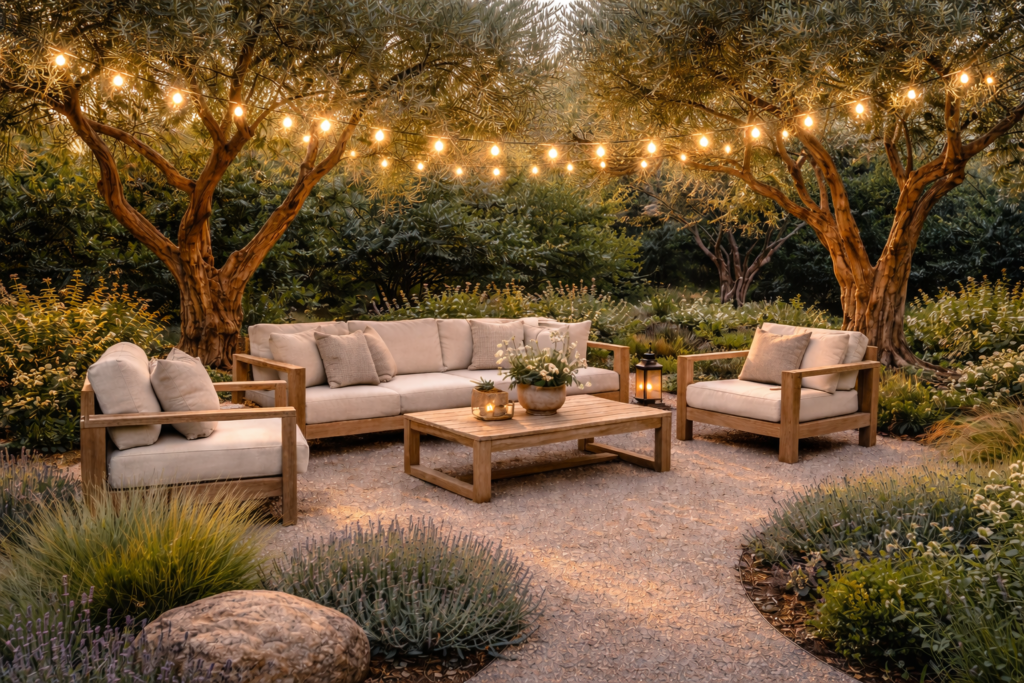
- Small wooden bench in the center
- Terracotta pots with rosemary and lavender
- String lights overhead
That’s it.
No over-design.
This setup works because it keeps the balance.
Seating Area: Where the Garden Comes Alive
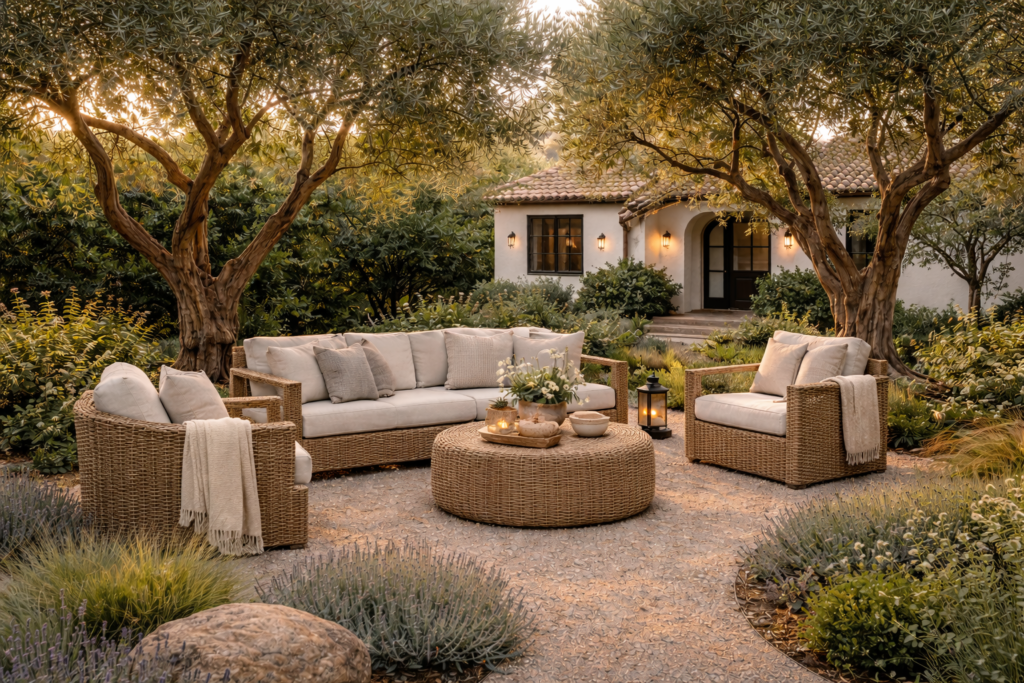
Every olive garden needs a place to sit.
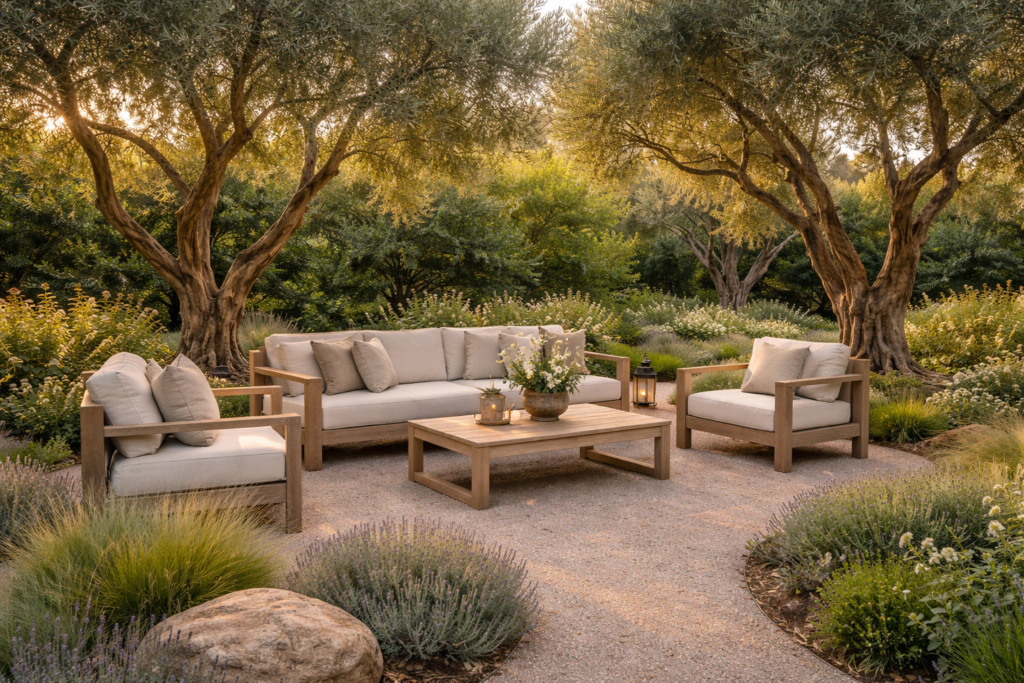
Choose the Right Furniture
Go simple.
Use:
- Wooden benches
- Wrought iron chairs
- Light outdoor seating
Avoid plastic furniture.
It breaks the natural look instantly.
Add Soft Layers
Hard furniture feels incomplete.
Add:
- Linen cushions
- Neutral fabric covers
- Light throws
Comfort matters more than design.
Lighting Setup: The Biggest Mood Shift
Lighting can make or ruin your Olive Garden decor.
Use warm lighting only.
Stick to:
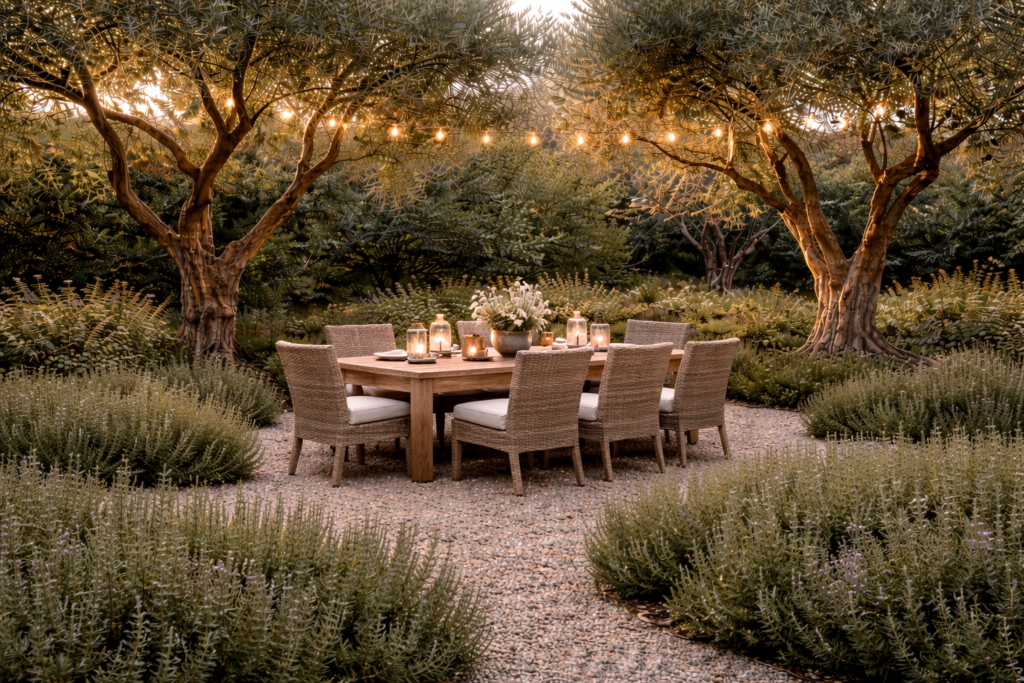
- String lights
- Hanging lanterns
- Solar garden lights
Color temperature matters.
Warm yellow tones create a relaxed feel.
Cool white lights feel harsh and artificial.
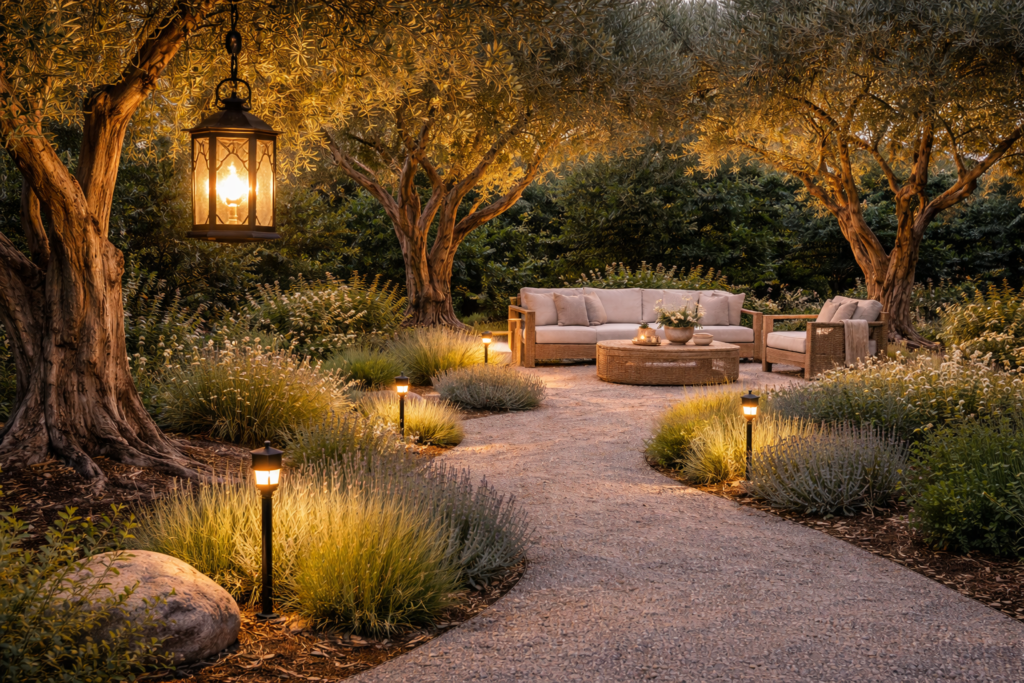
Practical Lighting Layout
For best results:
- Hang string lights above the seating area
- Place solar lights along pathways
- Add one lantern near plants
Simple setup. Big impact.
Ground Design: Forget Perfect Lawns
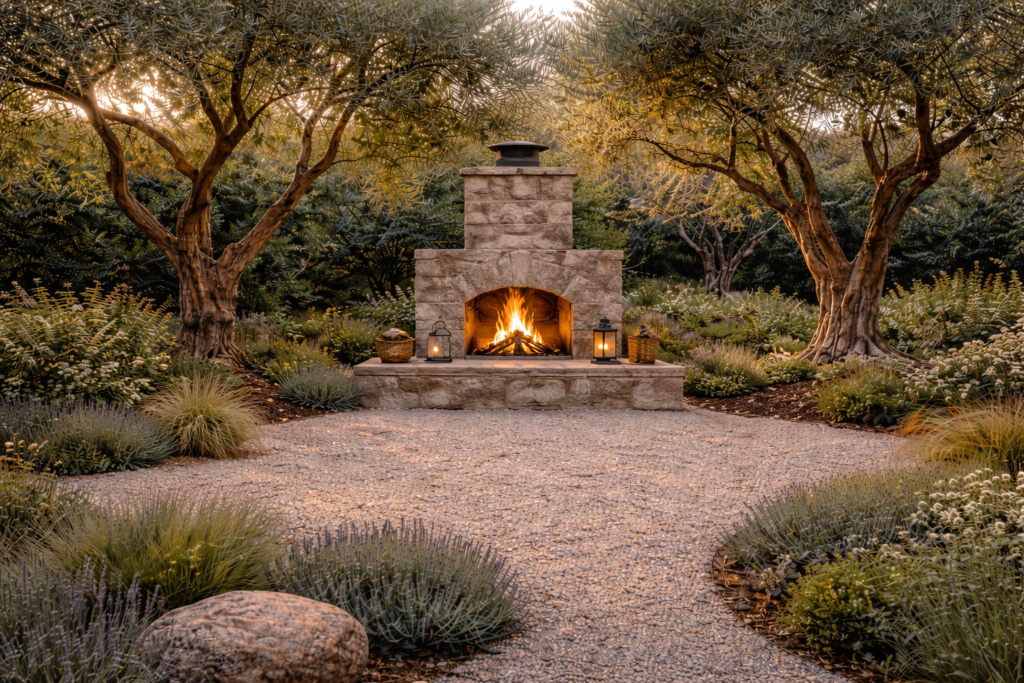
A clean lawn doesn’t fit this style.
An olive garden needs texture.
Best Ground Options
Use:
- Gravel
- Sand
- Natural stone
- Dry soil
These materials reflect Mediterranean landscapes.
They also require less maintenance.
Plant Pairing: Build a Cohesive Look
Random plants ruin the theme.
Stick to plants that belong together.
Best Plants for Olive Garden Styling
Use:
- Lavender
- Rosemary
- Thyme
- Sage
These plants:
- Need low water
- Match the color palette
- Add fragrance
This creates a proper Mediterranean garden decor feel.
Terracotta and Clay: Non-Negotiable Element
If you skip these steps, the garden feels incomplete.
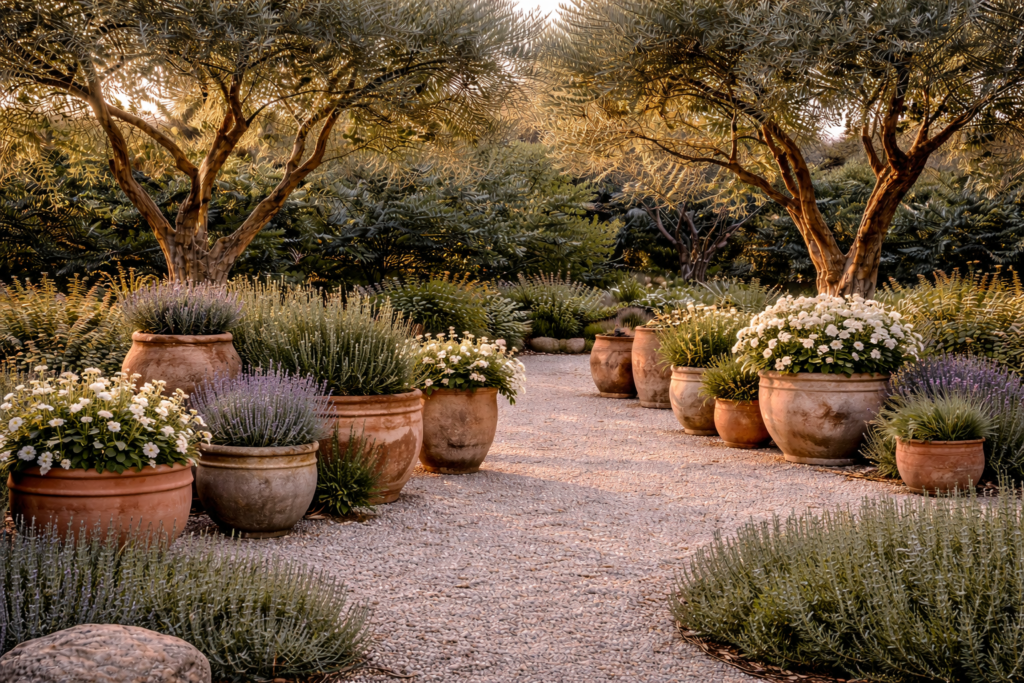
Add:
- Terracotta pots
- Clay planters
- Rustic containers
These materials age well.
They also naturally match olive tree tones.
Create Zones Instead of One Flat Space
Flat gardens feel boring.
Break your space.
Simple Zoning Plan
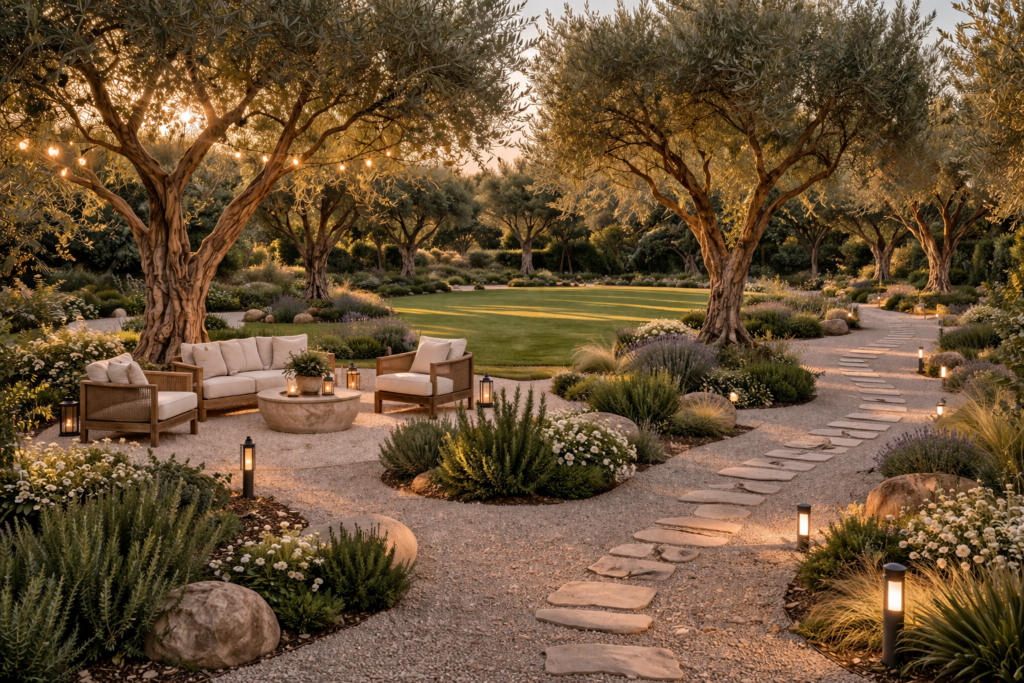
Divide into:
- Seating zone
- Plant cluster
- Walking path
- Open space
Even in small gardens, zoning works.
It adds structure without clutter.
Add a Water Feature
Not required. But effective.
Even a small element works.
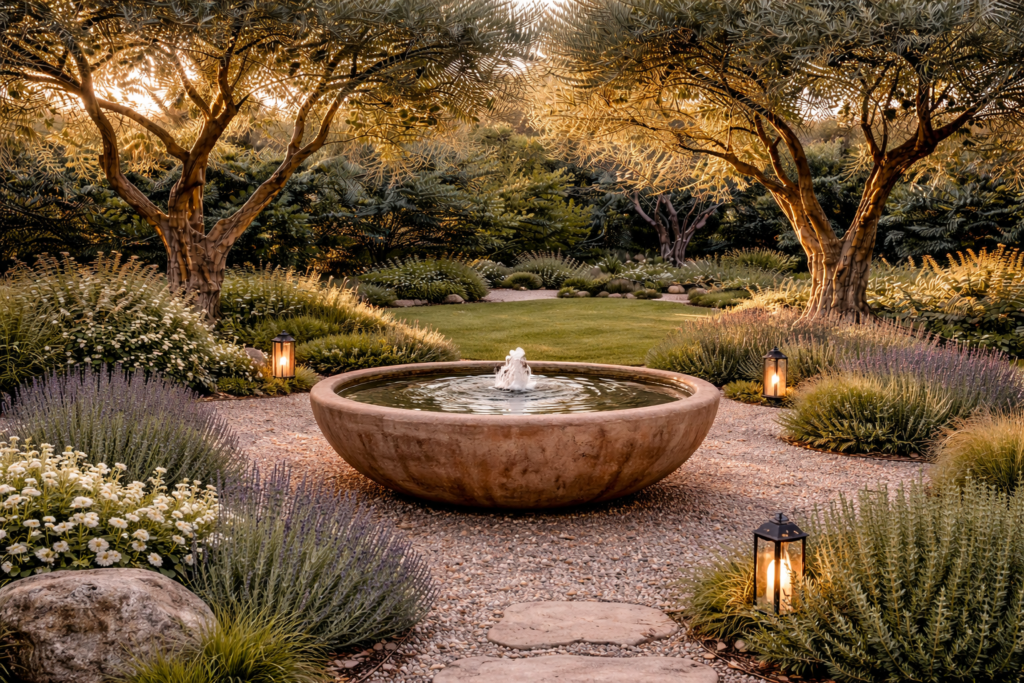
Try:
- Stone fountain
- Clay water bowl
- Mini water basin
Water adds movement and sound.
It makes your Olive Garden feel alive.
See more on Garden Lighting Ideas
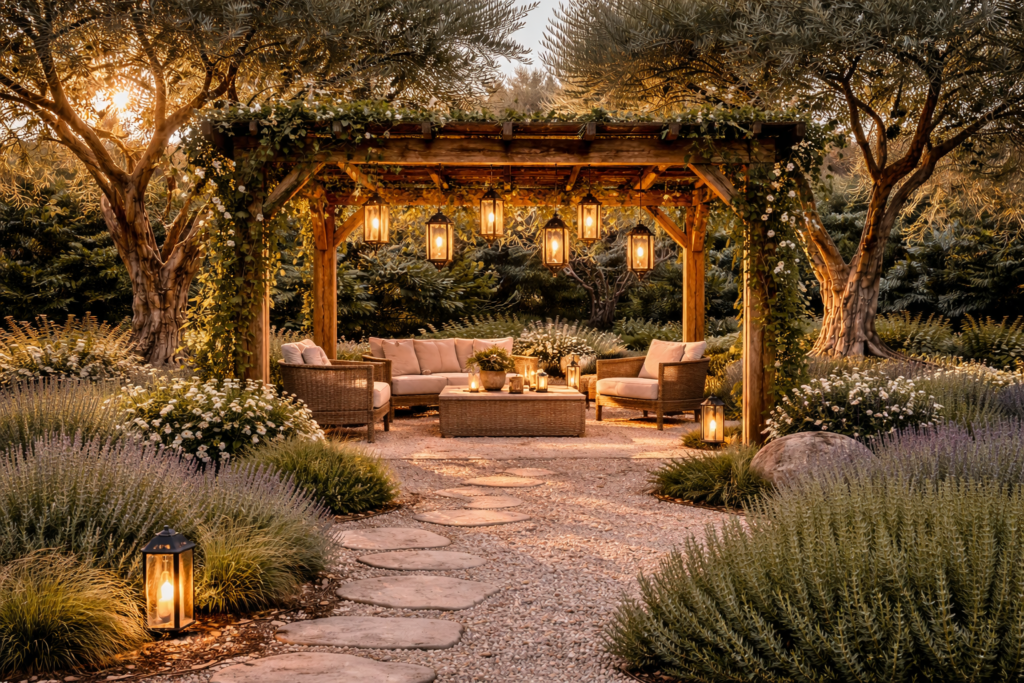
Vertical Elements: Add Height
Most people ignore vertical space.
That’s a mistake.
Use:
- Wooden pergola
- Climbing vines
- Hanging lanterns
This creates layers.
Your garden stops feeling flat.
Balcony Olive Garden Example
No backyard? Still works.
Try this setup:
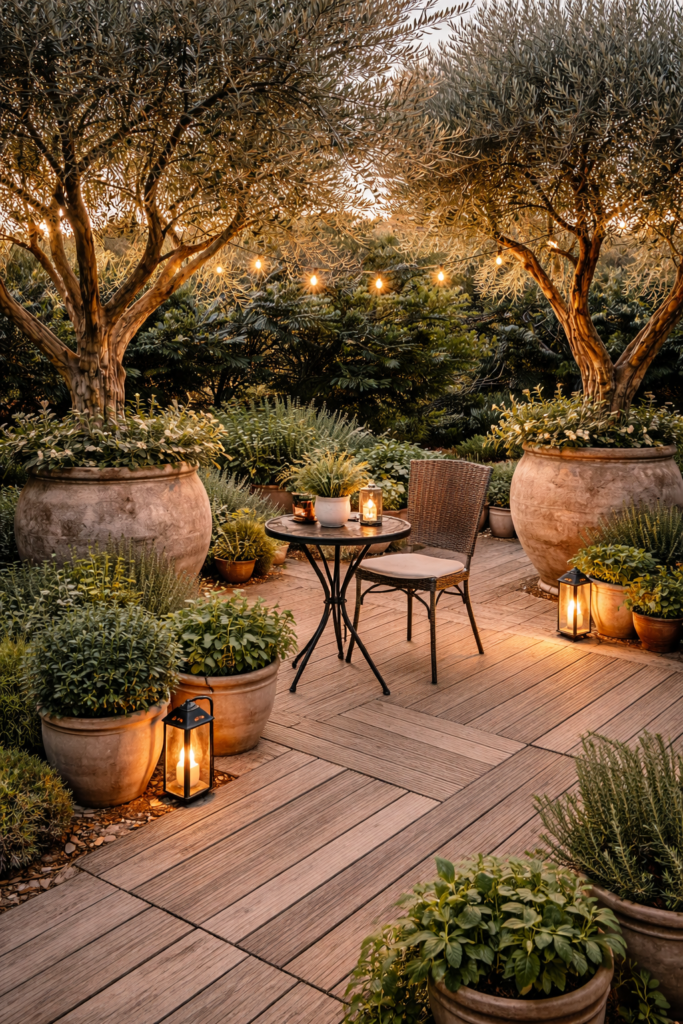
- Two large olive tree pots
- Wooden floor tiles
- Small bistro chair
- One lantern + string light
- Herb pots (thyme, basil)
Small space. Same feeling.
Budget-Friendly Olive Garden Decor Ideas
You don’t need expensive materials.
Start small.
- Use gravel instead of tiles
- Buy second-hand terracotta pots
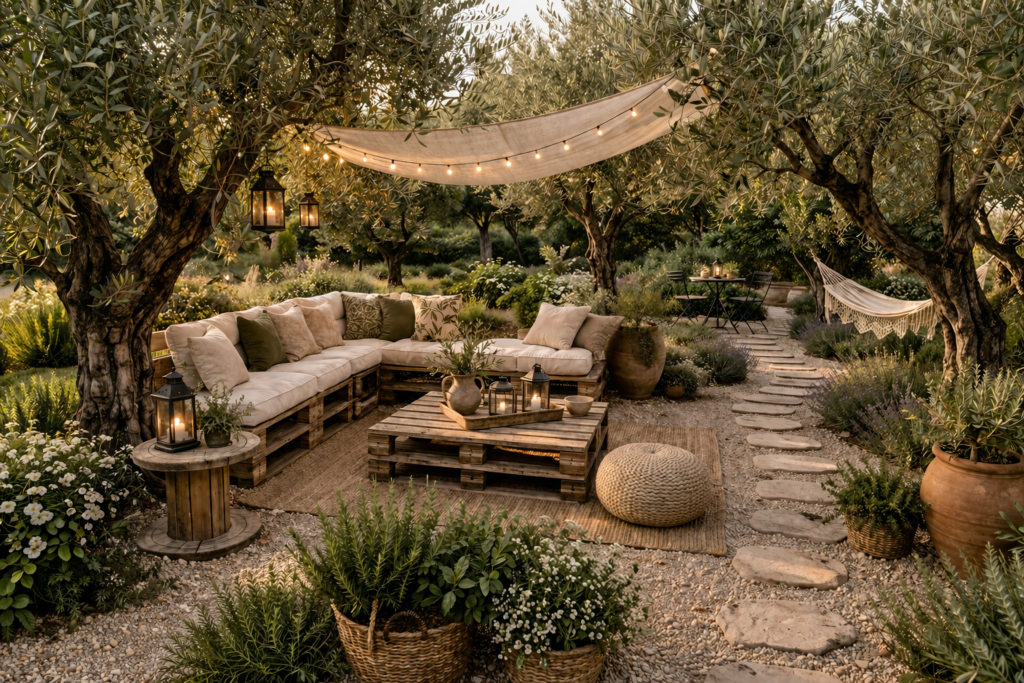
- DIY wooden seating
- Install solar lights
Focus on placement. Not price.
Common Mistakes That Kill the Look
Most people get this wrong.
Avoid:
- Bright plastic furniture
- Too many plant types
- Over-decorating
- Symmetrical layouts
- Glossy modern finishes
An olive garden should feel relaxed.
Not designed to impress.
Best Olive Tree Varieties for Home Gardens
Not every olive tree works in every garden. Pick the right variety first. It saves you time, money, and frustration.
Here are the best options for home gardens in the USA:
Arbequina:
This is the most popular choice for home gardens. It stays small, usually 10 to 15 feet tall. It grows well in containers. You can keep it on a patio or balcony without any issue. It produces small olives and handles mild winters fairly well.
Kalamata:
A classic Mediterranean variety. It grows larger than Arbequina, up to 20 feet. Best for open backyards with enough space. Known for its deep purple fruit and strong flavor. Needs full sun and warm summers.
Frantoio:
An Italian variety that works well in warm US climates. It grows upright and tall. Great as a visual anchor in a large backyard garden. Produces a high yield of olives and has a long lifespan.
Little Ollie (Dwarf Olive):
A non-fruiting compact variety. Perfect for decorative use. Stays under 6 feet. Works well in pots, borders, and small garden zones. Low maintenance. No fruit cleanup needed.
Wilsoni:
It is another non-fruiting variety. Denser foliage. Works well as a hedge or boundary tree. Good for privacy screening in narrow garden areas.
Quick Tip:
If you want a decorative garden without mess, choose a non-fruiting variety like Little Ollie or Wilsoni. If you want olives you can harvest, go with Arbequina or Kalamata.
Internal Styling Ideas You Can Connect
To make your garden more dashing, go for
- rustic outdoor decor ideas
- small backyard garden ideas
- Mediterranean patio design
- DIY garden seating ideas
This improves beautification.
Climate Zones: Where Olive Trees Grow Best in the USA
Olive trees are Mediterranean plants. They need warmth and sun to thrive. Before you plant, check your climate zone.
Olive trees grow best in USDA Hardiness Zones 8 through 11.
Here’s a quick breakdown by region:
Best zones for olive trees:
- California: Zones 9–11. Ideal climate. Olive trees thrive across most of the state. Southern California and the Central Valley are perfect.
- Texas: Zones 8–9. Works well in central and west Texas. Avoid humid East Texas.
- Arizona & New Mexico: Zones 8–10. A hot, dry climate suits olive trees perfectly.
- Florida: Zones 9–11. Warm enough, but high humidity can cause issues. Choose disease-resistant varieties.
- Georgia & South Carolina: Zone 8. Possible with cold-hardy varieties. Protect young trees in winter.
What about cold climates?
Olive trees struggle below 15°F (-9°C). If you live in Zone 7 or lower, grow them in large containers. Bring them indoors or into a garage during winter. Use an Arbequina or Cipressino variety. These handle colder temps better than most.
Rule of thumb: Full sun + dry heat + well-draining soil = olive trees thrive. Cold, wet winters = use pots so you can move them.
How to Maintain an Olive Tree Garden Year-Round
An olive tree garden is low-maintenance. But low maintenance doesn’t mean zero maintenance. Here’s what you need to do each season.
Sunlight: Olive trees need full sun, at least 6 to 8 hours daily. Plant or position them where they get direct sunlight most of the day. Shade kills growth and reduces flowering.
Watering: Young trees need regular watering for the first 2 years. Water deeply once or twice a week. Once established, olive trees are drought-tolerant. Water only during long dry spells. Overwatering causes root rot. Less is more.
Soil: Use well-draining soil. Olive trees hate wet roots. Sandy or loamy soil works best. Avoid clay-heavy soil. If your soil holds water, mix in gravel or perlite before planting.
Fertilize feed: once in spring with a balanced slow-release fertilizer. Skip heavy nitrogen,it encourages leaf growth over fruit. One light feed per year is enough for a healthy tree.
Pruning: Prune in late winter or early spring before new growth starts. Remove dead or crossing branches. Open up the canopy for airflow. Don’t over-prune; olive trees don’t need heavy cutting. Aim for shape and light access only.
In warm zones, no special care is needed. In colder areas (Zone 7 and below), move potted trees indoors or wrap young in-ground trees with frost cloth. Mulch the base to protect roots from freezing.
Pest Watch: Watch for olive fruit flies and scale insects. Check leaves regularly. Treat with neem oil spray if you spot an infestation early. Healthy trees with good airflow rarely have serious pest problems.
Olive Tree Garden on a Budget: Cost Breakdown
You don’t need to spend a lot. Most Olive Garden setups cost less than people expect.
Here’s a realistic budget breakdown for a small backyard setup in the USA:
| Item | Budget Option | Estimated Cost |
|---|---|---|
| Dwarf olive tree (potted) | Little Ollie or Arbequina in 5-gallon pot | $25–$50 |
| Gravel (ground cover) | 50 lb bag from hardware store | $8–$15 per bag |
| Terracotta pots (2–3) | Standard garden center pots | $10–$25 each |
| String lights | Basic outdoor LED string lights | $15–$30 |
| Wooden bench | Secondhand or DIY pallet bench | $0–$60 |
| Lavender + rosemary plants | Small starter plants | $5–$10 each |
| Solar path lights (4 pack) | Basic solar garden stake lights | $15–$25 |
Total estimated cost for a small setup: $100–$250
That covers two olive trees in pots, a gravel base, one seating area, string lights, and herb companions.
Tips to save more:
- Buy olive trees in small sizes; they grow fast and cost less than mature trees
- Use secondhand terracotta pots from thrift stores or Facebook Marketplace
- DIY a gravel path using landscape fabric + bulk gravel from a local supplier
- Skip stone pavers, and gravel gives the same Mediterranean feel at a fraction of the cost
A beautiful olive tree garden doesn’t require a landscape designer. It requires the right materials in the right places.
Quick Setup Plan
If you want results fast:
- Place olive trees (or pots)
- Add a gravel base
- Create one seating area
- Install warm lighting
- Add 2–3 terracotta pots
That’s enough to build a functional olive garden.
FAQ: Olive Tree Garden Ideas
What is an olive tree garden for home decor?
An olive tree garden is an outdoor space designed around olive trees using rustic Mediterranean styling, gravel paths, terracotta pots, warm lighting, and drought-tolerant companion plants.
What is the best olive tree for a small backyard or container?
The Arbequina and Little Ollie (dwarf) varieties work best for small spaces. Both stay compact, grow well in pots, and suit patios, balconies, and small backyard gardens.
How far apart should olive trees be planted?
Space them 10 to 20 feet apart for proper airflow and natural growth. For potted trees in small gardens, 4 to 6 feet between pots works well.
What plants grow well with olive trees?
Lavender, rosemary, thyme, and sage are the best companion plants. They share the same sunlight and water needs. They also match the Mediterranean color palette perfectly.
Can I grow an olive tree garden in a cold climate?
Yes, use cold-hardy varieties like Arbequina in large containers. Move them indoors or into a garage during winter. Avoid planting olive trees directly in the ground in zones below Zone 8.
How much does it cost to set up a basic olive tree garden?
A small functional setup costs between $100 and $250. This covers potted trees, gravel ground cover, terracotta pots, string lights, and herb companions.
How do I care for olive trees in a home garden?
Give them full sun (6–8 hours), water deeply but infrequently, use well-draining soil, and prune lightly in late winter. Olive trees are low-maintenance once established.
Final Thoughts
An olive garden is about restraint.
No more decor.
Better choices.
Focus on layout. Light. Natural materials.
Start with one area. Build slowly.
You don’t need perfection.
You need balance.